
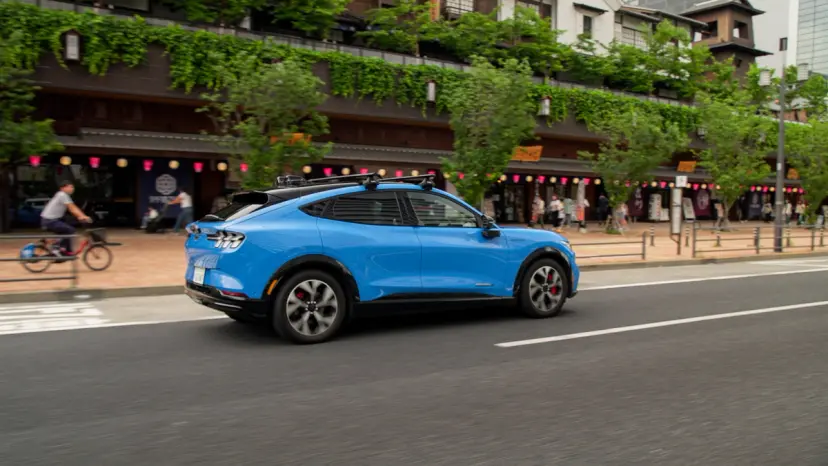
Applied Intuition has expanded its Self-Driving System (SDS) to Japan, introducing advanced driver-assistance capabilities less than a year after launching the platform across North America and Europe.
The company announced the expansion during its Intersect 26: Japan event, extending the SDS platform into a third major automotive region.
Bringing L2+ and L2++ Capabilities to Japan
The Self-Driving System supports L2+ and L2++ driver-assistance functions, including intelligent parking, active safety features, and point-to-point urban driving.
Applied Intuition said the platform is designed to support future progression toward Level 3 and Level 4 automated driving capabilities using the same underlying architecture.
The company offers SDS as a white-box platform, allowing automakers to customize the system according to their vehicle architectures, brand requirements, and software strategies.
Designed for Complex Urban Environments
Japan presents a challenging environment for driver-assistance technologies due to dense urban traffic, multi-exit intersections, left-hand driving patterns, and varying road conditions.
Applied Intuition said the expansion demonstrates the platform’s ability to adapt to different regulatory frameworks and driving environments.
“SDS was designed from the beginning to adapt quickly across regions, regulations and driving environments,” said Qasar Younis, co-founder and CEO of Applied Intuition.
“Expanding SDS to Japan demonstrates the flexibility of our architecture and the strength of the infrastructure we’ve built to support rapid deployment and iteration globally.”
Camera and Radar-Based Architecture
The SDS platform operates using production-grade cameras and radar sensors without relying on lidar or high-definition maps.
According to the company, the approach is intended to support large-scale deployment in passenger vehicles while reducing complexity and hardware costs.
The system uses neural-network-based software trained on a combination of real-world and synthetic driving data to manage urban driving, highway operation, parking functions, and vehicle summon capabilities.
Applied Intuition said the platform supports multiple automotive computing architectures, including passively cooled NVIDIA DRIVE systems and other automotive-grade processors.
Expanding Local Operations
The company has been active in Japan for several years through autonomous trucking projects, including collaboration with Isuzu Motors on Level 4 commercial vehicle initiatives.
To support the SDS rollout, Applied Intuition has established local engineering resources, vehicle operations teams, and data infrastructure dedicated to Japanese road conditions and driving behavior.
The company said locally collected data is integrated into ongoing development and validation efforts to improve system performance in the region.
Focus on Global Deployment
Applied Intuition said the Japan launch reflects increasing demand for scalable driver-assistance systems capable of operating across multiple vehicle categories and regulatory environments.
“Launching SDS in Japan marks a major milestone that reflects the remarkable pace at which we’re advancing production and deployment of autonomous driving,” said Will Lin, Head of Automotive at Applied Intuition.
“Today’s market demands a system that can adapt to all vehicle segments, powertrain types, and regional regulations, and SDS is purpose-built to deliver that, making intelligent driving accessible to everyone.”
With the addition of Japan, Applied Intuition’s SDS platform now spans North America, Europe, and Asia, positioning the company to support global automakers as advanced driver-assistance and automated driving technologies continue to evolve.