

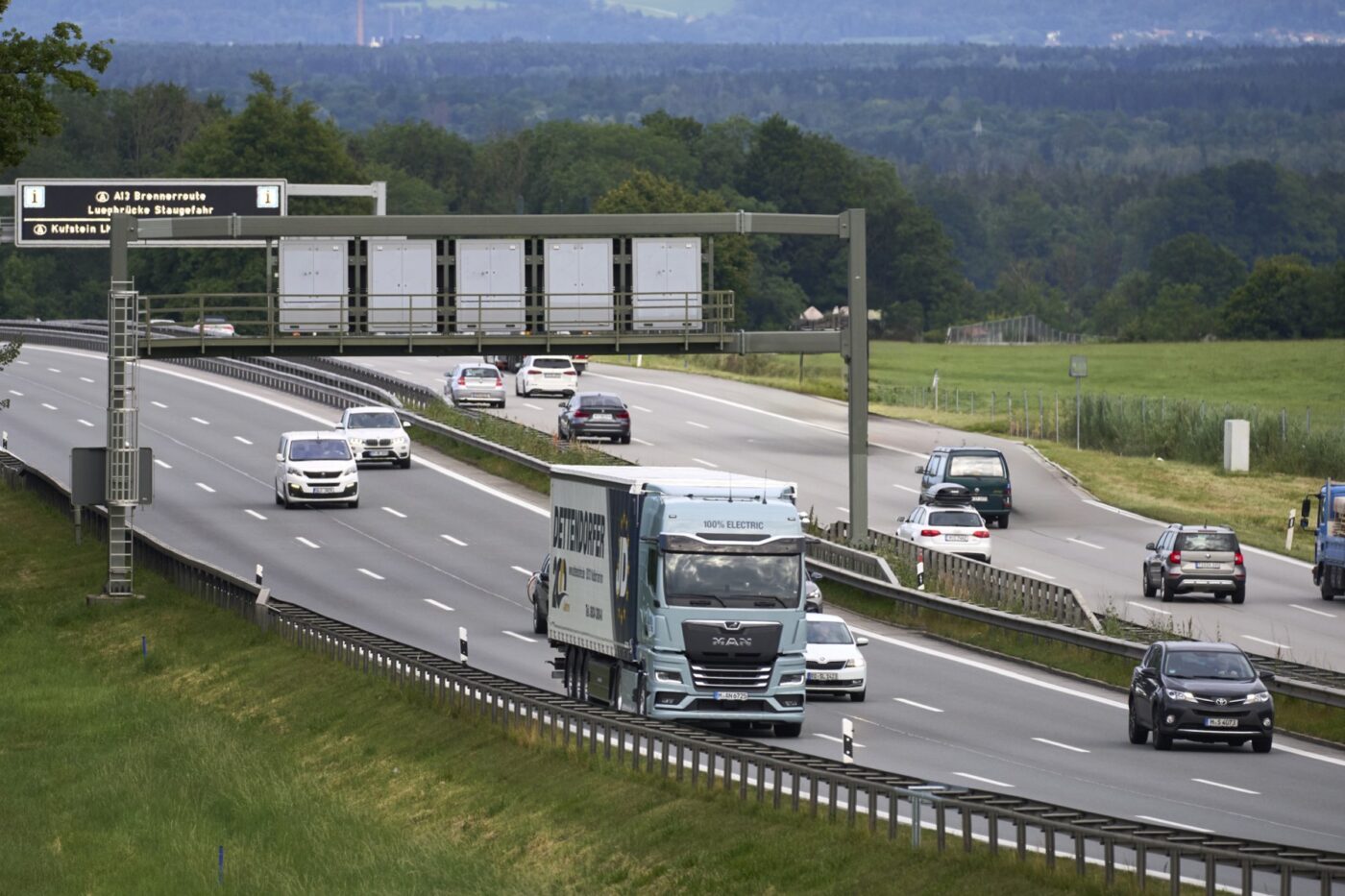
MAN Truck & Bus, Dettendorfer Energy GmbH and a group of industry partners have launched the Green Brenner Initiative, a collaboration aimed at supporting the use of battery-electric trucks along the Brenner freight corridor connecting Germany, Austria and Italy.
The initiative brings together participants from the transport, energy and infrastructure sectors and is intended to promote zero-emission freight transport on one of Europe’s busiest logistics routes.
Focus on the Brenner Corridor
According to the partners, the initiative seeks to develop the Brenner corridor as a model region for battery-electric freight transport while complementing existing rail infrastructure.
The group said the concept is intended to support freight movements that cannot be shifted to rail and to contribute to a broader integrated transport system as freight volumes continue to grow.
“The Brenner is a stress test for European freight transport – and at the same time concrete evidence that electric mobility in heavy goods transport can already make a significant contribution to alleviating the traffic problem today,” said Frederik Zohm, Executive Board Member for Research and Development at MAN Truck & Bus.
“Until the completion of the Brenner Base Tunnel, e-trucks can make an important contribution to easing the burden.”
Building on Earlier Field Trials
The initiative follows a four-week trial conducted by MAN and logistics operator Dettendorfer last year.
According to the companies, the trial examined the operational performance of electric trucks on the Brenner route, including energy consumption, emissions reductions and operating costs.
The partners said regenerative braking on Alpine routes can improve vehicle efficiency by recovering energy during downhill driving.
Charging Infrastructure Expansion
Dettendorfer has also partnered with regional energy supplier Energie Südbayern to establish Dettendorfer Energy GmbH, a joint venture focused on truck charging infrastructure.
The company currently operates charging hubs at the Inntal motorway service area in Raubling and in Langenbruck, south of Ingolstadt.
Dettendorfer Energy is participating in the Green Brenner Initiative alongside MAN and other stakeholders.
Operational and Economic Considerations
The initiative cites lower energy costs, toll incentives and regenerative braking as factors that can influence the economics of battery-electric truck operations on the corridor.
According to the partners, electric trucks operating approximately 110,000 kilometres annually could achieve lower operating costs than comparable diesel vehicles under current conditions.
“For logistics companies, practical viability is ultimately what counts,” said Georg Dettendorfer, Managing Director of Dettendorfer Spedition Ferntrans GmbH & Co KG and Dettendorfer Energy GmbH.
“This is precisely where the initiative comes in: we are demonstrating that emission-free transport in the Alpine region is not only ecologically sound, but also economically attractive.”
The partners estimate that energy costs for electric trucks can be lower than those of diesel vehicles and that regenerative braking on Alpine routes can further improve efficiency.
They also point to lower toll costs for zero-emission vehicles on sections of the route and estimate that total cost of ownership could be lower than that of comparable diesel trucks under certain operating conditions.
Future Development
The initiative has not yet disclosed specific deployment targets, charging infrastructure expansion plans or participation commitments from additional partners.
The stakeholders said wider adoption of electric freight transport on the corridor will depend on continued development of charging infrastructure and electricity grid capacity along the route.
According to MAN, the operation of approximately 300 electric trucks per day on the Brenner corridor could result in annual carbon dioxide emissions reductions of around 28,000 tonnes compared with conventional diesel-powered freight transport.
The Green Brenner Initiative is expected to continue working with logistics operators, infrastructure providers and policymakers as efforts to decarbonize heavy-duty transport progress across Europe.