


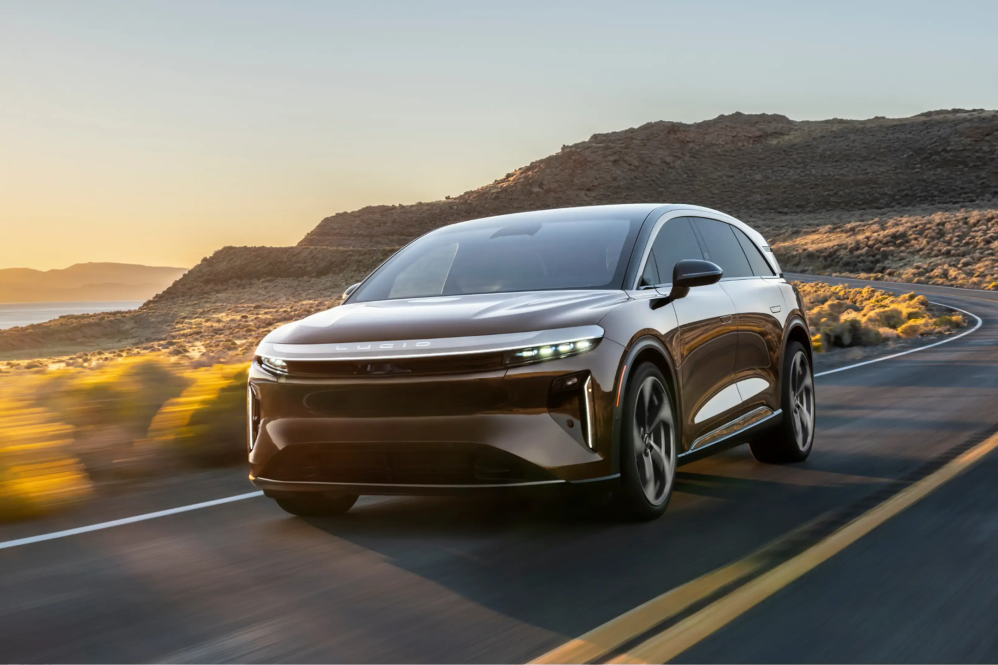
Lucid is again facing criticism over delays to promised software features for its Gravity sport utility vehicle, with customers highlighting the absence of hands-free driving capability that the company had previously said would arrive in 2025.
The issue resurfaced this week after Lucid Chief Executive Marc Winterhoff outlined the company’s longer-term autonomy strategy in an interview with Bloomberg TV. Winterhoff said Lucid plans to introduce point-to-point Level 2++ assisted driving on city streets and highways later this year using its existing DreamDrive Pro hardware in partnership with NVIDIA. He added that the company is targeting Level 3 capability by 2028 and Level 4 autonomy by 2029.
See also: Lucid, Nuro and Uber Unveil Production-Intent Robotaxi at CES
The comments drew renewed attention from customers and observers who say Lucid has yet to deliver near-term software features already announced for the Gravity. Lucid first unveiled Hands-Free Drive Assist and Hands-Free Lane Change Assist in July 2025, saying the functions would be available to Lucid Air owners by the end of that month and to Gravity owners later in the year via an over-the-air update. While Air owners received the update, Gravity owners did not.
Lucid Vice President of Communications Nick Twork acknowledged the delay in a public response on social media this week, saying, “We still plan to deliver hands free drive assist for Gravity,” adding that the company had prioritised other software updates, resulting in a later delivery timeline. He later said the company’s team remained focused on delivering the feature.
See also: Lucid Launches First Certified Pre-Owned EV Program In Bid To Broaden Customer Base
The explanation has reinforced concerns among some Gravity owners that the delay reflects shifting priorities rather than technical constraints. Customers have also pointed to other software features still unavailable on the Gravity, including Mobile Key, Apple CarPlay, Android Auto, Camp Mode and streaming apps, which are already offered on the Lucid Air.
Lucid has positioned advanced driver-assistance systems as a core part of its technology strategy, but the delays underline the execution challenges facing the company as it seeks to expand its vehicle lineup and compete more directly with established electric vehicle makers.