
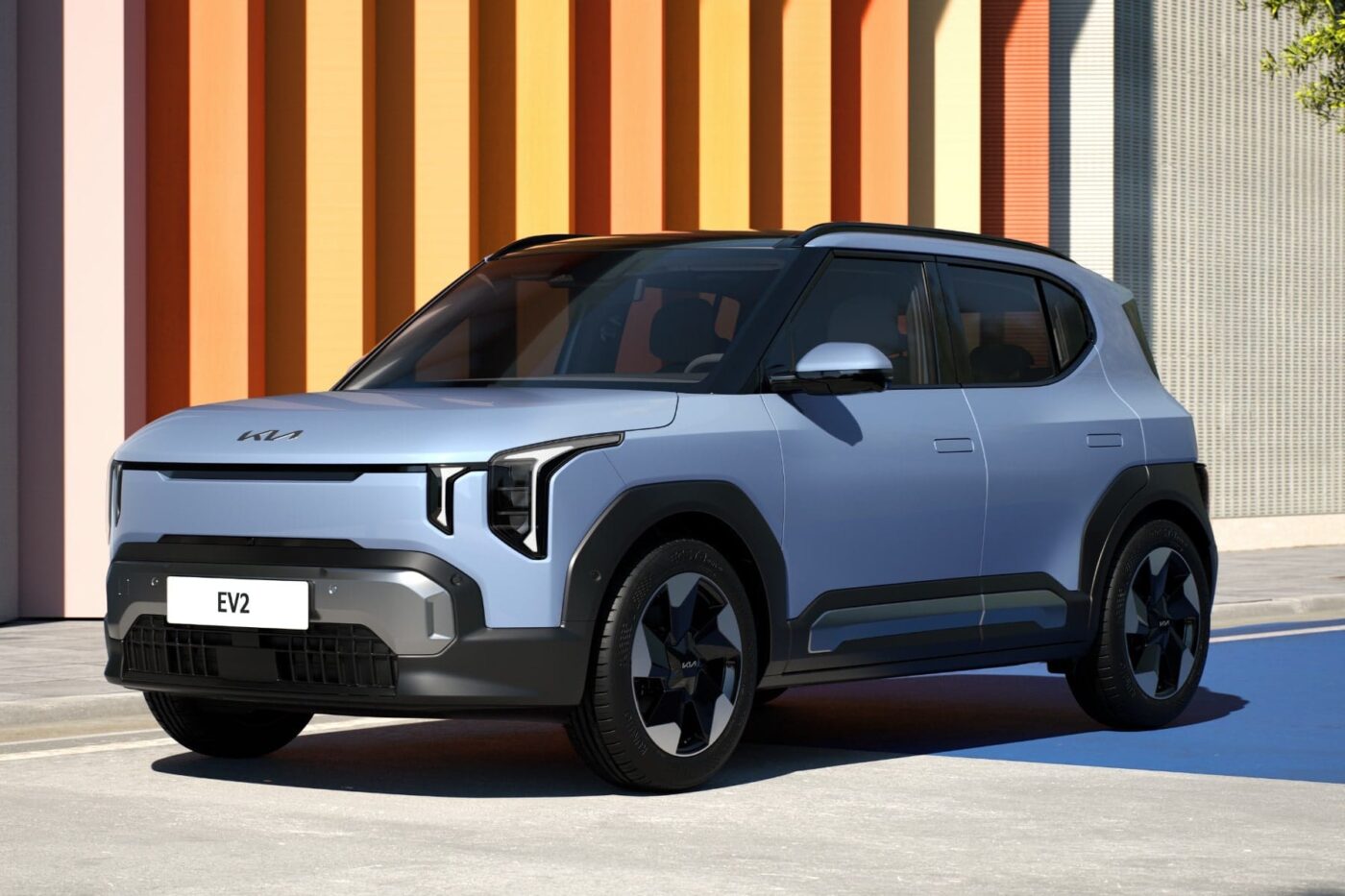
Kia unveiled the production version of its EV2 compact electric SUV at the Brussels Motor Show 2026, marking the world premiere of what will become the South Korean automaker’s most affordable battery-electric model to date.
Positioned below the EV3 in Kia’s electric lineup, the EV2 is built on the 400-volt version of the group’s Electric Global Modular Platform (E-GMP) and is aimed squarely at the European B-segment, one of the continent’s largest and fastest-growing vehicle classes. Kia said the EV2 will be offered with two battery options, delivering ranges of up to 317 kilometres and 448 kilometres under the WLTP cycle.
See also: Kia Brings EV4 Sedan to Canada With Sub-C$40,000 Starting Price
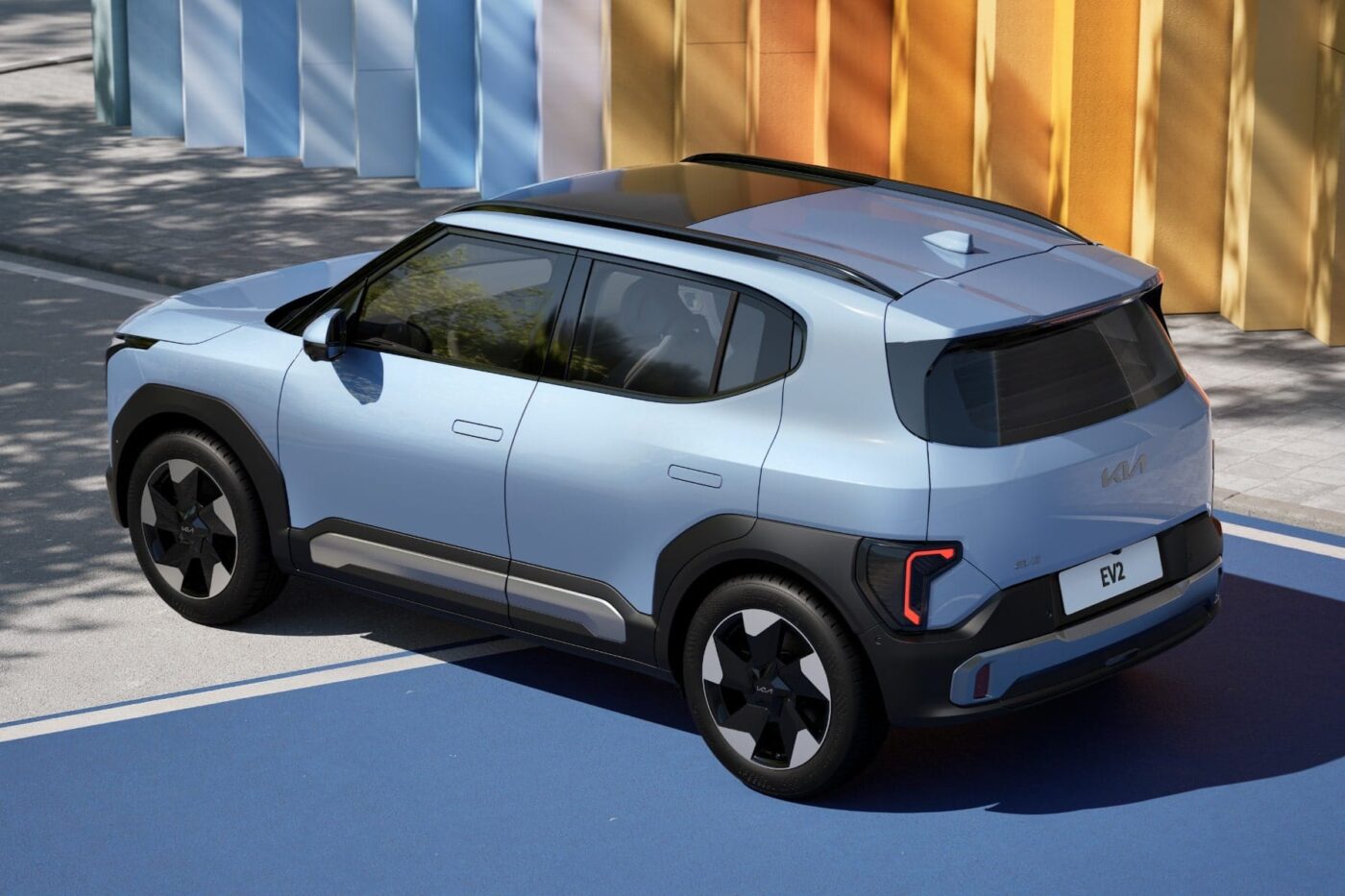
The compact crossover measures 4.06 metres in length, 1.80 metres in width and 1.57 metres in height, with a wheelbase of 2.57 metres. It will be available as either a five-seater or a four-seater, with luggage capacity ranging from 362 litres to 403 litres depending on configuration.
Kia said production of the standard EV2 will begin in the first quarter of 2026, starting with the smaller battery version, while larger-battery and GT-Line variants will follow later in the year. Pricing has not yet been disclosed.
“This reflects the dominance of AC charging infrastructure in Europe and provides greater flexibility for charging at private and public stations,” Kia said in a German-language statement, referring to its decision to offer an optional 22-kilowatt AC charging capability at launch. The EV2 also supports 11-kW AC charging as standard and is expected to charge from 10% to 80% in around 30 minutes under DC fast-charging conditions, according to provisional figures.
See also: Kia Names Soohang Chang as New Europe CEO to Accelerate Electrification Push
The EV2 will be offered with a 42.2-kWh battery providing up to 317 kilometres of range, or a 61-kWh battery delivering up to 448 kilometres. All performance and charging figures are provisional and subject to final homologation ahead of the market launch.
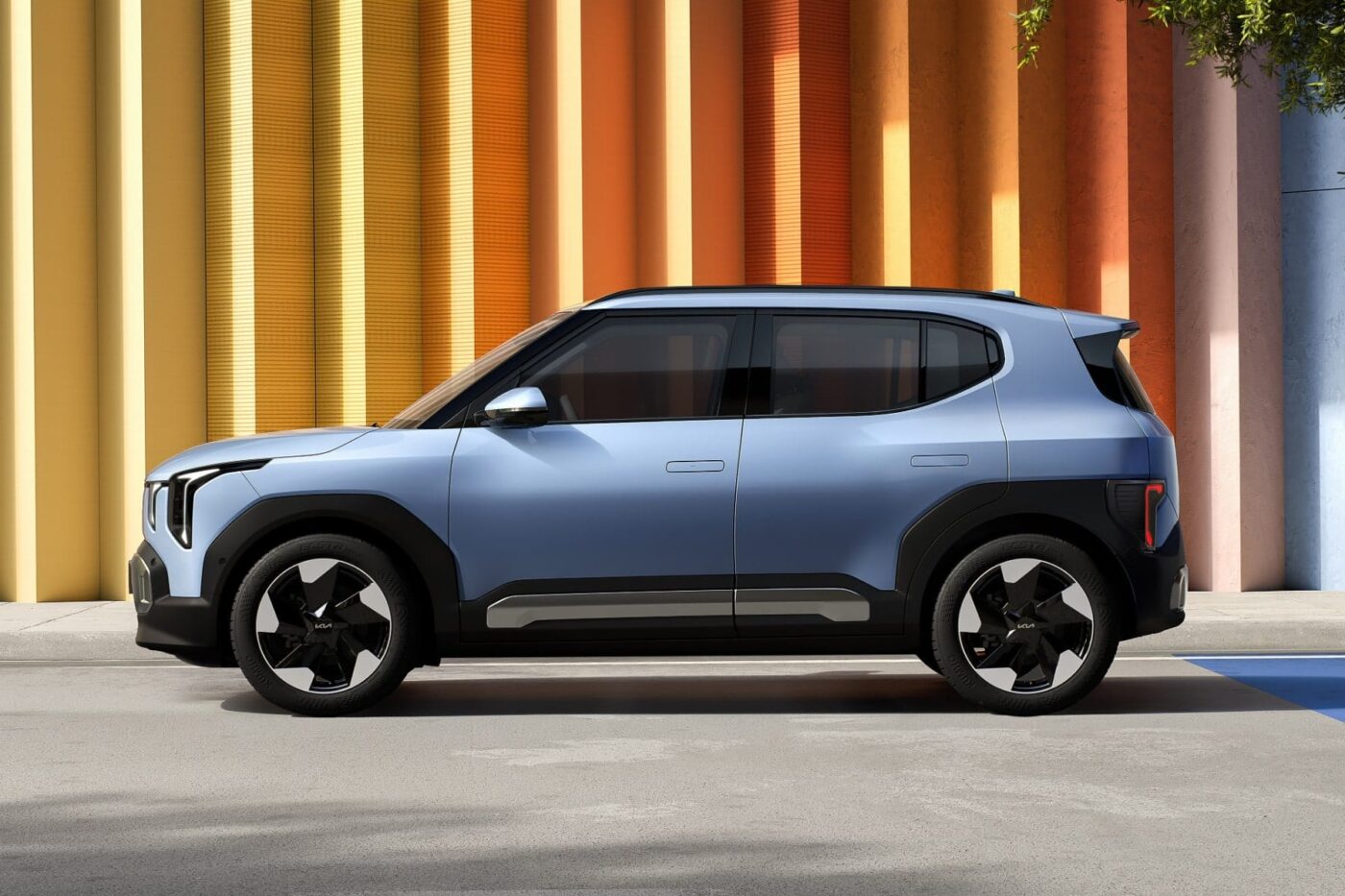
Design-wise, the EV2 adopts Kia’s “Opposites United” styling language, featuring pronounced shoulder lines, robust wheel arches and distinctive lighting signatures similar to the larger EV3 and EV9. Depending on trim, the model rides on wheels ranging from 16 to 19 inches, with the GT-Line receiving unique exterior elements and 19-inch alloys.
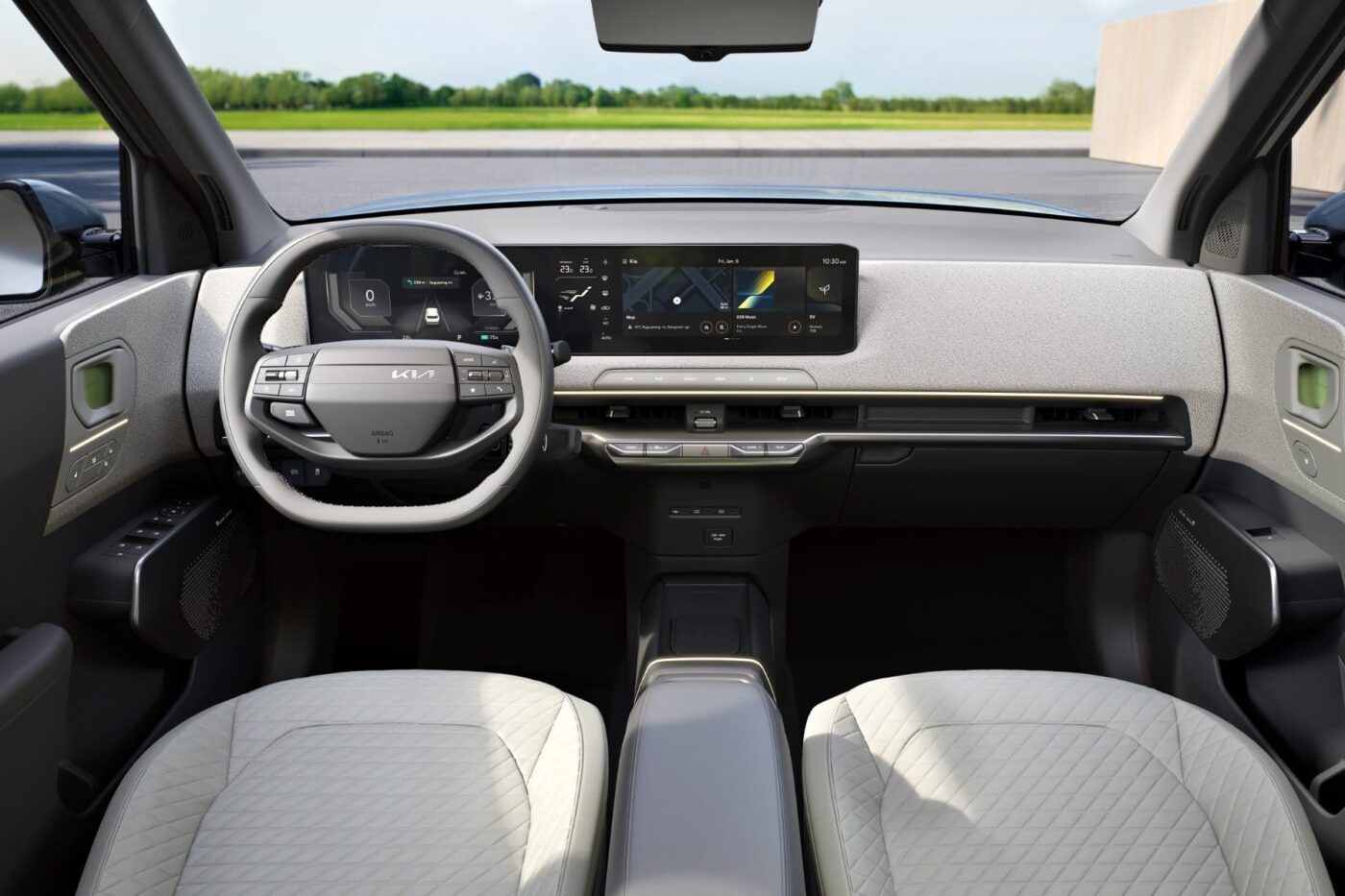
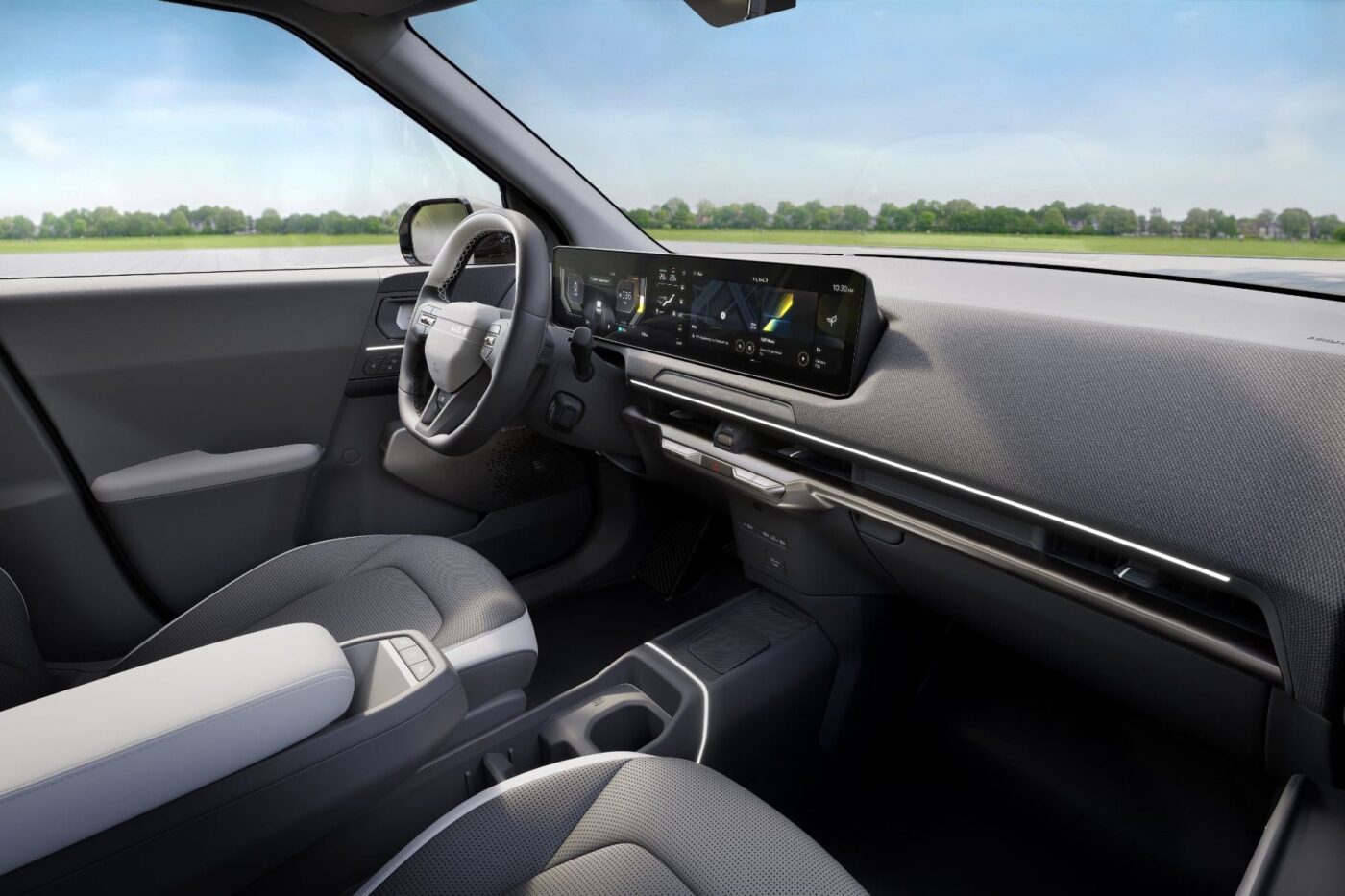
Inside, the EV2 features a wide, open cabin layout anchored by a panoramic digital display combining two 12.3-inch screens for instrumentation and navigation, alongside a 5.3-inch climate control touchscreen. Infotainment is handled by a simplified version of Kia’s Connected Car Navigation Cockpit (ccNC), designed to reduce costs while retaining wireless Apple CarPlay and Android Auto connectivity.
See also: Kia EV4 and PV5 Passenger Qualify for UK Electric Car Grant
Among its technology highlights, the EV2 includes vehicle-to-load (V2L) capability as standard and is hardware-ready for vehicle-to-everything (V2X) applications. Driver assistance features available across the range include adaptive cruise control, motorway assist, blind-spot monitoring with camera display, a 360-degree camera system and remote parking functionality.
“Every element of the EV2 has been developed with the European lifestyle in mind,” said Sjoerd Knipping, chief operating officer of Kia Europe. “Its compact exterior dimensions, spacious interior, and advanced technologies make it easy to integrate into daily life.”
See also: Kia Unveils EV5 WKNDR Concept With Off-Road Focus at Guangzhou Auto Show
Soohang Chang, president and chief executive of Kia Europe, said the model plays a strategic role in broadening the company’s electric offering. “With the Kia EV2, we are expanding the reach of Kia’s electric mobility to customers who want a compact car that still feels spacious, capable and emotionally rewarding,” he said.
As part of its localisation strategy, Kia confirmed the EV2 will be produced at its Zilina plant in Slovakia, making it the second fully electric model built there after the EV4. Production is scheduled to start in February, with European market launches to be announced at a later date.