
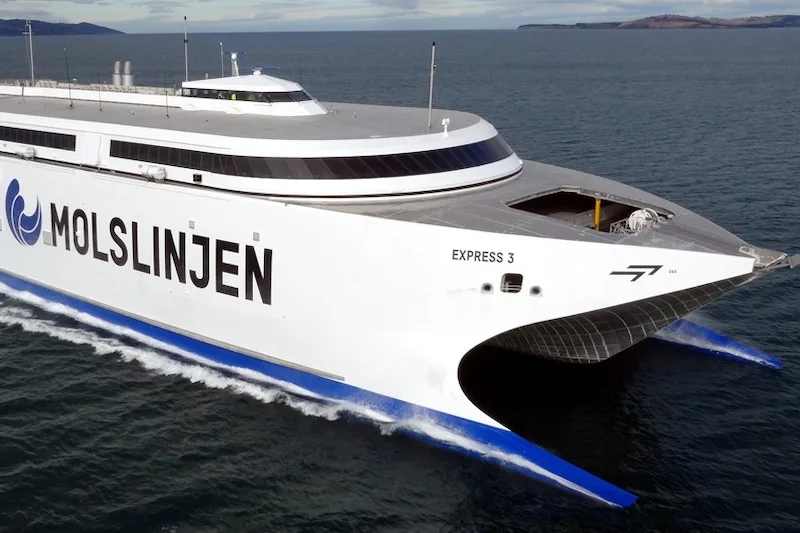
Australian shipbuilder Incat Tasmania has secured a contract to build two 129-meter-long battery-electric catamarans for Danish ferry operator Molslinjen. The fully electric vessels, which will feature battery systems with a capacity of approximately 45,000 kWh, are expected to operate on the busy Kattegat route between Jutland and Zealand.
The new ferries will accommodate up to 1,483 passengers and 500 cars, reaching speeds of over 40 knots as they travel between Aarhus and Sjællands Odde. Once delivered, they will be 11 percent larger than Bornholmslinjen’s Express 5, currently the world’s largest catamaran by vehicle capacity. Charging will take place at harbors in Aarhus and Odden, supported by new land-based infrastructure.
Incat Chairman Robert Clifford described the project as a significant milestone: “These new vessels for Molslinjen mark a turning point not just for Incat but for the global maritime industry. They are part of a new class of high-speed, low-emission ships that are redefining what’s possible at sea.”
The construction of the two catamarans is expected to be completed by the beginning of 2028. Molslinjen is reportedly also in discussions with Incat to add a third vessel of a similar class. The total investment for the three vessels and supporting infrastructure is projected at around 3.5 billion Danish kroner (€468 million), and the company estimates a CO₂ emissions reduction of approximately 132,000 tons annually.
Molslinjen CEO Kristian Durhuus highlighted the broader scale of the project: “This is a massive undertaking, involving not just the three ferries but also extensive land-based infrastructure projects and energy storage systems for the new ships.”
To support the production of the battery-electric ferries, Incat is expanding its facilities at Prince of Wales Bay in Tasmania. The upgrade will enable the company to double its production capacity and workforce over the next three years, in line with rising global demand for sustainable high-speed marine transport.
Incat has described the contract as part of “the world’s largest electrification project at sea,” aligning with Denmark’s broader efforts to decarbonize transportation and invest in green infrastructure for public transit and commercial shipping.