


Google is expanding its generative AI platform, Gemini, to vehicles equipped with Android Auto in the coming months, the company announced ahead of its annual I/O developer conference. The technology will also roll out to cars using Google’s Built-In operating system later this year, offering drivers and passengers a more conversational and context-aware in-car assistant.
The move marks a significant shift in the in-vehicle experience, according to Google. “This is really going to be, we think, one of the largest transformations in the in-vehicle experience that we’ve seen in a very, very long time,” said Patrick Brady, Vice President of Android for Cars, during a virtual media briefing.
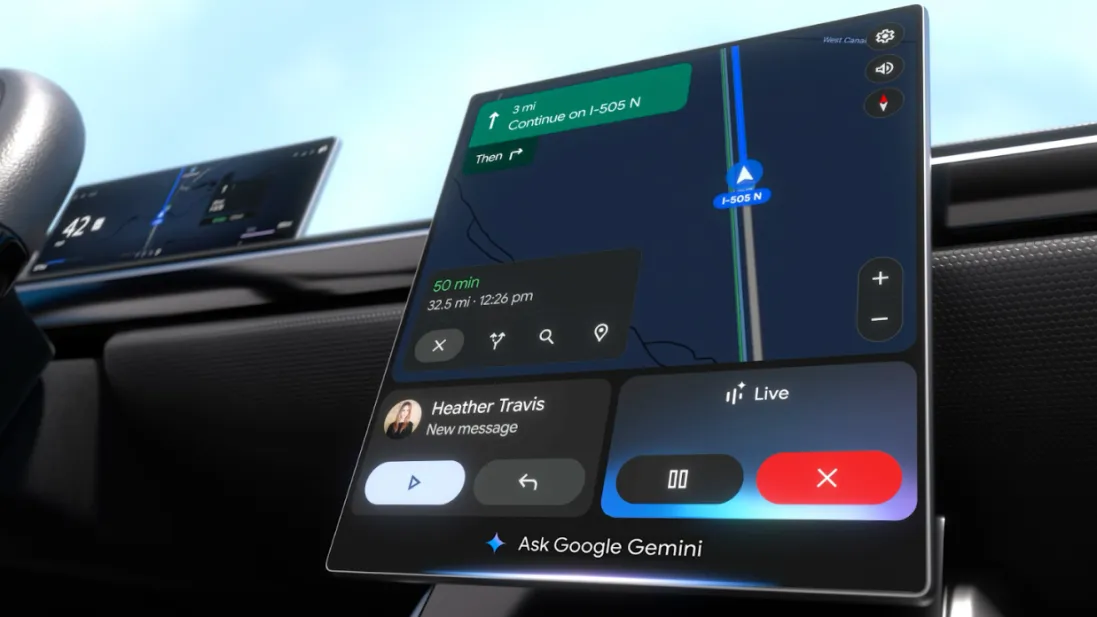
Gemini will be integrated into Android Auto in two primary ways. First, it will serve as a next-generation voice assistant, capable of understanding natural language and performing tasks such as sending messages, playing music, or managing navigation — with less need for rigid commands. For example, it can recall user preferences such as language choices for specific contacts and automatically translate messages.
The second integration, dubbed “Gemini Live,” will allow the AI to remain actively engaged, offering users conversational assistance on a variety of topics. Brady described potential use cases ranging from planning family meals to discussing Roman history or finding travel ideas. Despite concerns about distraction, he emphasized that the natural language processing would streamline interactions, potentially “reducing cognitive load” for drivers.
See also: Rivian Software Chief Confirms Google Cast, Ditches Buttons, Explores Subscription-based Upgrades
The update comes amid growing consumer pushback against touchscreen-heavy automotive interfaces, with some automakers reintroducing physical buttons for essential controls. Google, however, sees Gemini as a way to simplify the user experience without adding visual complexity.
Initially, Gemini will rely on cloud processing for Android Auto and Google Built-In vehicles. However, Google is working with manufacturers to enable on-device processing in the future, aiming to improve performance and reliability — particularly important for vehicles navigating fluctuating network coverage.
While Google declined to confirm whether future versions of Gemini will utilize vehicle sensor data or onboard cameras, Brady noted the company sees “some really, really interesting use cases” as vehicles become increasingly equipped with visual inputs.
Gemini will be available in all markets where Google’s generative AI is currently supported, and will function in over 40 languages.