
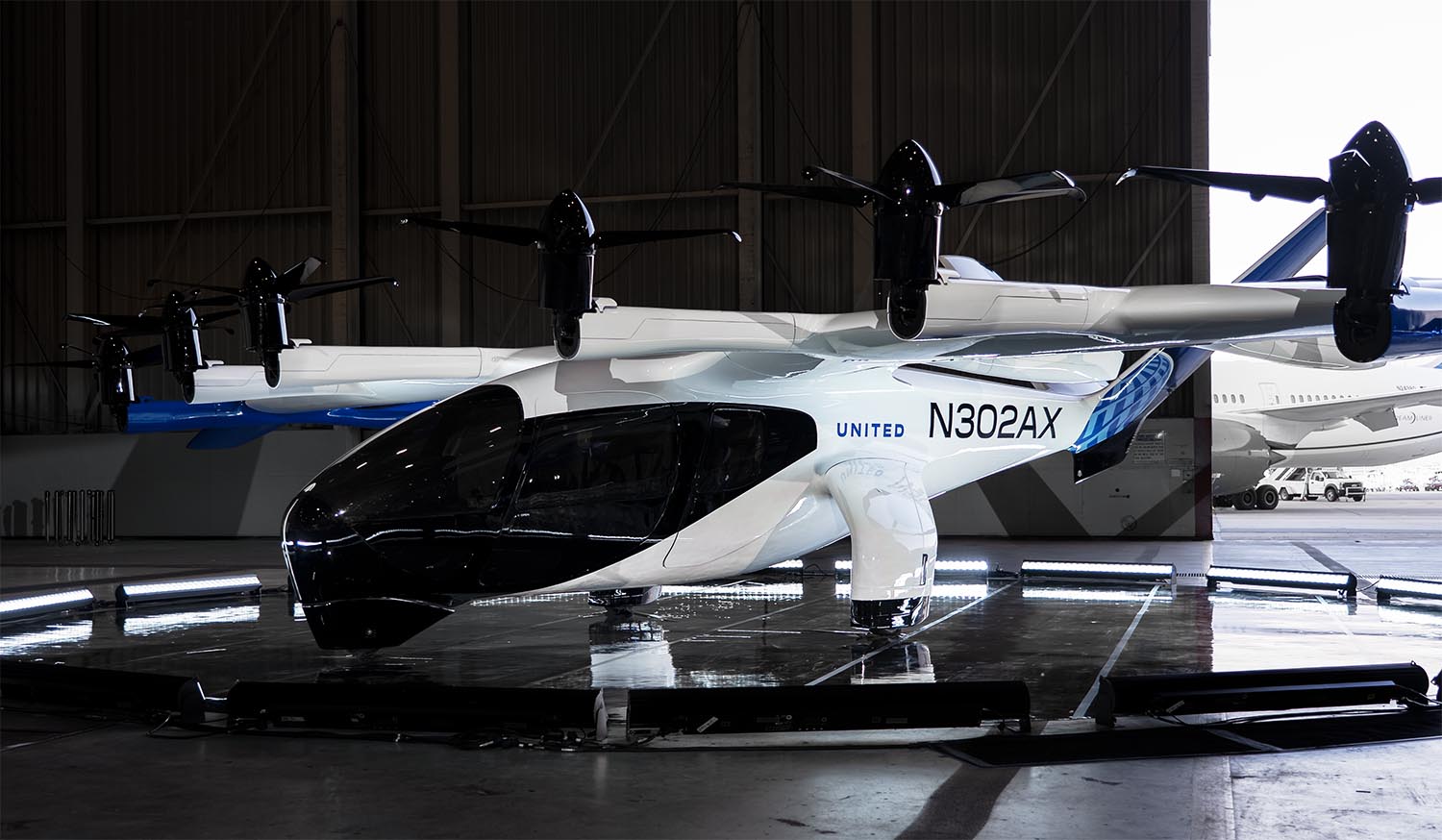
The Federal Aviation Administration has approved eight pilot projects aimed at accelerating testing of electric air taxi technologies in the United States, allowing developers to conduct operational trials ahead of full aircraft certification.
The initiative, called the Advanced Air Mobility and Electric Vertical Takeoff and Landing Integration Pilot Program, will allow companies such as Archer Aviation, Beta Technologies and Joby Aviation to begin expanded testing of their electric vertical take-off and landing (eVTOL) aircraft this summer.
The program is overseen by the FAA, which reports to the US Department of Transportation. The initiative is intended to enable companies to test operational procedures and flight concepts before completing the lengthy FAA certification process, which typically takes several years and costs hundreds of millions of dollars.
The program was created following an executive order issued by former US President Donald Trump last year to accelerate the development of advanced air mobility technologies.
Although the program focuses on eVTOL aircraft, it also includes electric short takeoff and landing (eSTOL) aircraft and other electric or hybrid-electric regional aircraft capable of operating from short or conventional runways.
“This is the clearest sign yet from the White House, the FAA and the DOT that bringing air taxis to market in the United States is a real priority,” said Adam Goldstein. “We appreciate Secretary Duffy and Administrator Bedford’s leadership and are excited to bring Midnight to the skies of some of America’s largest cities.”
According to Archer, the initiative will enable companies to work closely with federal agencies, state governments and local authorities to test real-world operations and develop a roadmap for scaling air taxi services nationwide.
Kyle Clark said participation in the program could accelerate development timelines.
“Being selected for the programme would enable the company to commence flight operations a year earlier than originally planned,” Clark said.
The FAA received more than 30 applications for the initiative but approved eight projects. Unlike traditional testing programmes led by manufacturers, the approved projects are coordinated by local or regional authorities.
For example, the Port Authority of New York and New Jersey is working with Archer Aviation, Beta Technologies, Joby Aviation and Electra.aero to test multiple operational concepts, including potential operations from a Manhattan helipad.
Another project led by the Pennsylvania Department of Transportation in partnership with the National Association of State Aviation Officials will examine regional air mobility services across 13 states, including routes similar to those supported under the Essential Air Service.
Additional projects will be coordinated by the states of Florida, Louisiana, North Carolina, Texas and Utah, as well as the city of Albuquerque.
In total, the initiative covers projects across 26 U.S. states and includes testing of multiple use cases such as urban air taxi services, regional passenger flights, emergency medical operations, offshore transport and cargo logistics, involving both piloted and autonomous aircraft operations.