
Satisfaction among electric vehicle (EV) drivers in Germany, Austria, and Switzerland has improved notably, according to the latest USCALE EV Satisfaction Study 2025. The survey, conducted in May among 5,004 EV drivers, found that the Net Promoter Score (NPS)—a measure of customer willingness to recommend a product—rose to 33 points, up from 24 a year earlier.
The study attributes the rise in satisfaction to significant improvements in vehicle range and charging speed. Fifty percent of respondents now report a real-world summer driving range exceeding 400 kilometers (249 miles), a 38% increase compared to 2024. Additionally, 75% of EVs are now capable of DC fast charging at 150 kW or more, up from 61% last year.
See also: Study Shows EV Owners Face Longer Waits for Dealership Service, Despite Overall Satisfaction
Despite these gains, charging reliability and digital integration continue to lag. About 73% of drivers reported charging-related issues, such as failed starts or interrupted sessions. Software and app-related problems remain widespread, with 46% of respondents citing poor app performance, though this marks an improvement from the 54% who reported such issues in 2024.
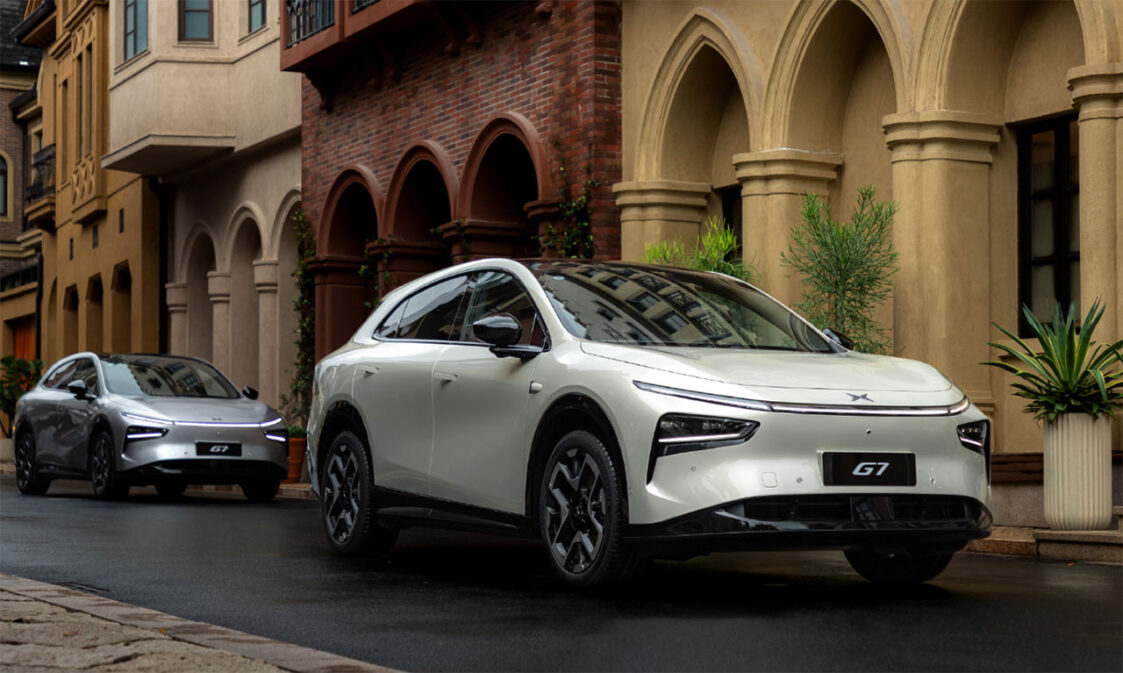
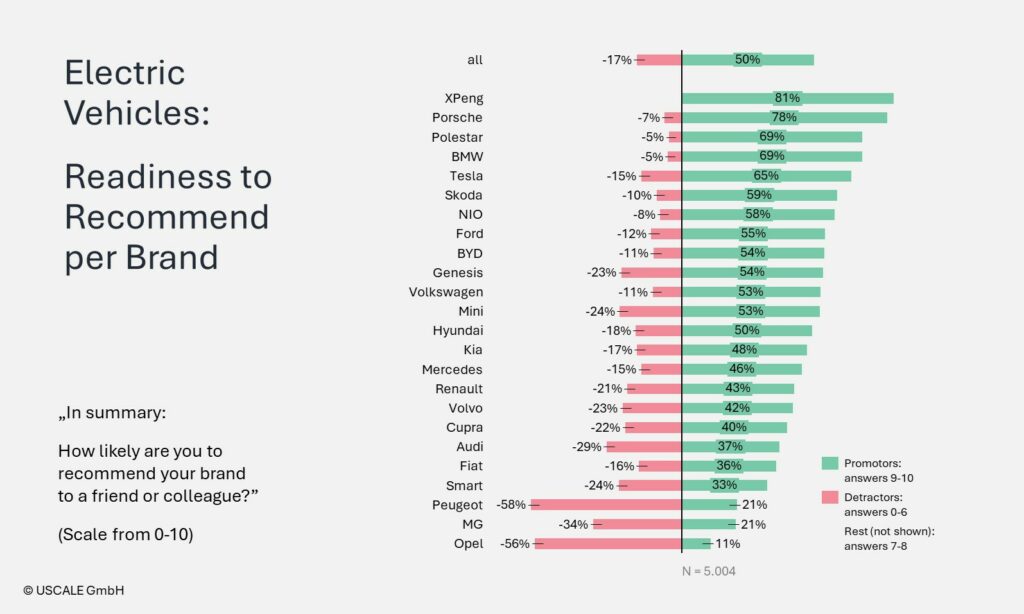
Brand performance varied widely. Chinese automaker Xpeng emerged as the top-rated brand in terms of customer recommendation, overtaking Tesla for the first time. Tesla’s decline was attributed in part to reduced charging performance and reputational concerns.
See also: American Interest in Electric Vehicles Declines as Hybrids Gain Momentum – Study

Ford’s new Explorer received positive marks for range and charging, while NIO was praised for its user interface and software. In contrast, Stellantis brands, MG, and Smart performed poorly in key areas such as connectivity and app reliability.
Volkswagen, Mercedes, BMW, and Hyundai showed mixed results, with strengths in some technical aspects but persistent weaknesses in software and route planning. Renault, Mini, and Audi recorded incremental improvements, while Fiat, Cupra, and Volvo continue to face challenges in user experience and efficiency.