
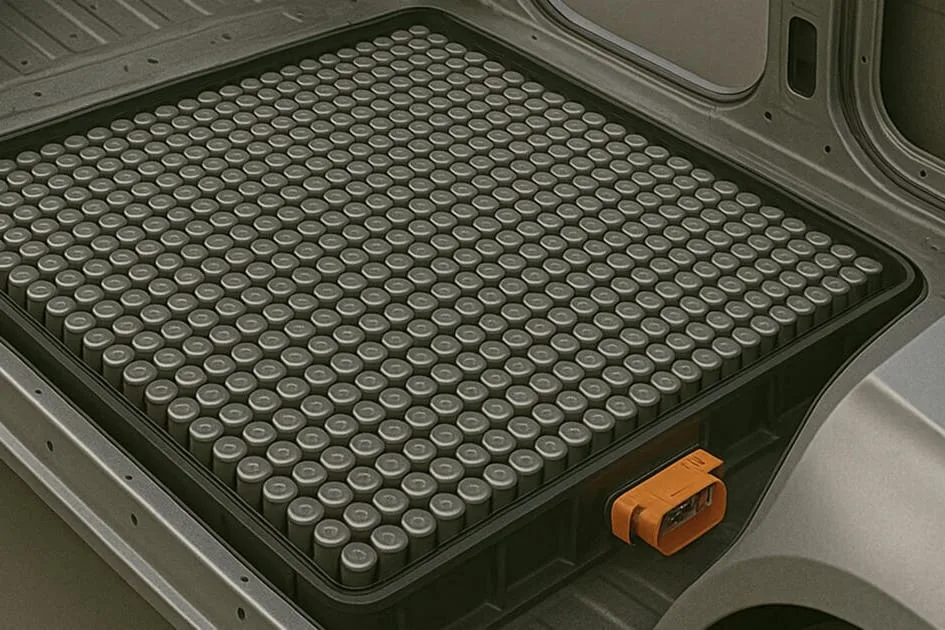
RWTH Aachen University’s Chair of Production Engineering of E-Mobility Components (PEM) is working with several European and international partners to develop next-generation battery packs under the Horizon Europe-funded project ‘RESiLiTE’. The initiative, supported with around €6.2 million in EU funding, aims to improve the energy density, efficiency, safety, temperature resistance and sustainability of batteries used in electric vehicles and future electric aircraft.
Project partners include Turkish electric car manufacturer Togg, semiconductor group Infineon Austria and the Fraunhofer Institutes EMI and LBF. The research is centred on a cell-to-pack approach using cylindrical 4695-format cells densely integrated into a lightweight housing made from recycled fibre-reinforced thermoplastics. “A cell holder structurally integrated into the housing makes it possible to completely dispense with casting materials,” said PEM director Prof. Achim Kampker.
The concept is designed to reach an energy density of 220 Wh/kg at the pack level — about 14% above current benchmarks, according to Kampker. Combined indirect cooling solutions built into the cell holders are expected to support charging and discharging rates of more than 4.5 C. Safety measures include a soft ventilation concept and the use of fire-retardant nanomaterials.
Energy efficiency is another target. “The use of thermoplastic materials for the housing provides additional insulation for the battery pack, resulting in a longer service life in cold environments before active heating solutions are required,” said PEM management member Prof. Heiner Heimes. The RESiLiTE project, whose acronym stands for Robust, Economical, Silicon-rich, Lightweight, and Thermally Efficient battery packs, will run until June 2028.