
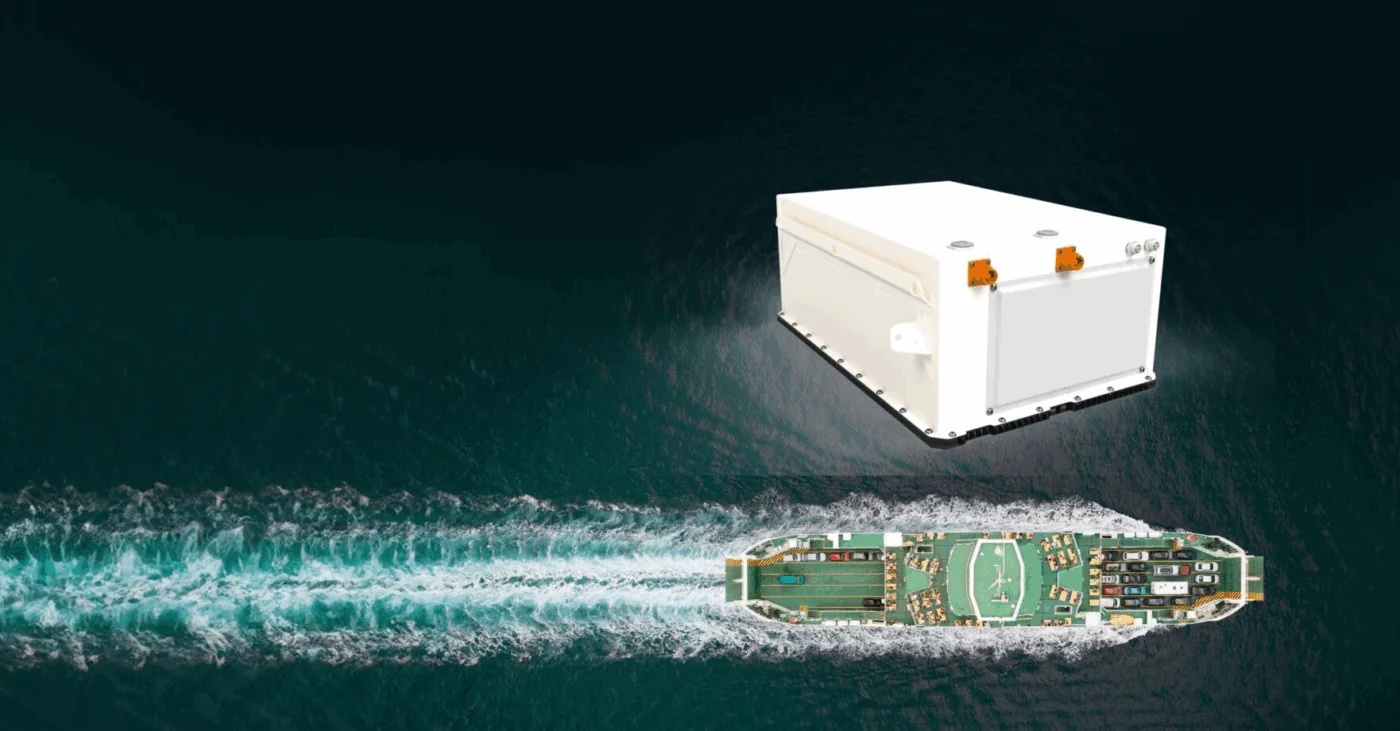
Dutch battery system specialist EST-Floattech has launched new lithium iron phosphate (LFP) battery modules as part of its Octopus Series, targeting large-scale energy storage for the maritime sector. The addition aims to broaden the company’s offerings for hybrid and electric vessels amid rising interest in LFP technology.
Each Octopus LFP module offers a nominal voltage of 52 V and a capacity of 233 Ah. The modules are designed for scalable integration into battery systems with capacities of several megawatt-hours. EST-Floattech says the system is fully compatible with its existing Octopus Series Battery Management System (BMS).
“By introducing LFP to our Octopus Series, we empower shipbuilders and operators with even more choice,” said Mark Witjens, CEO of EST-Floattech. “LFP gives us the ability to serve applications with a high energy capacity demand and long discharge and charge cycles with a robust, safe, and cost-effective solution—without compromising on our commitment to reliability and quality.”
The Rotterdam-based firm produces batteries for inland vessels, ferries, and yachts, and develops its battery management solutions in-house. Its growing LFP lineup reflects a broader industry trend toward safer and lower-cost battery chemistries.
The company was involved in converting multiple inland vessels in 2022, supplying a 504 kWh battery container for the task. More recently, UK-based Coastal Workboats selected EST-Floattech to equip the UK’s first commercial electric workboat, the E-LUV, with a 2,400 kWh Octopus High Energy system.
LFP batteries are gaining traction in both the automotive and maritime sectors, thanks to their thermal stability, affordability, and sufficient energy density. “The development of LFP is the logical step for EST-Floattech to cater to the growing demand for different chemistries by shipyards and shipowners,” Witjens added.