
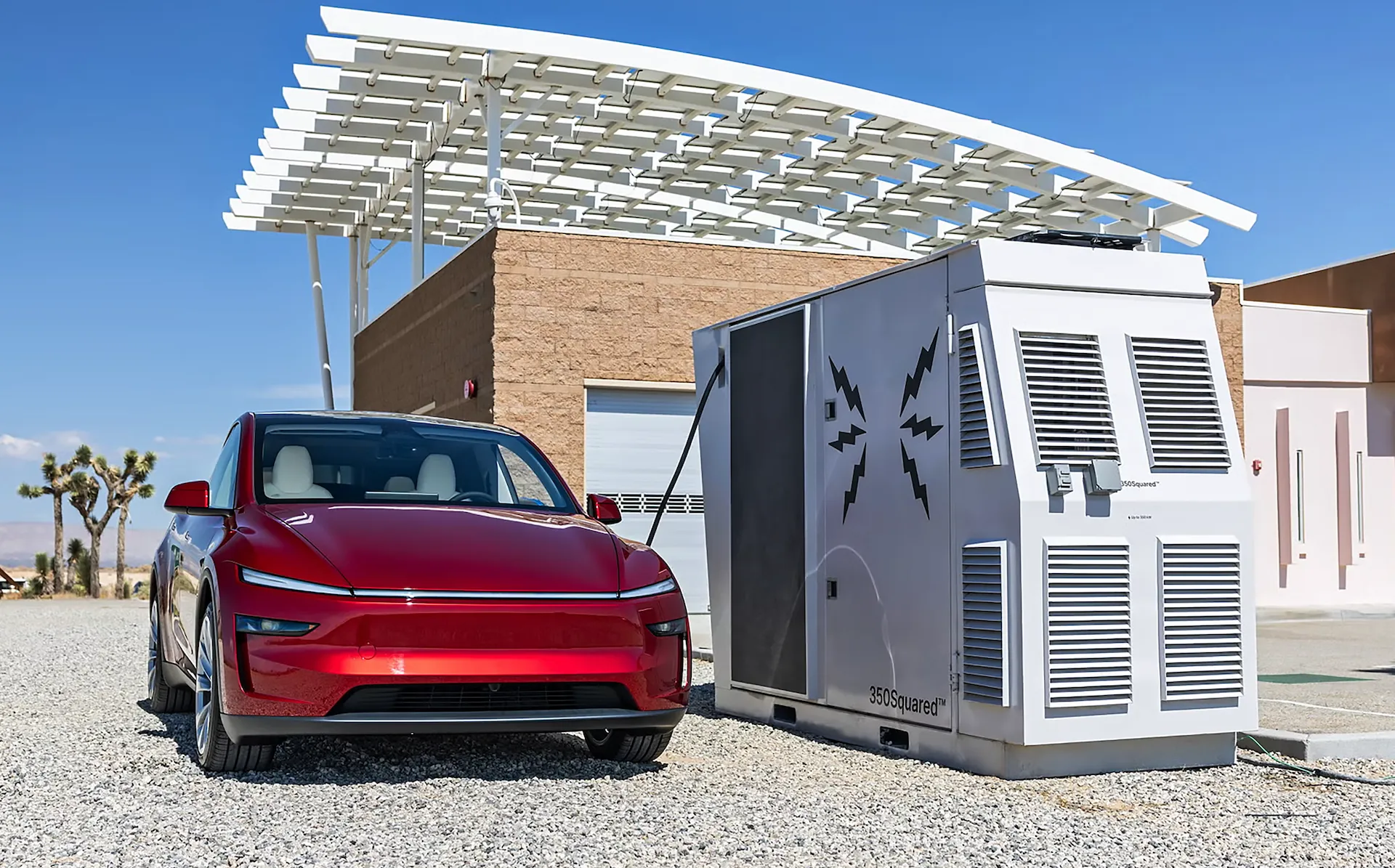
U.S. startup ElectricFish Energy on Tuesday unveiled a battery-powered fast charging platform at CES 2026, positioning the system as a way to overcome grid constraints that have slowed the deployment of electric vehicle charging infrastructure.
The company’s Turbo Charge service combines a fast charger with a built-in battery and artificial intelligence-driven energy management software, enabling charging power of up to 400 kilowatts while relying on grid connections as small as 30 kW. ElectricFish said the approach allows charging sites to be installed in four to six weeks, compared with 12 to 18 months for conventional direct-current fast chargers that often require major utility upgrades.
See also: Emobi and ElectricFish Partner to Advance Grid-Independent EV Charging Solutions
ElectricFish’s system uses a 400 kWh lithium iron phosphate battery that supplies energy directly to vehicles, drawing power from the grid gradually and storing it on site. The company said this reduces both installation costs and delays, which can exceed $150,000 per charger in grid upgrade expenses alone.
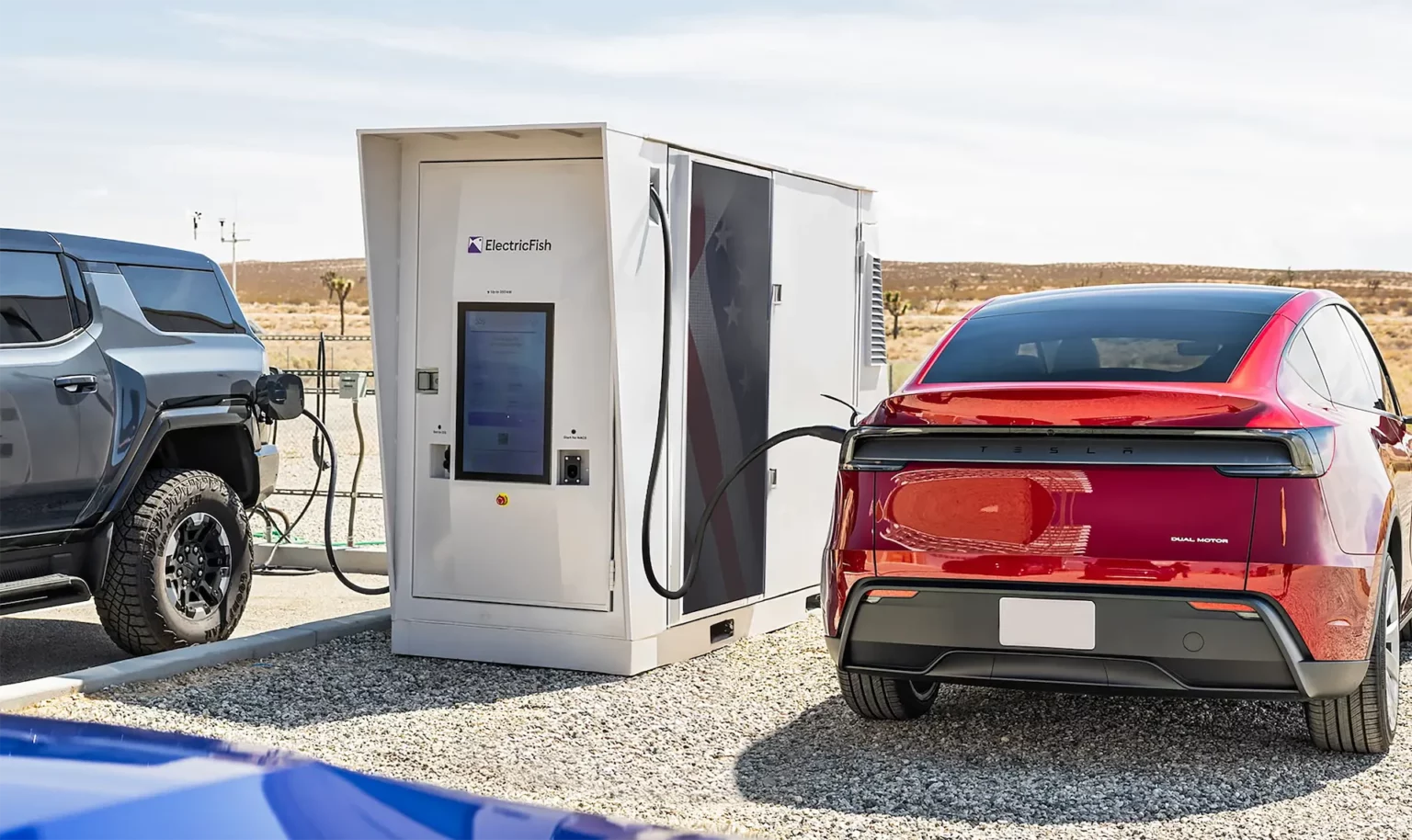
“Gas stations are built for short dwell times and high turnover,” said Anurag Kamal, chief executive and co-founder of ElectricFish. “We designed our new Turbo Charge service to behave like a pump, not a parking space.”
See also: XCharge North America, Energy Plus Plan Battery-Backed EV Charging Hub in New York City
The company is targeting gas stations and high-throughput locations with a revenue-sharing business model, under which site operators provide space and a modest electrical connection, while ElectricFish installs, owns and maintains the equipment and shares charging revenue.
ElectricFish said the platform has been validated through extended testing with Hyundai Motor at its California Proving Ground. During multi-month trials, the system delivered more than 1,100 kilowatt-hours of energy across 37 charging sessions, achieving peak output of 313 kW in triple-digit Fahrenheit temperatures.
See also: Arnold Clark Charge Claims Scotland’s Largest Ultra-Rapid EV Charging Network
“ElectricFish allowed us to fast charge without costly electrical infrastructure upgrades, and installation is quick and simple,” said Dean Vivo Amore, a senior engineer at Hyundai. He added that the system demonstrated stable performance under extreme heat conditions.
The company’s first commercial deployment is now operating in Detroit’s Eastern Market district as part of the Toyota Mobility Foundation’s Sustainable Cities Challenge. The site supports both fleet operations and public fast charging in an area with heavy logistics activity.
See also: Allego Opens Belgium’s Largest Fast-Charging Hub at Mechelen Retail Park
ElectricFish said each charging unit functions as a distributed energy resource, capable of absorbing power during off-peak periods and feeding energy back to the grid during times of high demand. This model aligns with recent U.S. policy initiatives encouraging grid-connected storage and distributed energy resources, including federal and state-level programs to expand electric vehicle infrastructure.
“We don’t sell EV chargers or batteries; we sell time and uptime,” said Nelio Batista, chief technology officer and co-founder of ElectricFish. “By actively managing when energy flows in or out, fast charging can strengthen the grid instead of destabilising it.”
See also: Fastned Passes 400 Fast-Charging Sites as European Network Expansion Accelerates
ElectricFish is headquartered in San Carlos, California, and said it is in discussions with manufacturers in Michigan as it looks to scale production and expand deployments across the United States.