
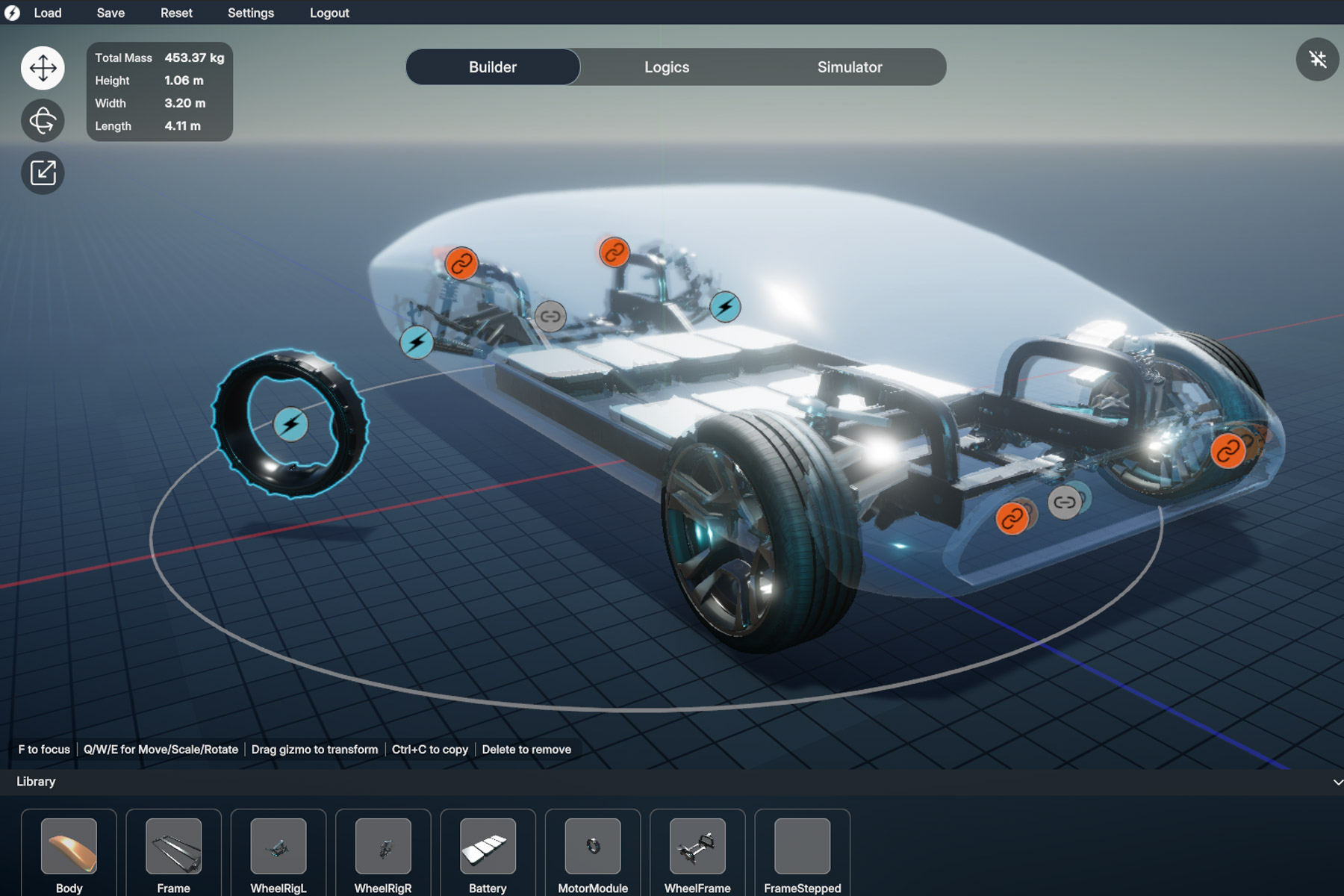
Finnish technology company Donut Lab has introduced DonutOS, a new software platform designed to transform how electric vehicles are conceived, engineered and brought to market. The company, now a subsidiary of electric motorcycle manufacturer Verge Motorcycles, said the platform integrates virtual modelling with real-world vehicle behaviour to create what it calls “Digital Twin 2.0.”
Donut Lab is widely known for its Donut Motor — a hub motor integrated into the wheel rim and used in the Verge TS Pro — which gives the motorcycle its distinctive hollow rear-wheel appearance. Earlier this year, the company unveiled a 630-kW version of the motor for use in cars and other vehicle types. With DonutOS, the company is now extending its ambitions beyond two-wheelers to the broader electric mobility sector.
According to Donut Lab, DonutOS consolidates the full EV development process into a single software environment, addressing what it describes as longstanding fragmentation in vehicle engineering. “Automotive development has long been constrained by fragmented tools and slow physical prototyping. As electric vehicles have evolved into complex, software-driven systems, these challenges have only grown,” the company said in its announcement.
The platform allows teams to design, simulate, validate and refine entire vehicle systems before hardware exists, replacing the traditional sequence of physical prototypes, lab tests, track validation and software integration. Donut Lab says this integrated workflow could shorten development cycles from years to “months or even weeks,” reducing costs for established manufacturers and lowering the barrier to entry for startups. “Startups without large engineering teams can now design vehicles with the complexity of major OEMs,” the company added.
DonutOS’s Digital Twin 2.0 concept aims to model complete vehicle behaviour instead of isolated components. The company says it creates an “interactive, virtual vehicle” where systems, sensors, controls and data flows are fully mapped, allowing engineers to test responses to environmental conditions and sensor inputs before a prototype is built.
“DonutOS empowers manufacturers to develop the entire vehicle—hardware, software, and behaviour—as a single digital entity. Our goal is to enable smaller mobility companies to innovate faster, even without the resources of large OEMs,” said Marko Lehtimäki, CEO of Donut Lab. “Innovation shouldn’t be limited by size. With DonutOS, we’re levelling the playing field and making advanced development tools accessible to all.”
While DonutOS is not yet publicly available, Donut Lab said it will announce a release date later. To begin rolling out the technology, the company has launched a Global Innovators Program offering early-stage EV companies access to DonutOS, technical support and preferential pricing for low-volume production.