

China will step up efforts to achieve breakthroughs in all-solid-state batteries and high-level autonomous driving while expanding automotive consumption, the country’s industry ministry said following a high-level policy meeting on the development of the new energy vehicle sector.
The plans were outlined after a Jan. 13 inter-ministerial work meeting in Beijing focused on energy conservation and the NEV industry, chaired by Li Lecheng, Party Secretary and Minister of the Ministry of Industry and Information Technology, according to a report by Sina.
See also: China Opens Public Consultation on National Solid-State Battery Standard
Officials described 2026 as the opening year of China’s 15th Five-Year Plan and said the intelligent and connected NEV sector was entering a key period of opportunity. The ministry called for stronger coordination among government agencies and closer alignment between industrial planning, energy systems and infrastructure development to support high-quality growth.
A central focus will be strengthening domestic supply chains and technological self-reliance. MIIT said it would launch a new round of industry-chain development actions, prioritising advances in strategic products, core materials and key software. All-solid-state batteries and high-level autonomous driving technologies were explicitly identified as targets for accelerated progress.
See also: China to Enforce Mandatory EV Energy Standard From 2026, Setting 15.1 kWh/100 km Limit
Chinese automakers and suppliers are already intensifying work on solid-state batteries, moving from laboratory research to pilot production. Companies including Dongfeng, Chery, Sunwoda and SAIC are developing prototypes with higher energy densities and longer ranges, supported by pilot production lines and partnerships across cathode and electrolyte materials, as the industry seeks to commercialise next-generation battery technologies.
Automakers are also advancing conditionally autonomous driving. Manufacturers such as BYD, Xpeng, Li Auto, Changan Deepal and Arcfox have received permits to test Level 3 autonomous vehicles on designated roads, collecting real-world data to refine vehicle intelligence and connectivity. MIIT has approved market access for an initial batch of L3 models, positioning 2026 as a potential milestone year for limited commercial deployment.
See also: China to Extend Auto Trade-In Subsidies Into 2026 With Revised Incentive Structure
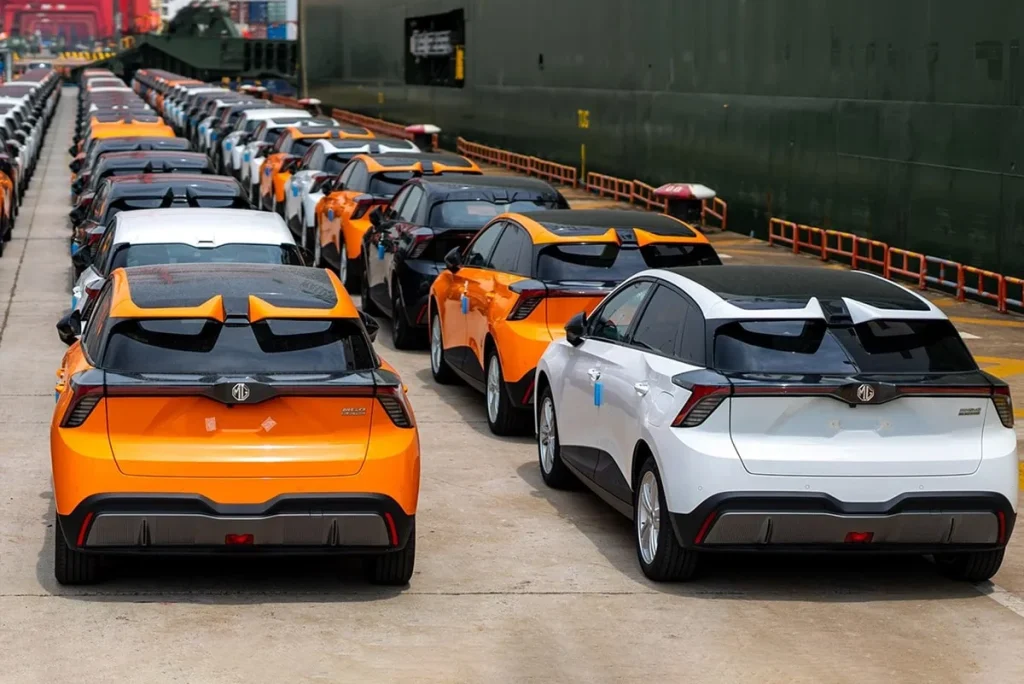
On the demand side, the ministry said it would further expand vehicle consumption through measures including trade-in programmes, increased adoption of new-energy heavy trucks, reforms to NEV insurance and policies aimed at unlocking more diverse consumer demand. The goal is to smooth vehicle replacement cycles and encourage wider uptake of electrified and intelligent vehicles.
The ministry also stressed the need to maintain a fair and competitive market environment, strengthen price monitoring and cost investigations, and enhance product quality and conformity checks. Internationally, officials said China would continue to support trade, investment and technology cooperation while managing risks associated with overseas expansion and promoting orderly global development by Chinese companies.