




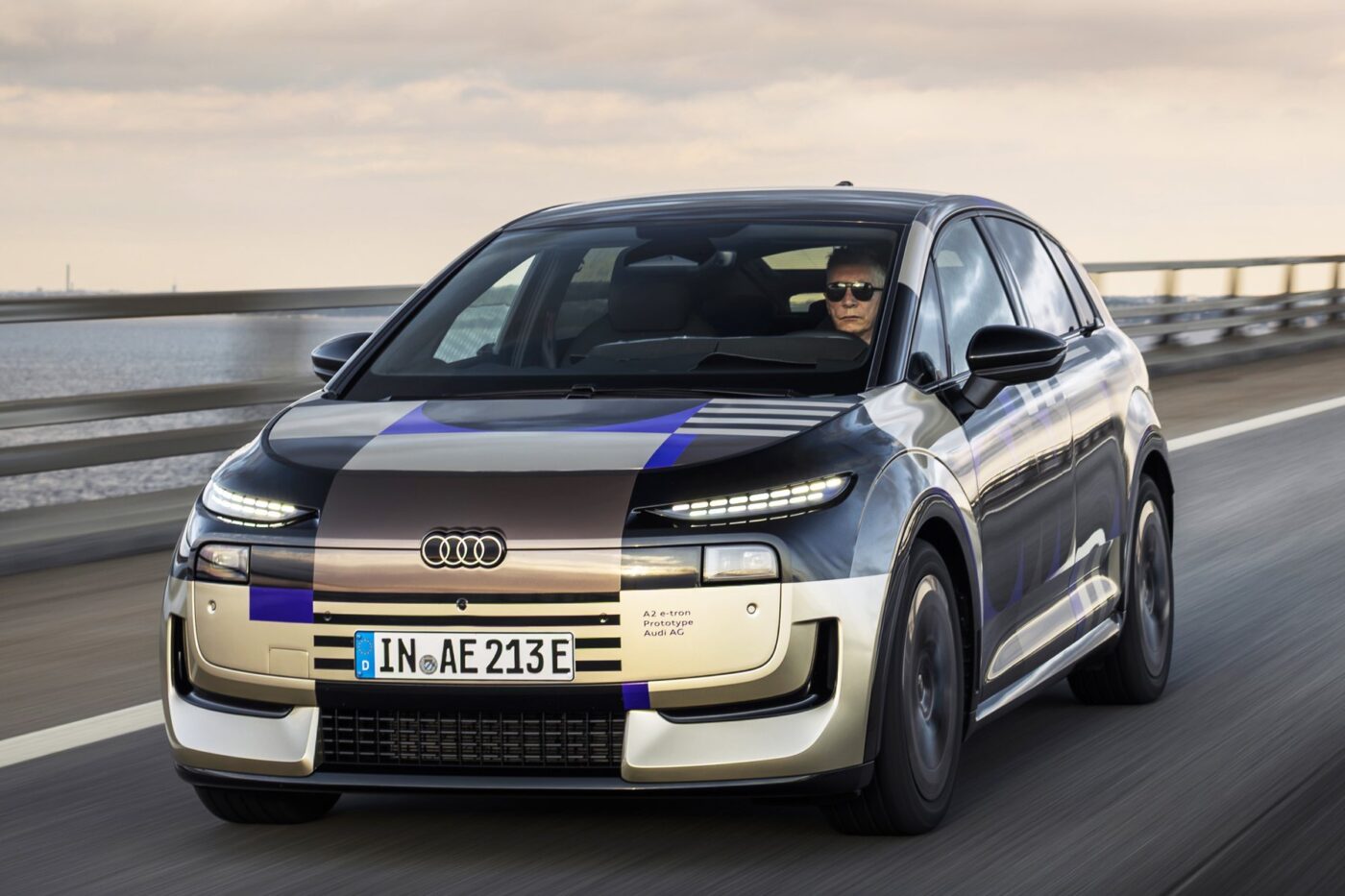
Audi has released additional technical details of the upcoming A2 e-tron ahead of its global debut this autumn, outlining the electric hatchback’s battery specifications, drivetrain, efficiency and charging performance.
The latest preview also provides a clearer look at the exterior design, with most of the camouflage removed ahead of the model’s official unveiling.
Efficiency-Focused Electric Hatchback
Audi said the A2 e-tron has been developed with a strong emphasis on efficiency, combining low energy consumption with competitive driving range.
The manufacturer confirmed that the 140kW version equipped with the optional Efficiency Package will feature a 61kWh lithium iron phosphate (LFP) battery, providing 58kWh of usable capacity.
Power comes from the Volkswagen Group’s APP350 electric motor, which is already used in several MEB-based models, including the Volkswagen ID.3, Cupra Born and vehicles from Škoda.
According to Audi, the configuration delivers provisional energy consumption of 12.8kWh per 100 kilometres. While an official WLTP range has not yet been announced, the company indicated the model is expected to achieve approximately 450 kilometres on a single charge.
Multiple Variants Planned
The A2 e-tron will be offered with four power outputs: 125kW, 140kW, 170kW and 240kW.
Audi said larger battery options will also be available, increasing the maximum driving range to as much as 649 kilometres depending on the chosen configuration.
The entry-level 125kW model will start at €38,200.
Charging Performance
The 140kW variant supports DC fast charging at up to 105kW.
Audi said the battery can be charged from 10% to 80% in approximately 26 minutes, adding that the charging curve has been optimised to maintain consistent charging performance throughout the session.
Aerodynamic Design
To improve efficiency, the A2 e-tron has been designed with a drag coefficient of 0.24, the lowest of any compact Audi model.
The exterior incorporates a rounded front end, sloping roofline and sharply defined rear profile, alongside aerodynamic features including Air Curtains, Gap Reducers and Gap Breathers to minimise airflow turbulence around the vehicle.
Robby Pyttel, Audi’s engineer responsible for aerodynamics and aeroacoustics development, said each aerodynamic element was designed to improve efficiency while remaining integrated into the vehicle’s overall styling.
Built on the MEB Platform
The A2 e-tron is based on the updated MEB platform used across Volkswagen Group’s compact and midsize electric vehicle range rather than the smaller MEB+ architecture planned for future entry-level electric models.
Audi Chief Executive Officer Gernot Döllner said the new model builds on the legacy of the original A2 by prioritising efficiency while meeting the expectations of today’s electric vehicle customers.
The Audi A2 e-tron is scheduled to make its world premiere later this autumn, with sales expected to begin following its official launch.


