
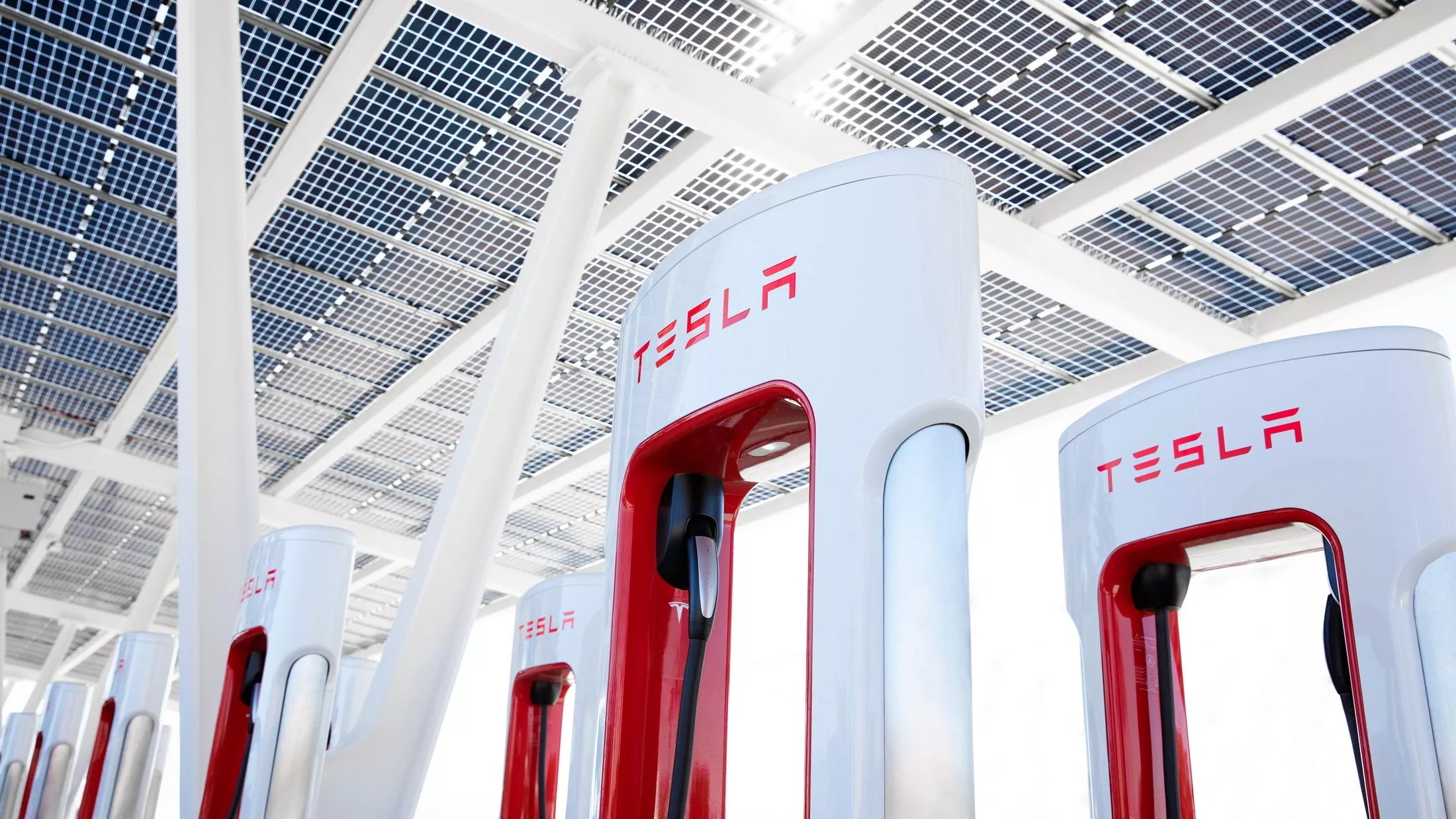
China’s National Development and Reform Commission (NDRC) has issued new regulations requiring high-power charging (HPC) networks—often referred to as “supercharger” stations—built by electric vehicle (EV) manufacturers to be accessible to all brands, marking a significant policy shift in the country’s rapidly expanding EV infrastructure landscape.
The directive, issued by the General Office of the NDRC, targets proprietary charging networks operated by leading automakers such as Tesla, Li Auto, BYD, and members of the Harmony Intelligent Mobility Alliance (HIMA). These networks, which have until now largely served brand-exclusive users, must now be opened to all battery-electric vehicles (BEVs) without preferential treatment or pricing.
“The network of high-power charging facilities built by new energy vehicle companies should, in principle, be opened up without distinction,” the NDRC stated in its notice. The agency also called on charge point operators to “strengthen the internationalization of high-power charging standards and promote the coordinated development of domestic and international charging standards.”
Currently, many supercharging networks in China operate with restricted or brand-biased access. Tesla, for example, allows non-Tesla vehicles to charge but imposes higher fees and parking fines, while Li Auto’s chargers are limited to the company’s own BEV models. BYD’s recently introduced megawatt chargers are also not yet accessible to third-party EVs. Only a few networks—such as those operated by NIO, Xpeng, and Zeekr—currently allow open access, though with varying terms on discounts and benefits.
The new regulation is part of a broader strategy to accelerate deployment and standardization of high-power charging across the country. China plans to build more than 100,000 HPC hubs by the end of 2027, with a focus on expanding infrastructure at highway service areas and integrating charging with retail and commercial amenities. The policy also includes provisions to reduce inefficiencies and redundancy in charging station construction and operation.
If fully implemented, the regulation is expected to reshape how leading EV brands operate their fast-charging networks, enhancing interoperability and competition while benefiting end users through greater convenience and lower charging costs.
Source: chinaevhome.com, ndrc.gov.cn