
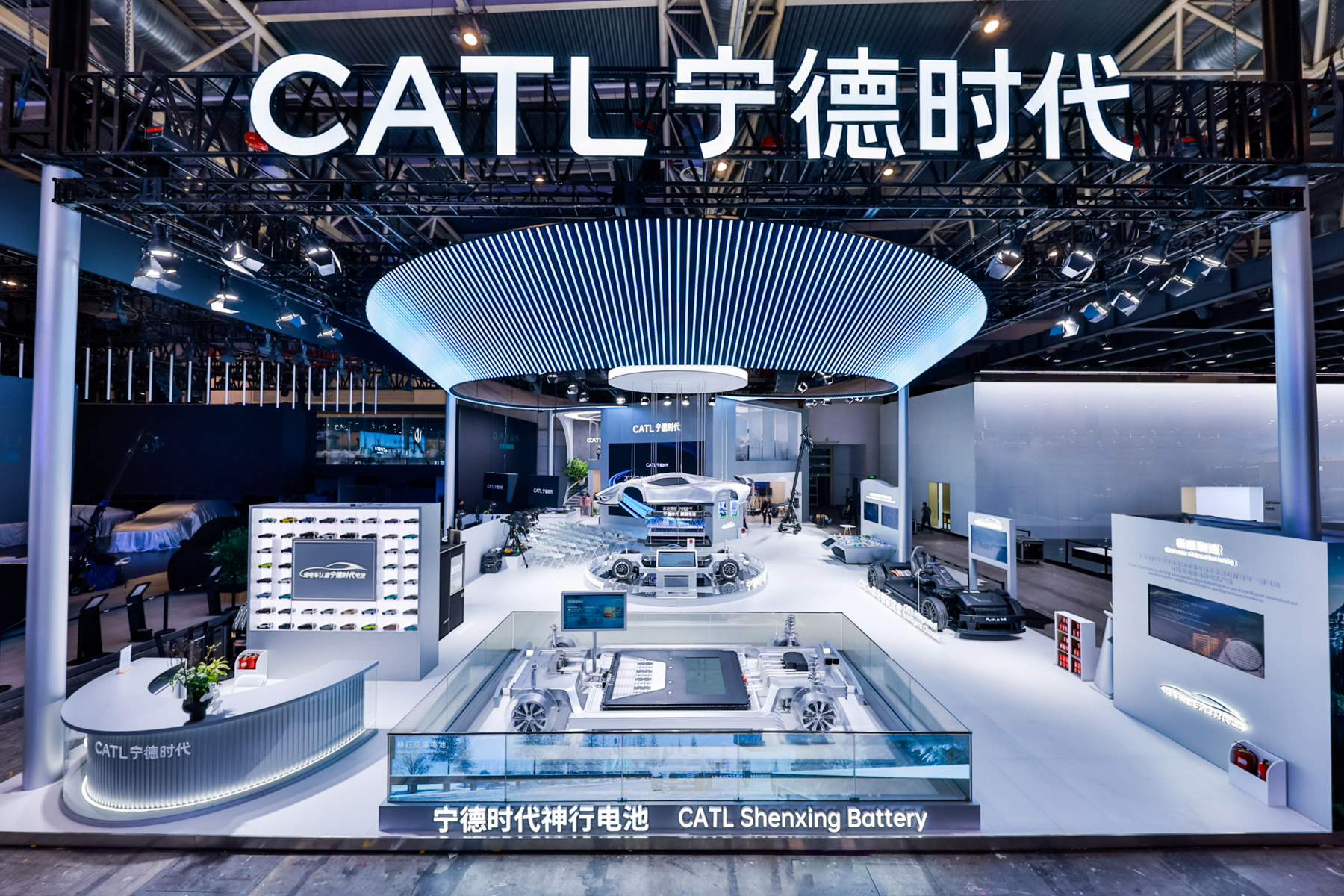
CATL, the world’s largest electric vehicle battery manufacturer, has made its first investment in the nuclear fusion sector by leading a seed funding round for Chinese startup Beta Fusion, signaling a strategic expansion into one of the most closely watched future energy technologies.
According to Chinese media reports citing people familiar with the transaction, the funding round was worth several hundred million yuan. The investment marks CATL’s debut in the nuclear fusion industry as the company continues to broaden its ambitions beyond battery manufacturing and energy storage.
Fusion Startup Targets Commercial Power Generation
Beta Fusion was established in December 2025 and focuses on the commercialization of controlled nuclear fusion technology.
The company is led by founder and Chief Executive Officer Cao Zhiping, a Chinese scientist specializing in field reversed configuration (FRC) fusion technology. The startup’s technical team includes researchers and engineers from several of China’s leading fusion research institutions and national scientific projects.
Beta Fusion aims to develop fusion systems capable of delivering between 50 MW and 100 MW of grid-connected electricity within the next six to eight years.
The company is pursuing the FRC fusion approach, a technology pathway also being developed by US-based fusion company Helion Energy.
Industry observers consider the FRC route one of the most ambitious approaches to commercial fusion, offering the potential for faster deployment but carrying higher technological risks compared with more established fusion concepts.
Growing Interest in Fusion Energy
Nuclear fusion has attracted increasing attention from governments, investors and technology companies because of its potential to provide abundant carbon-free electricity using widely available fuel sources.
Unlike conventional nuclear fission, fusion generates energy by combining atomic nuclei and is viewed as a long-term solution for producing large amounts of clean baseload power with minimal emissions.
China has identified fusion energy as a strategic technology area and included it within its long-term national development priorities.
The technology is also drawing renewed interest from the technology sector as artificial intelligence, cloud computing and hyperscale data centers drive rapid growth in electricity demand worldwide.
Strategic Expansion Beyond Batteries
For CATL, the investment aligns with its broader vision of evolving from a battery manufacturer into a comprehensive clean energy company.
Founder and Chairman Robin Zeng has previously stated that energy generation, storage and grid management could become significantly larger business opportunities than electric vehicle batteries over the long term.
The company has increasingly invested in energy storage systems, zero-carbon energy infrastructure and grid-related technologies as part of that strategy.
Fusion energy could eventually complement CATL’s existing energy storage and battery businesses by providing large-scale clean electricity generation for industrial users, utilities and data centers.
Following a Broader Industry Trend
CATL is not the first Chinese new energy company to back nuclear fusion technology.
In 2023, electric vehicle manufacturer Nio invested 995 million yuan in fusion startup Neo Fusion, acquiring a 19.9% stake in the company.
The growing involvement of EV and battery companies reflects increasing recognition that future energy demand will require solutions extending beyond transportation electrification alone.
Strong Financial Position Supports New Investments
CATL enters the fusion sector from a position of financial strength.
The company reported first-quarter 2026 revenue of 129.13 billion yuan, representing a year-on-year increase of 52.45%. Net profit attributable to shareholders rose 48.52% to 20.74 billion yuan during the same period.
CATL also maintained its dominant position in China’s battery market. According to industry data, the company installed 33.08 GWh of batteries in May, accounting for a 46.14% share of the country’s power battery market.
While commercial fusion power remains years away from large-scale deployment, CATL’s investment in Beta Fusion highlights growing confidence among major industrial players that fusion technology could become an important part of the future global energy mix.
As demand for clean electricity continues to rise, particularly from AI infrastructure and energy-intensive industries, investments in advanced energy technologies are expected to play an increasingly important role in shaping long-term energy strategies.