



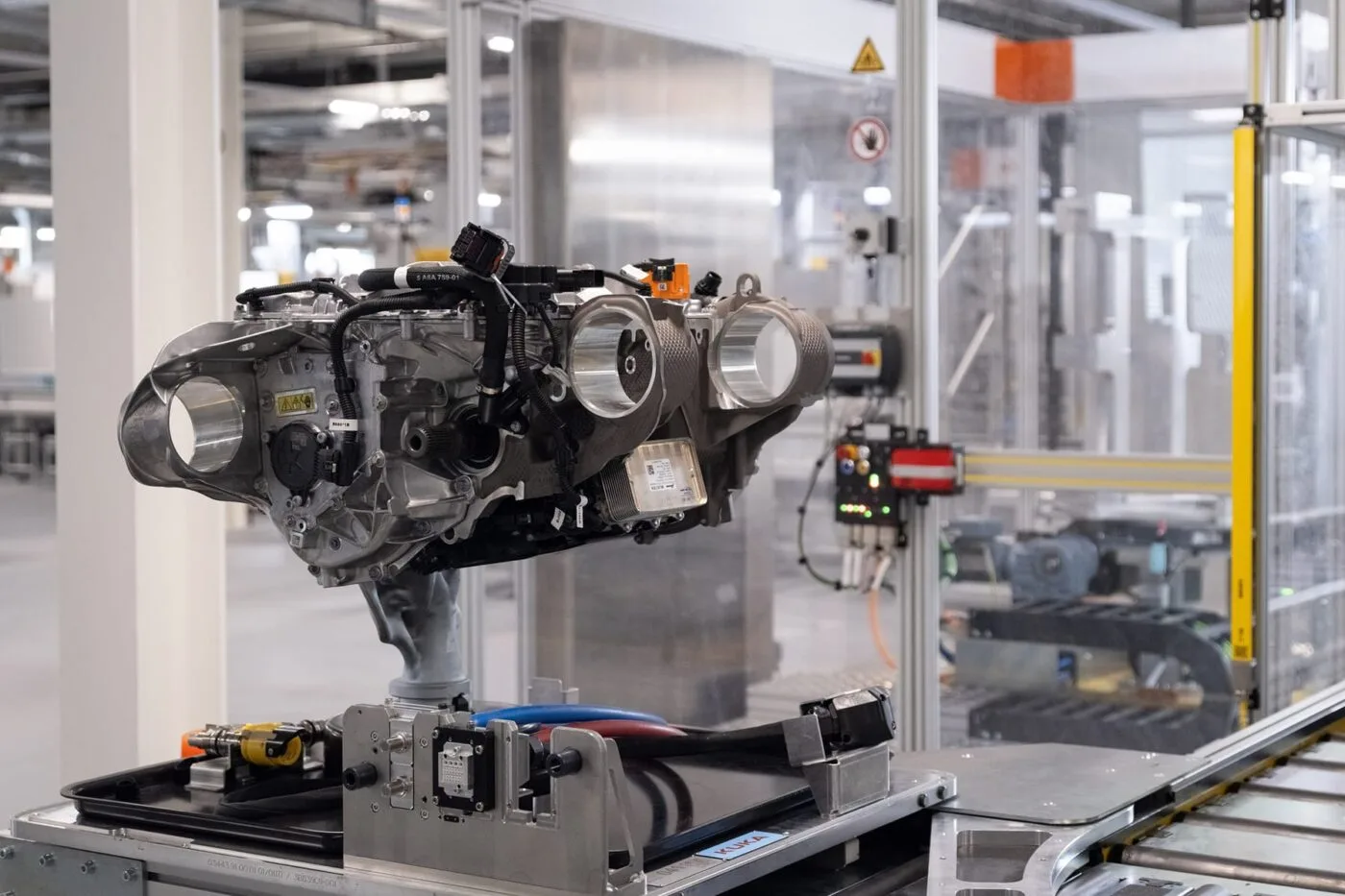
BMW has begun series production of its sixth-generation (Gen6) electric drive systems at its Steyr plant in Austria, which will power the upcoming ‘Neue Klasse’ range of electric vehicles.
The drives use current-excited synchronous machine (SSM) technology without permanent magnets and incorporate 800-volt system voltage and silicon carbide (SiC) semiconductors for improved efficiency. Production involves a largely Austrian supply chain, with rotors, stators and inverters made in Steyr, electrical steel supplied by Voestalpine in Linz, and aluminium housings produced at BMW’s Landshut foundry.
BMW has set up two new assembly lines in Steyr, employing 1,000 people, and introduced in-house inverter manufacturing for the first time, with a clean room environment for production. “The overall production concept for the Gen6 e-drive follows the principle of a modular system, making it possible to produce different highly flexible electric drive train derivatives for the entire range of Neue Klasse models,” the company said, adding that the approach will deliver economies of scale and cost savings.
BMW said the Gen6 drives will improve efficiency, reduce weight and cut costs compared to the current generation. Martin Kaufmann, Head of Global Drive Development, said the future iX3 xDrive 50 will see “energy loss reduced by 40 percent, costs by 20 percent and weight by 10 percent,” contributing to an estimated 20% increase in vehicle efficiency and a WLTP range of up to 800 km.
“Today, we are laying the foundations for the future of the BMW Group,” said Milan Nedeljković, BMW Board Member for Production. “As the first production site for the Gen6 electric drive, Plant Steyr is central to the Neue Klasse and the continued development of our global production network.”


