



Altilium has filed its 10th UK patent application, covering a proprietary process to produce key battery intermediates—including nickel mixed hydroxide precipitate (MHP)—from recycled materials, the company said.
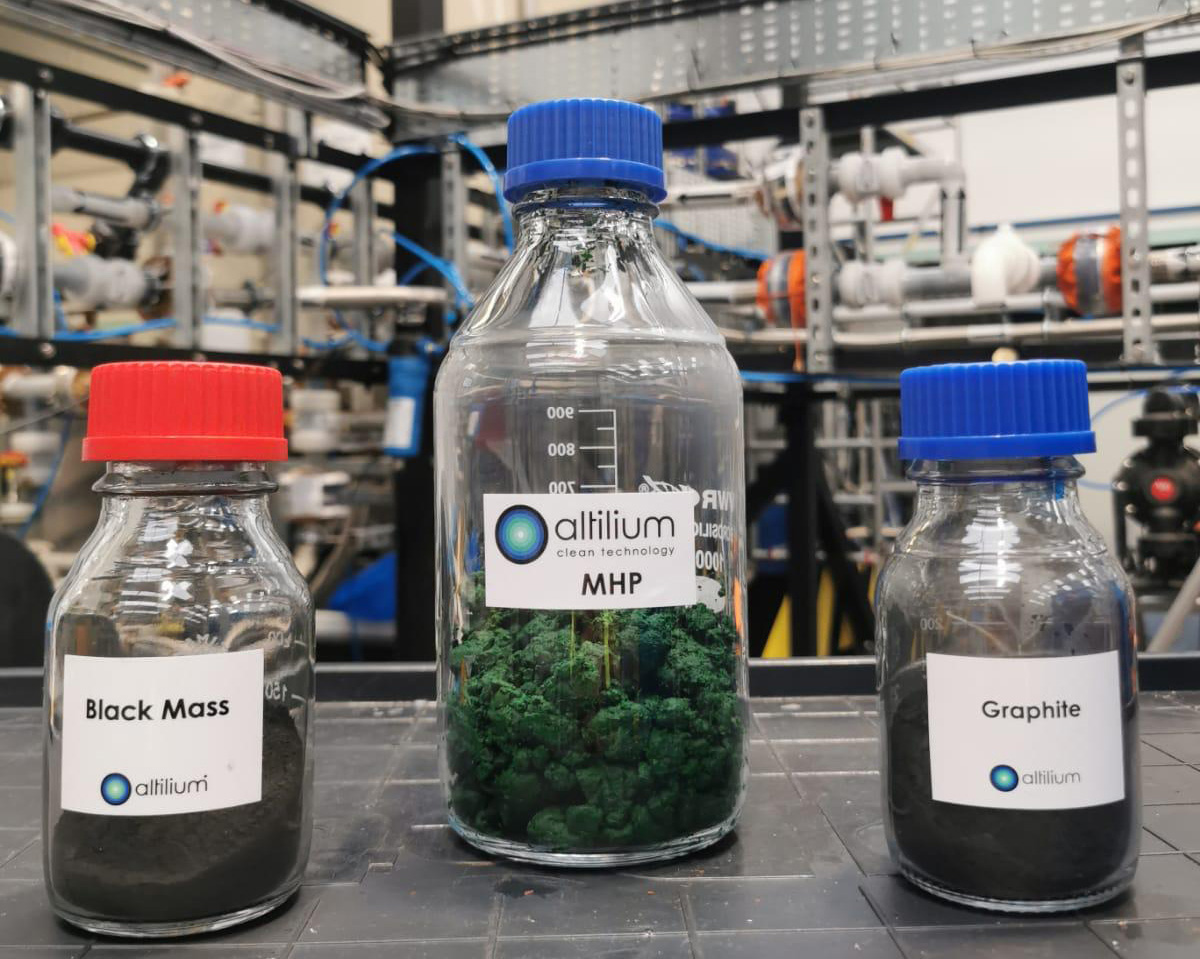
The filing marks a further expansion of Altilium’s intellectual property portfolio and follows a technical milestone achieved at its ACT2 pilot facility, where the company has begun commercial production of nickel MHP for customer qualification. The development is intended to demonstrate both the scalability of the process and its ability to meet industry standards.
The new process, developed at the ACT2 site, enables the recovery of critical materials from a range of feedstocks, including end-of-life lithium-ion batteries, black mass and manufacturing scrap. The resulting output includes nickel and cobalt-rich MHP as well as lithium sulphate, all of which can be reintroduced into battery production.
Altilium said the technology is designed to support a circular battery supply chain in the UK by reducing reliance on primary raw material extraction. The company plans to deploy the process at its ACT3 commercial facility currently under construction in Plymouth, which is expected to produce around 3,200 tonnes of nickel MHP annually once operational.
MHP has become an increasingly important intermediate in the production of battery-grade nickel sulphate used in electric vehicle batteries. The global market is currently dominated by Indonesia, which is projected to account for more than 80% of supply by 2030, underscoring the strategic importance of developing local sources.
Christian Marston said the latest patent underscores the company’s focus on innovation in recycling technologies.
“This patent filing reflects the strength of our technology platform and our continued focus on innovation in battery recycling. By converting recycled materials into high-value intermediates like nickel MHP, we are helping to close the loop on battery production, reduce reliance on primary mining and onshore production of EV battery materials,” said Christian Marston, Chief Operating Officer of Altilium.
The new filing adds to Altilium’s broader intellectual property portfolio, which includes technologies for graphite recycling, black mass processing into precursor and cathode active materials, and blending techniques aimed at meeting European Union recycled content requirements.
The company said these developments are intended to strengthen the UK’s position in building a domestic, sustainable battery ecosystem while supporting the transition to net-zero emissions.