




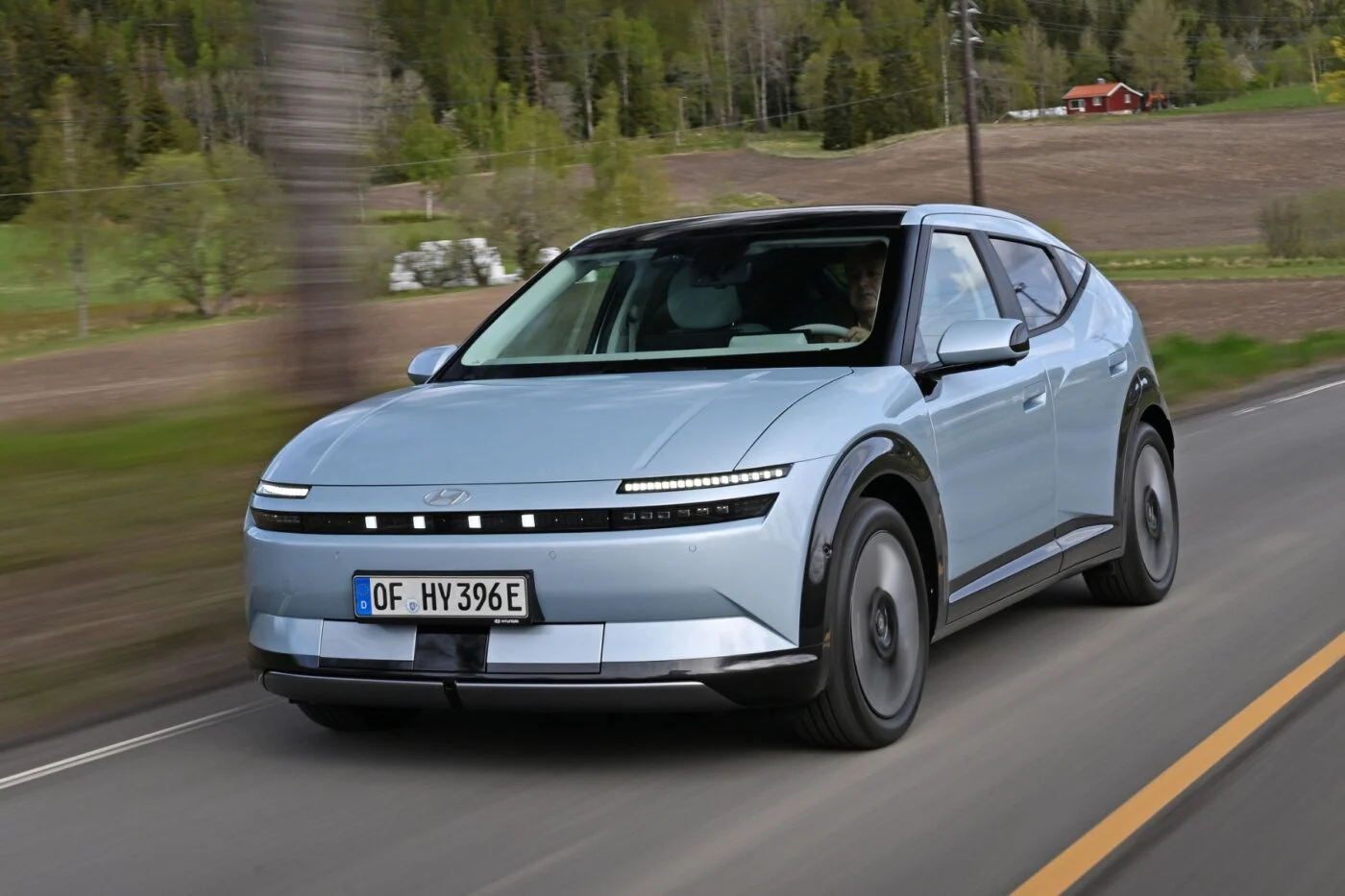
Hyundai has released its first pricing for the Ioniq 3 in the Netherlands, with the compact battery-electric hatchback starting at €27,995 for the Standard Range version equipped with a 42 kWh battery.
The model is available to order with two battery options and will compete in Europe’s high-volume electric vehicle segment alongside models such as the Renault 5, Kia EV2, Cupra Raval and the upcoming Volkswagen ID. Polo.
Two Battery Options Available
The entry-level Ioniq 3 Standard Range features a 42 kWh battery and delivers a WLTP driving range of up to 344 kilometres. The model is priced from €27,995 in the Dutch market.
Customers seeking additional range can opt for the Long Range version, which starts at €31,995 and uses a 61 kWh battery offering up to 497 kilometres of WLTP range.
Hyundai lists system output at 107.8 kW for the Standard Range model and 99.5 kW for the Long Range variant.
Built on 400-Volt Platform
The Ioniq 3 is built on Hyundai’s 400-volt electric vehicle architecture, which the company says helps reduce production costs compared with the larger Ioniq 5, Ioniq 6 and Ioniq 9 models that use higher-end platforms.
Production takes place at Hyundai’s manufacturing plant in İzmit, Türkiye.
The model is equipped with Hyundai’s new Pleos Connect infotainment system based on Android Automotive OS. Depending on the trim level, the system features either a 12.9-inch or 14.6-inch central touchscreen.
Unlike some rivals that rely solely on a central display, the Ioniq 3 also includes a separate driver information display positioned behind the steering wheel.
Six Trim Levels Offered
Hyundai is offering the Ioniq 3 in six trim levels in the Netherlands, ranging from the entry-level Select version to the flagship N Line Evo.
The pricing closely aligns with the Kia EV2, which starts at €27,595 in the Netherlands and €26,600 in Germany. Hyundai has not yet announced German pricing for the Ioniq 3, although local pricing is expected to follow a similar structure with adjustments reflecting country-specific taxes and duties.


