
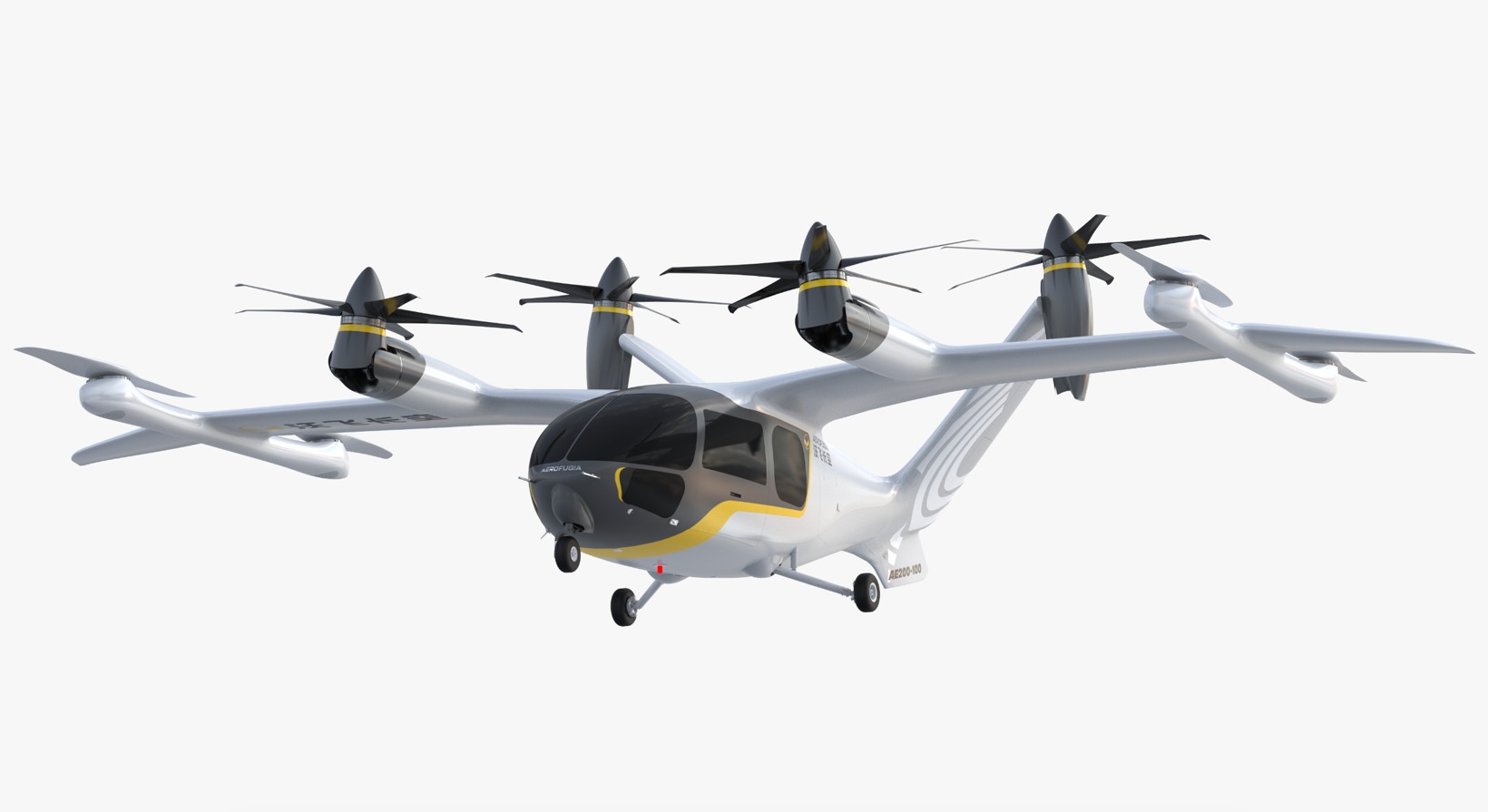
Chinese electric vertical takeoff and landing aircraft maker Aerofugia said on Feb. 2 it has raised nearly 1 billion yuan ($140 million) in a new funding round, the largest single investment in China’s low-altitude economy so far this year, as the company accelerates its push toward commercial deployment.
The latest financing, Aerofugia’s second independent market-based raise in three months, highlights growing investor confidence in the sector and in the company’s development trajectory. The Chengdu-based firm said the capital will be used to support final airworthiness certification of its AE200 series aircraft, expand production capacity at its global headquarters, and further develop its low-altitude mobility business model.
See also: Geely Subsidiary Aerofugia Rolls Out First AE200-100 eVTOL Prototype in Chengdu
Aerofugia said it is entering a “critical sprint phase,” shifting its focus from technical validation to scaled manufacturing and delivery. Public records show that in 2025 the company completed assembly of its first aircraft, carried out verification flights for the AE200-100 model during the airworthiness assurance stage, and topped out the first phase of its global headquarters project.
The company has reported cumulative orders exceeding 1,000 units and has participated in several pilot programs, including a civil aviation and low-altitude mobility demonstration project and test flights along the Bashu-Han low-altitude tourism corridor, as it explores commercial use cases.
See also: China’s Aerofugia Commences eVTOL Certification Process for AE200 Air Taxi
Wu Hao, general manager of lead investor CSCI, said the investment aligns with China’s strategy to foster “new quality productive forces.” “We are optimistic about Aerofugia’s technological breakthroughs and its progress toward commercialization,” Wu said, adding that CSCI plans to help connect the company with supply chain partners to support industrial development.
China has elevated the low-altitude economy to a national priority, with policymakers and industry groups estimating the market could grow into a trillion-yuan sector. Analysts say the latest funding round suggests capital is increasingly concentrating on companies with advanced technology and clearer paths toward certification and large-scale operations.