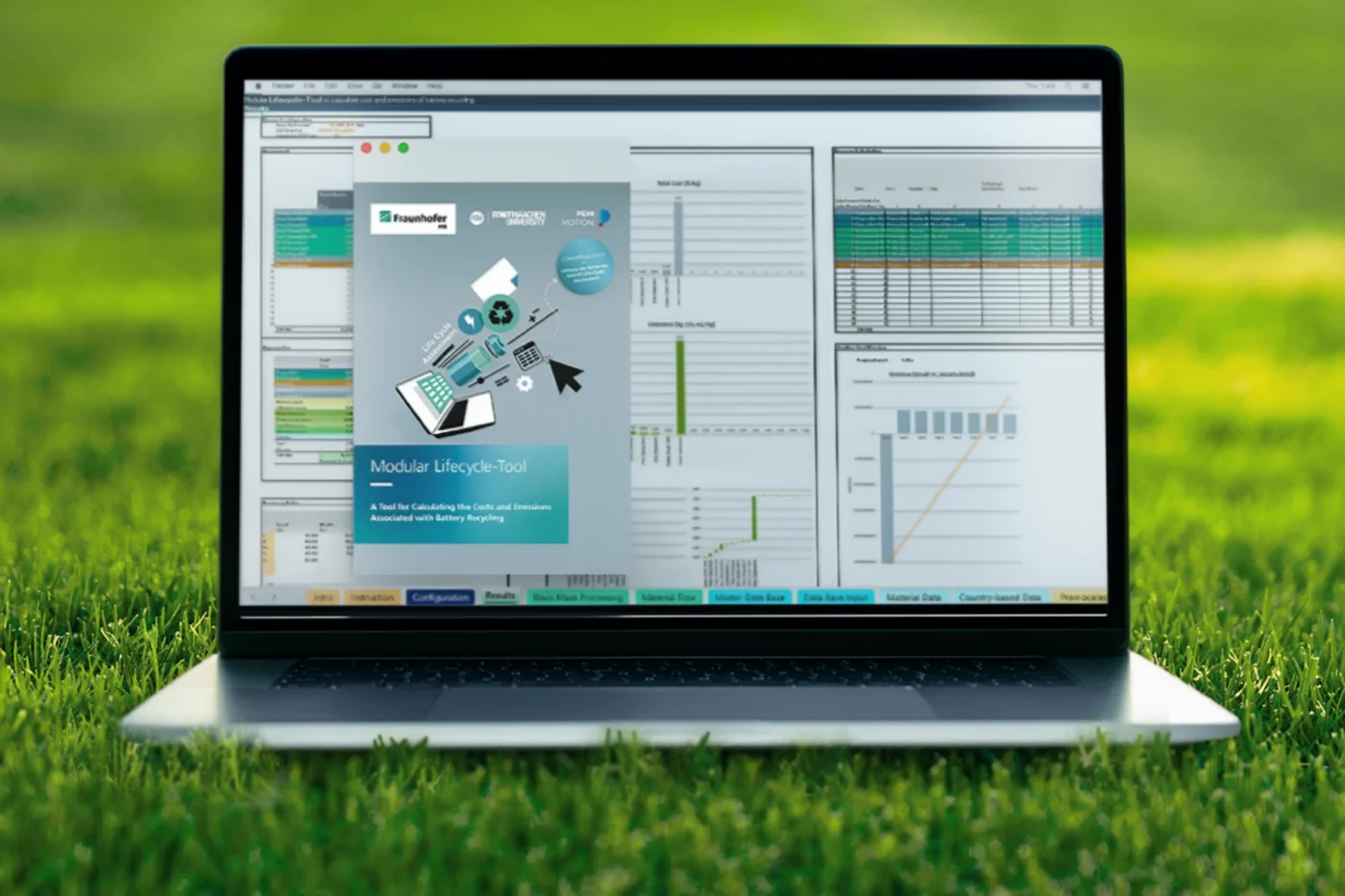
Fraunhofer FFB and RWTH Aachen University have developed an evaluation model to compare lithium-ion battery recycling processes based on their economic costs and environmental impact. The tool is designed to help recycling companies, technology providers and battery manufacturers assess different process configurations using a consistent methodology.
The development comes as battery recycling in Europe faces significant economic challenges. A study conducted under the EU research project Safeloop found that recycling lithium-ion batteries under the conditions examined currently generates an average loss of approximately €1.90 per kilogram of battery pack.
The study identified hazardous goods transportation, battery disassembly and uncertainty surrounding material recovery as major cost factors.
Modular Model Evaluates the Entire Recycling Chain
The new evaluation model, called the Modular Lifecycle Tool, divides the battery recycling process into individual areas, process steps and technologies. Its modular structure allows users to compare different methods and examine how decisions at one stage affect subsequent operations.
Recycling technologies can differ in energy requirements, material recovery rates and the quality of recovered materials. These differences can also influence the complexity and costs of downstream processing.
For example, users can compare alternative shredding methods and assess their effects on subsequent recycling stages. The model tracks material flows throughout the recycling chain to show how individual process choices influence overall performance.
Costs, Emissions and Plant Utilisation Included
The tool uses a database containing information on individual recycling process steps. Users can enter parameters such as material throughput and battery composition, then assemble customised process chains for evaluation.
The calculations incorporate several economic and environmental indicators, including:
- Energy consumption and CO2 emissions
- Operating and investment costs
- Revenue from recovered raw materials
- Waste disposal costs
- Regional electricity mix and labour costs
- Plant utilisation and processing throughput
Users can adjust parameters such as throughput, separation efficiency and material recovery rates to examine their effects on downstream processes, total costs and emissions.
This approach enables companies to identify stages that contribute disproportionately to operating expenses or environmental impact. It can also support scenario analysis for scaling battery recycling operations to industrial levels.
Benedikt Gruber, a research associate at Fraunhofer FFB, said the model is intended to provide a consistent basis for evaluating different recycling approaches.
“With this tool, we aim to make different recycling concepts comparable on a common basis and thereby create a robust foundation for technological and strategic decisions,”
Gruber said the framework can be used both to improve existing recycling processes and to assess emerging technologies.
Further Development Planned for Different Battery Chemistries
The Modular Lifecycle Tool was developed through a consortium study involving partners from the recycling industry, plant engineering and consulting.
Fraunhofer FFB Produces First Lithium-Ion Cell Using Fully European Equipment
Its evaluation framework is expected to be expanded to cover additional battery chemistries, regionally differentiated datasets and regulatory scenarios.
The expanded model could provide a broader basis for comparing recycling technologies across different markets and operating conditions as battery recycling capacity develops in Europe.