Switzerland is proposing stricter CO2 emissions requirements for newly registered heavy commercial vehicles while easing targets for vans and other light commercial vehicles from 2030, as the government moves to align its transport climate regulations with forthcoming European Union standards.
The Swiss Federal Council has submitted proposed revisions to the CO2 Act and Energy Act for public consultation. The legislative package aims to bring vehicle emissions requirements from 2030 into line with the EU Commission’s forthcoming Automotive Package.
The proposal does not cover requirements from 2035 onward, leaving out the wider European debate over whether to revise the planned phase-out of new combustion-engine vehicles.
Truck Emissions Reduction Target Increased to 45%
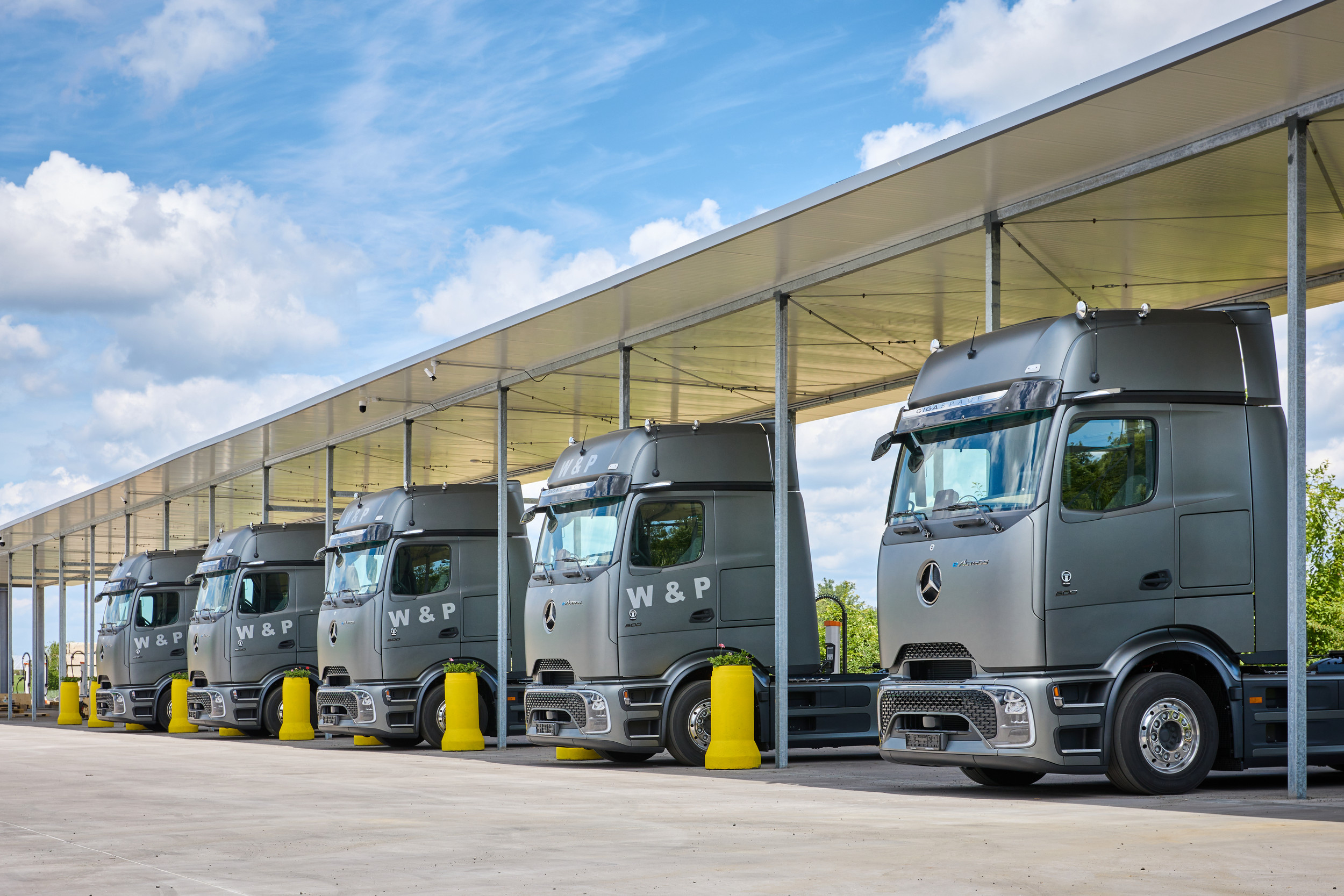
The proposed changes would tighten emissions requirements for heavy commercial vehicles, including trucks. Instead of the previously planned 30% reduction, Switzerland is proposing a 45% reduction target from 2030.
The country is already seeing increased adoption of electric trucks. According to figures from the European Automobile Manufacturers’ Association (ACEA), electric trucks weighing more than 16 tonnes accounted for 26% of new truck registrations in Switzerland during the first half of 2026.
Charging infrastructure investment is also expanding. A funding programme launched in early 2026 to support the installation of truck charging facilities received sufficient demand for the government to double its budget in October, from CHF 20 million to CHF 40 million.
CO2 Limits for Vans to Be Relaxed
For light commercial vehicles, including vans and transporters, the Federal Council proposes a less demanding emissions target than previously planned.
The target value for 2030 would increase from 90.6 grams of CO2 per kilometre to 108.7 g/km. The adjustment would bring Switzerland’s requirements closer to the forthcoming EU framework.
Passenger Car Targets Remain Unchanged
The proposed legislation does not change Switzerland’s fleet emissions targets for passenger cars, which are already aligned with EU requirements.
The target remains 49.5 g/km from 2030, following the reduction to an average of 93.6 g/km under the current requirements from 2025.
Electric vehicles accounted for 34.9% of new passenger car registrations in Switzerland in October, according to the reported figures.
The proposal would, however, introduce greater flexibility for manufacturers and importers when demonstrating compliance. Instead of assessing target achievement separately each year, calculations for passenger cars and light commercial vehicles could be based on a three-year average covering 2030 to 2032.
Switzerland Plans to Adopt EU Vehicle Energy Label
The Federal Council also proposes replacing Switzerland’s existing vehicle energy label with the future standardized EU vehicle label.
Under the proposed system, classification would primarily reflect local CO2 emissions. As a result, fully electric vehicles would consistently qualify for the highest efficiency category, A.
Under the current Swiss labelling system, some electric vehicles have received category B ratings because the calculation also considers the country’s electricity mix.
The changes would also allow manufacturers to provide vehicle labels directly from the factory, potentially simplifying the process for importers.
Consultation Runs Until February 2027
The Federal Council is starting the legislative process ahead of the EU’s final decisions to avoid delays in implementing the revised requirements.
Although the EU Automotive Package may still undergo changes, Switzerland intends to prepare its domestic regulations for the planned 2030 alignment.
The consultation period for the proposed revisions to the CO2 Act and Energy Act will remain open until 18 February 2027.