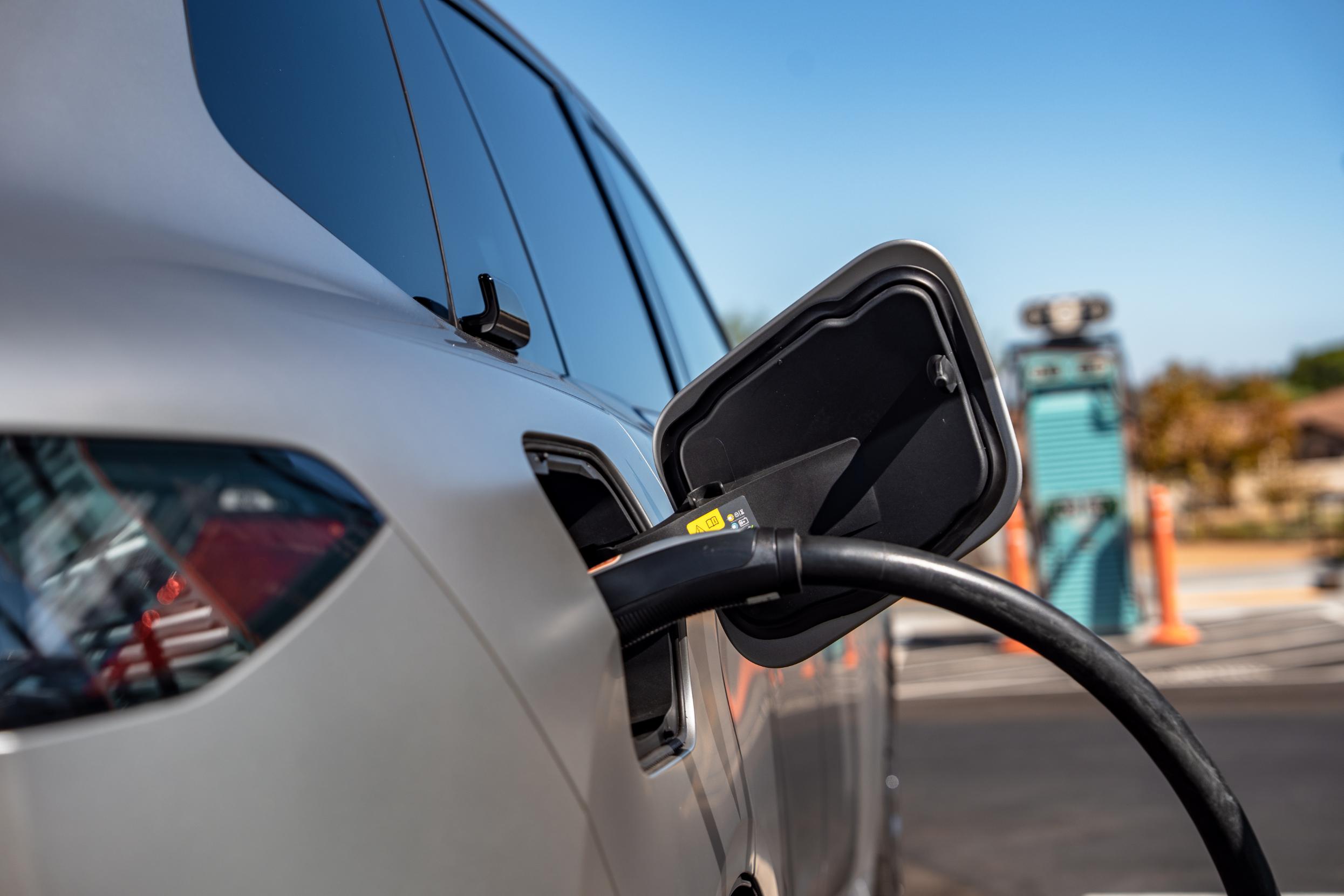
Germany registered 94,086 new battery-electric vehicles (BEVs) in October 2026, an increase of 79.5% compared with the same month last year. BEVs accounted for 37% of all new passenger car registrations, making them the largest individual powertrain category in the German market, according to data from the Federal Motor Transport Authority (KBA).
Overall, Germany recorded 254,492 new passenger car registrations in October, up 1.7% year over year. Total registrations during the first ten months of 2026 reached approximately 2.476 million units, an increase of 4.9%.
BEVs Gain Share as Conventional Powertrains Decline
The increase in electric vehicle registrations contrasted with continued declines in conventional powertrains.
Gasoline-powered car registrations fell 40.5% year over year to 38,516 units, representing 15.1% of the market. Diesel registrations declined 21.6% to 23,882 units, giving the category a 9.4% share.
Hybrid vehicles, including plug-in hybrids, recorded 95,931 registrations and accounted for 37.7% of the market. However, total hybrid registrations decreased 5.6% compared with October 2025.
Germany and France Reportedly Seek Further Easing of EU 2035 CO₂ Rules
Plug-in hybrid (PHEV) registrations fell 7.9% to 28,499 units, representing 11.2% of new registrations. Germany also registered 2,065 liquefied petroleum gas (LPG) vehicles, an increase of 121.6%.
The average CO2 emissions of newly registered passenger cars declined 21.1% to 79.4 grams per kilometre.
BYD Records Strong Growth Among Import Brands
Among import brands with a market share of at least 1.5%, BYD recorded the largest year-over-year increase in October, with registrations rising 54.3% to reach a 2% market share.
Other import brands reporting double-digit growth included MG Roewe (+48.5%), Mazda (+23.5%), Kia (+19.4%), Dacia (+15.4%) and Citroen (+10%).
Skoda remained the largest import brand in Germany, with a 7.7% market share, although its registrations declined 12.1%.
Among German brands, Smart recorded the strongest growth at 59.5%, followed by MINI at 25%. Volkswagen remained the country’s largest brand overall, with an 18.2% market share despite a 4% decline in registrations.
SUVs Remain the Largest Vehicle Segment
SUVs accounted for 37.8% of new passenger car registrations in October, with registrations increasing 13.3% year over year.
Small cars represented 13.7% of the market, up 9.1%, while compact cars accounted for 13.6%, down 15.3%.
The mini segment recorded the largest increase among vehicle categories, rising 20.6%. The luxury segment also grew by 11.1%, while several other categories, including mini-vans, sports cars and motorhomes, recorded declines.
Total Vehicle Registrations Increase
Across all vehicle categories, Germany registered 304,375 new motor vehicles in October, an increase of 3.6% year over year. New motor vehicle trailer registrations declined 1.6% to 20,997 units.
Germany and France Propose 90% EU Car CO₂ Reduction Target by 2035
Commercial vehicle registrations increased across several categories. Bus registrations rose 39.2%, overall tractor registrations increased 13.1%, and truck registrations grew 10.3%. Motorcycle registrations were up 25.4%.
In the used vehicle market, 619,460 motor vehicles changed ownership during October, down 2.6% compared with the same month last year.