Joby Aviation reported third-quarter 2026 revenue of $55 million, primarily generated by its Blade passenger aviation business, and raised its full-year revenue outlook to between $135 million and $140 million.
The company provided an update on its electric vertical take-off and landing (eVTOL) aircraft development, reporting progress in Federal Aviation Administration (FAA) certification testing and an increase in manufacturing activity. As of September 30, 17 aircraft were in production.
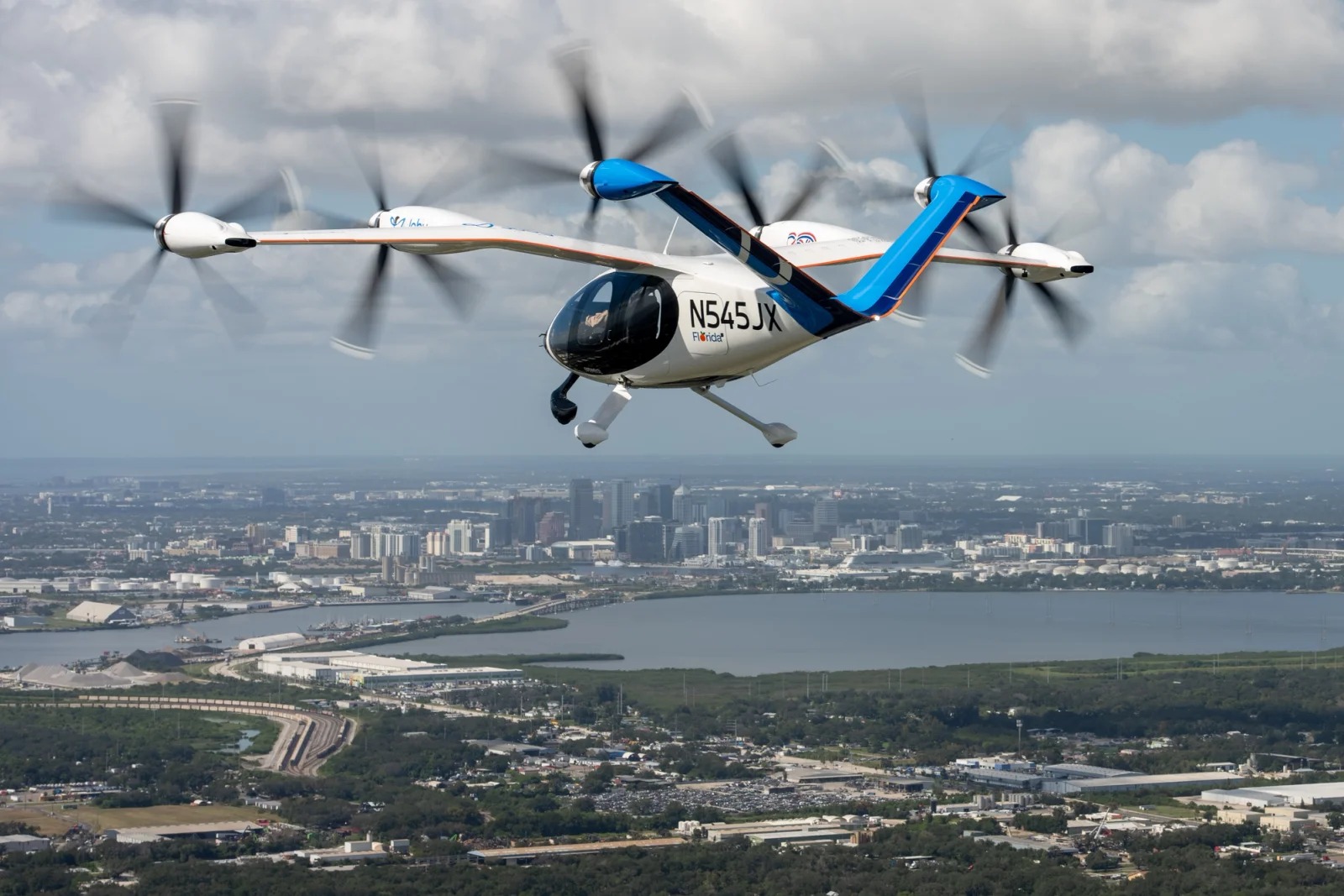
During the quarter, Joby also conducted its first flights in Texas and Florida under the White House-backed eVTOL Integration Pilot Program (eIPP), which supports the development and introduction of electric air taxi services in the United States.
FAA Certification and Manufacturing
Joby said it completed a range of “for credit” tests with the FAA as part of the fifth and final stage of its aircraft type certification programme.
The company also reported an increase in manufacturing output, with 17 aircraft in production at the end of September. Its activities remain focused on completing certification requirements, expanding production capacity and preparing for commercial operations.
The flights in Texas and Florida under the eIPP programme formed part of its efforts to demonstrate the aircraft in potential early U.S. markets.
Blade Carries More Than 44,000 Passengers
Joby’s Blade passenger aviation business carried more than 44,000 passengers in the third quarter, its highest quarterly total to date. Blade accounted for most of the company’s $55 million in quarterly revenue.
The results reflect the contribution of Joby’s existing passenger aviation operations while it continues developing its eVTOL aircraft for commercial passenger service.
Autonomous Flight and Defence Contracts
Joby also reported progress in its autonomous aviation programme. Its J208 aircraft, a Cessna 208 Caravan equipped with the company’s autonomy system, completed a cross-country flight that Joby described as the first fully autonomous flight of a civilian aircraft across the United States.
The company also expanded its autonomy-focused contracts with the U.S. Air Force, bringing the service’s total commitment to nearly $37 million. The work supports the development and testing of autonomous flight capabilities for military logistics applications.
Separately, Joby announced plans to acquire Resonant Sciences, a defence technology company with more than $100 million in trailing 12-month revenue. The company is EBITDA-positive and has established programmes, classified capabilities and manufacturing operations.
The proposed acquisition is expected to expand Joby’s activities in the defence sector.
Cash Position and 2026 Outlook
Joby reported $2.2 billion in cash, cash equivalents and short-term investments as of September 30, 2026.
The company increased its full-year 2026 revenue outlook by 15%, setting a target range of $135 million to $140 million. The revised outlook includes revenue from its existing operations and reflects its ongoing commercial activities.
Joby expects to use between $385 million and $415 million in cash, cash equivalents and short-term investments during the second half of 2026. Planned spending includes eVTOL certification, manufacturing expansion and commercial preparations under the eIPP programme.
Founder and CEO JoeBen Bevirt said the company had advanced several development and operational activities during the quarter.
“This quarter, we made important progress on the fifth and final stage of certification, completing a wide range of ‘for credit’ testing with the FAA. We significantly increased manufacturing output while improving efficiency, and demonstrated our electric air taxi in key early U.S. markets through the White House-backed eIPP program. Our J208 aircraft also completed what we believe to be the first fully autonomous flight of a civilian aircraft across the United States, and this morning we announced an expansion of our autonomy-focused contracts with the U.S. Air Force to nearly $37 million.”
Bevirt said the company’s main objective remained the development of electric vertical flight for passenger transportation.
“Our core mission is – and always has been – to bring electric vertical flight to passengers around the world. We designed our aircraft from the ground up for that mission, and our engineering, manufacturing and certification efforts are focused on bringing it to market. The progress we’re making gives me every confidence that Joby will continue to lead the way.”