
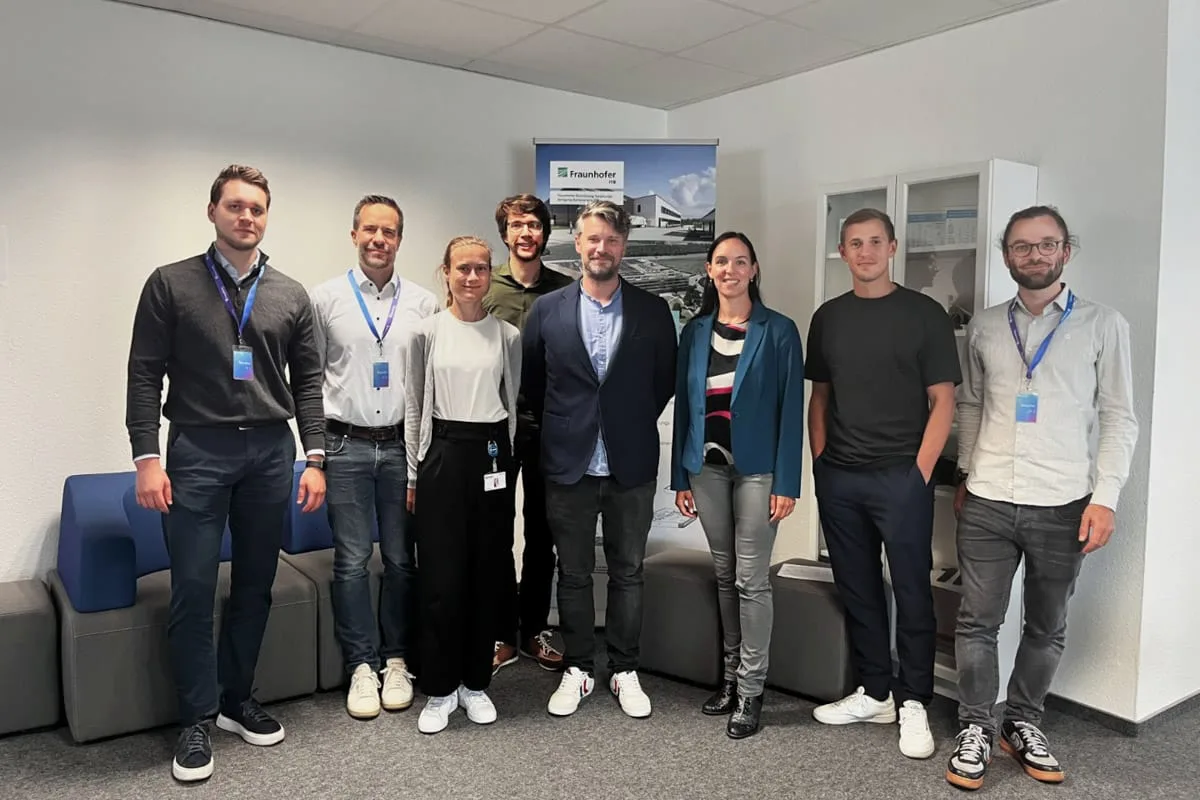
A new initiative has been launched in Germany to fast-track the industrialization of sodium-ion battery technology. The Fraunhofer Research Facility for Battery Cell Production (FFB), in collaboration with the Chair of Production Engineering of E-Mobility Components (PEM) at RWTH Aachen University and mixing technology specialist hs-tumbler, has started the KOOP project, a three-year program aimed at developing scalable sodium-ion battery production.
Backed by the German Federal Ministry of Research, Technology and Space, the KOOP project focuses on the development of a hard carbon anode using a method known as trajectory mixing. This technique has the potential to cut energy consumption in half compared to traditional mixing processes. One of the project’s primary goals is to scale this method to an industrial level while maintaining stringent quality assurance and process controls.
Beyond the technical scope, KOOP introduces a novel collaborative model referred to as “highly cooperative scaling.” The approach is designed to eliminate the inefficiencies that often arise when transitioning production technologies from laboratory research to commercial applications. Delays caused by fragmented data management and disconnected funding strategies are common in projects at mid-level technology readiness. KOOP seeks to address these issues through close integration of data sharing, personnel collaboration, and unified planning.
The project will also implement a shared digital platform to streamline the transfer of information between innovators and production partners. This infrastructure is intended to provide real-time access to product and process development data, enabling participating institutions to prepare early for changes in production capacity or plant configuration. The long-term aim is to create a replicable model for accelerating the commercialization of emerging battery technologies in Europe.
Source: ffb.fraunhofer.de, pem.rwth-aachen.de