
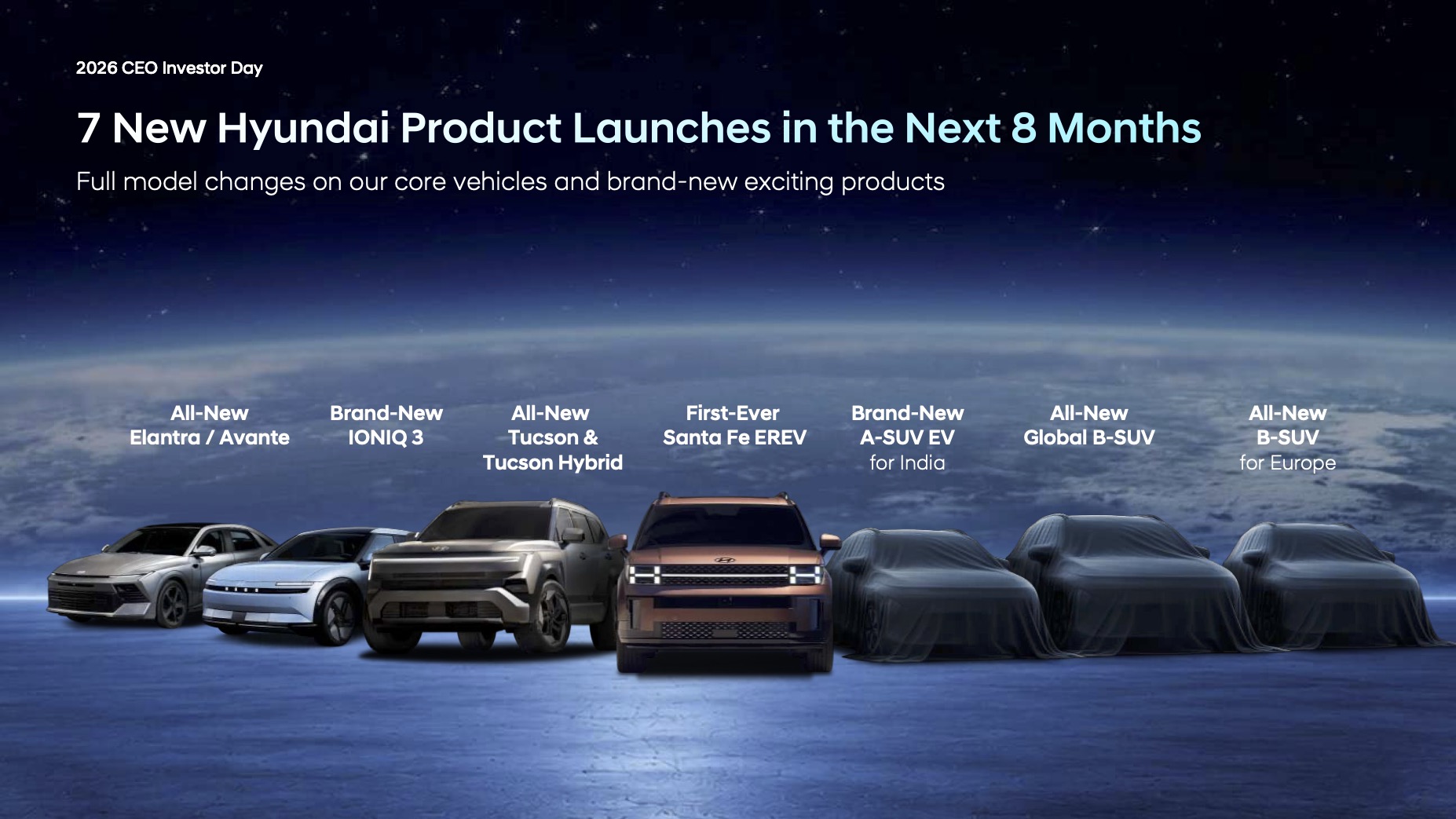
Hyundai Motor has revealed Ioniq P as the name of its upcoming mass-market electric vehicle for India, a new A-segment model scheduled to launch in the first quarter of 2027. The vehicle will expand the South Korean automaker’s electric car portfolio with a more affordable offering positioned below models such as the Inster in its global line-up.
The announcement follows Hyundai Motor India’s disclosure of plans to introduce a dedicated mass-market electric vehicle during the January-March 2027 quarter. The company’s Indian subsidiary outlined the launch timeline when reporting its third-quarter 2026 financial results on 28 October. Hyundai’s parent company subsequently confirmed the Ioniq P name during its earnings conference call on 29 October.
Discussing the company’s upcoming products for different markets, a Hyundai global official said: “In China, we have Ioniq V that’s coming, and in India, we have Bayon and Ioniq P”.
The Ioniq P is understood to be the A-segment electric vehicle previously referred to by Indian media under the development codename HE1i. Hyundai has been conducting road tests of the model in India and South Korea for nearly a year.
SUV-Inspired Design for Indian Buyers
Prototypes spotted during testing indicate that the Ioniq P will draw design inspiration from the Hyundai Inster, although the Indian model appears to adopt a more upright and boxy exterior.
The proportions and styling are expected to give the vehicle a stronger SUV identity, reflecting demand among Indian consumers for compact cars with a more rugged appearance. The model also appears larger than the Inster, although Hyundai has not yet released its official dimensions.
Exterior features visible on test vehicles include flush-fitting door handles, slim front and rear lighting elements incorporating Hyundai’s Parametric Pixel design signature, two-tone wheels and a shark-fin antenna.
The interior is expected to follow Hyundai’s latest global design direction. Reported features include a slim 9.9-inch digital instrument cluster and a tablet-style 12.9-inch infotainment touchscreen, with both systems running Android Automotive Operating System (AAOS).
Hyundai has also confirmed that the vehicle will offer Level 2 advanced driver assistance systems (ADAS), adding driver-support technology to its mass-market electric car offering.
Two Battery Options Planned
According to a report by Autocar India, the Ioniq P is expected to use Hyundai’s E-GMP (K) platform, which also underpins the Inster.
Hyundai initially planned to source lithium iron phosphate (LFP) battery cells from India’s Exide Energy. However, following delays involving the supplier, the automaker has reportedly decided to import cells from China’s Svolt during the initial production phase.
The company is expected to offer two battery pack configurations, targeting different customer requirements. The options are intended to serve both urban commuters and drivers who regularly undertake longer journeys.
Hyundai has not yet disclosed battery capacities, driving ranges, charging specifications or pricing for the Ioniq P.
India-Centred Electric Vehicle Strategy
The upcoming model forms part of Hyundai’s broader effort to strengthen its electric vehicle presence in India with products developed for local market requirements.
Positioning the Ioniq P in the A-segment would give the company an entry point into a more price-sensitive part of the market, complementing its existing electric vehicle offerings.
For now, Hyundai has not announced whether the Ioniq P will be exported to other markets. Its initial launch plans remain focused on India, where the company is preparing to introduce the vehicle in the first quarter of 2027.