
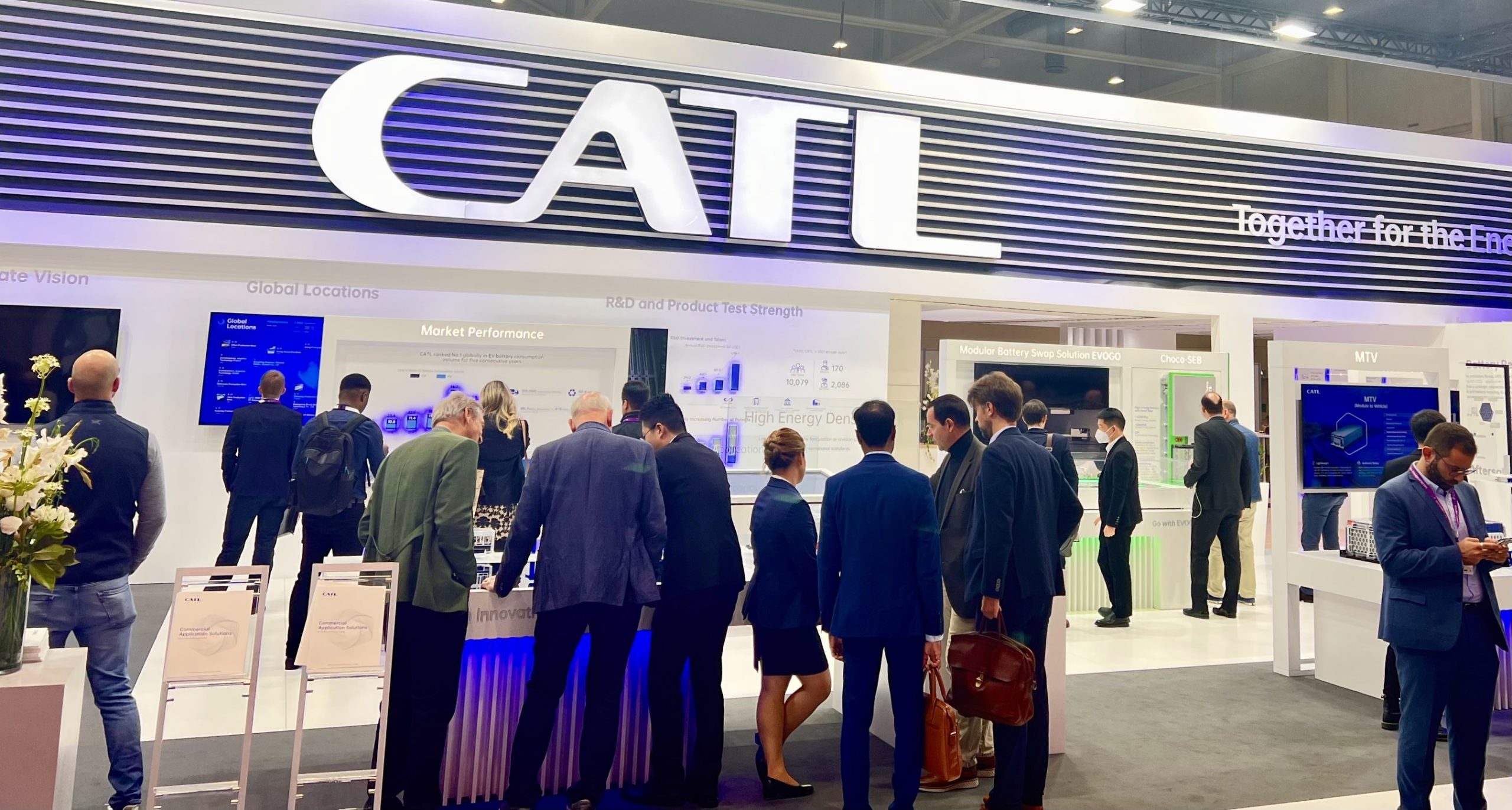
CATL’s technology-licensing battery plant with Ford Motor has entered production in the United States, marking a key milestone in one of the most closely watched partnerships between a Chinese battery manufacturer and a U.S. automaker, according to Caixin. CATL Vice President Meng Xiangfeng announced that the Michigan facility was completed and began production in June during the annual meeting of the China Automotive Battery Innovation Alliance (CABIA).
Michigan Plant Begins Operations
The partnership dates back to February 2023, when Ford announced plans to invest US$3.5 billion in a wholly owned lithium iron phosphate (LFP) battery factory in Michigan.
Under the agreement, CATL provides battery technology licensing as well as engineering, construction and operational support, while Ford owns and operates the facility.
The project was originally designed with an annual production capacity of 35 GWh, enough to supply batteries for approximately 400,000 electric vehicles.
Following political scrutiny and project revisions, the investment was reduced to US$2 billion and planned annual capacity was lowered to 20 GWh.
Political Challenges
The project has faced repeated political opposition since its announcement.
In 2023, Republican lawmakers questioned whether production tax credits available under the Inflation Reduction Act could indirectly benefit CATL through its technology licensing arrangement with Ford.
The controversy led Ford to temporarily suspend the project before restarting construction later that year with a smaller investment and production target.
The facility came under renewed scrutiny in 2026 after Ford expanded its plans to manufacture batteries for energy storage applications alongside electric vehicles.
Battery Production Targets
Ford confirmed in June that the plant had completed full-process trial production of its first prismatic LFP battery cells, with manufacturing processes meeting the company’s safety and quality requirements.
The cells are currently undergoing validation under CATL’s technical specifications, with Ford targeting an ultra-low defect rate of one defective cell per one billion produced.
Commercial production is expected to ramp up during 2026, with the first battery packs destined for Ford’s upcoming economy and midsize electric pickup trucks.
Expanding Global Manufacturing
Meng also said CATL’s battery manufacturing facilities in Hungary and Indonesia are scheduled to begin production before the end of the year, supporting the company’s continued international expansion.
Despite policy changes affecting electric vehicle incentives in the United States, Ford has maintained its collaboration with CATL, while also planning to use the licensed battery technology to support future energy storage products alongside its electric vehicle business.