
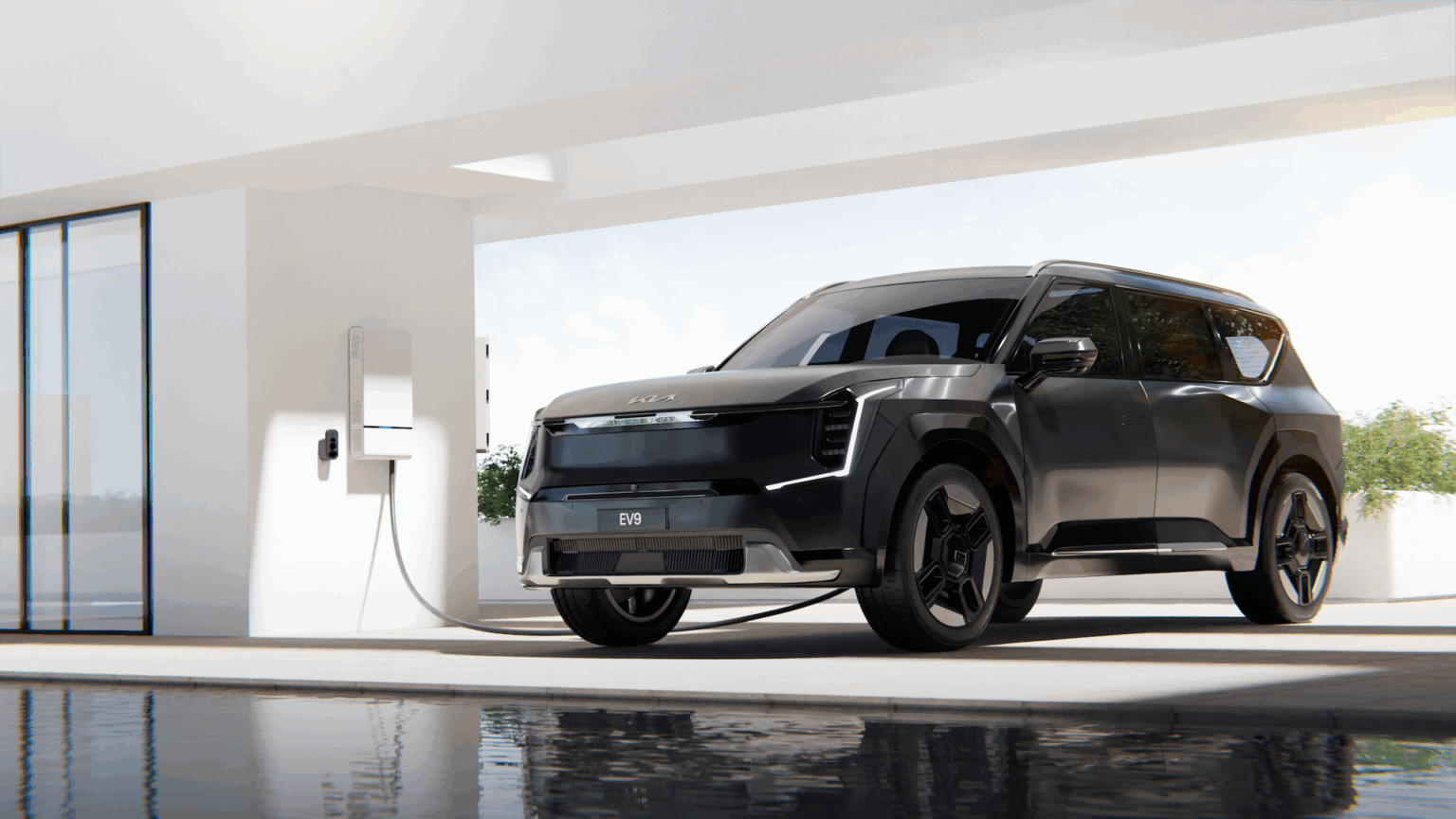
Wallbox has completed the first residential installations of its Quasar 2 bidirectional charger in the United States, marking a step toward integrating electric vehicles (EVs) with home energy systems. The project allows compatible EVs, such as the Kia EV9, to discharge energy back into homes, providing households with a potential source of electricity during peak periods.
The initial six units were installed in Menifee, California, as part of a collaborative effort with Kia America and the University of California, Irvine (UCI). The initiative aims to demonstrate how vehicle-to-home (V2H) technology can lower electricity costs, support energy independence, and reduce strain on the electrical grid.
See also: Wallbox Fast Chargers to Power New Public EV Network in Western Canada
Douglas Alfaro, Chief Business Development Officer at Wallbox, described the project as “a glimpse into a future where every EV serves as an energy asset,” emphasizing that Quasar 2 allows homeowners to achieve greater resilience and control over their energy usage.
Sujith Somasekharan, Director of Connected Car & Mobility at Kia America, highlighted that the V2H feature “helps showcase how EVs can deliver value beyond simple mobility” and will soon be available to eligible EV9 vehicles as part of the Kia Connect suite.
See also: Wallbox and ENSOL EV to Expand Fast Charging Infrastructure in U.S.
Professor Scott Samuelsen of UCI noted the significance of deploying bidirectional charging in real-world settings, stating that such projects are essential for collecting data and insights needed to scale the technology across the grid.
Wallbox said it plans to expand the availability of Quasar 2 across the U.S., aiming to redefine the role of electric vehicles in daily life by turning them into flexible energy resources that support a cleaner and more resilient energy system.