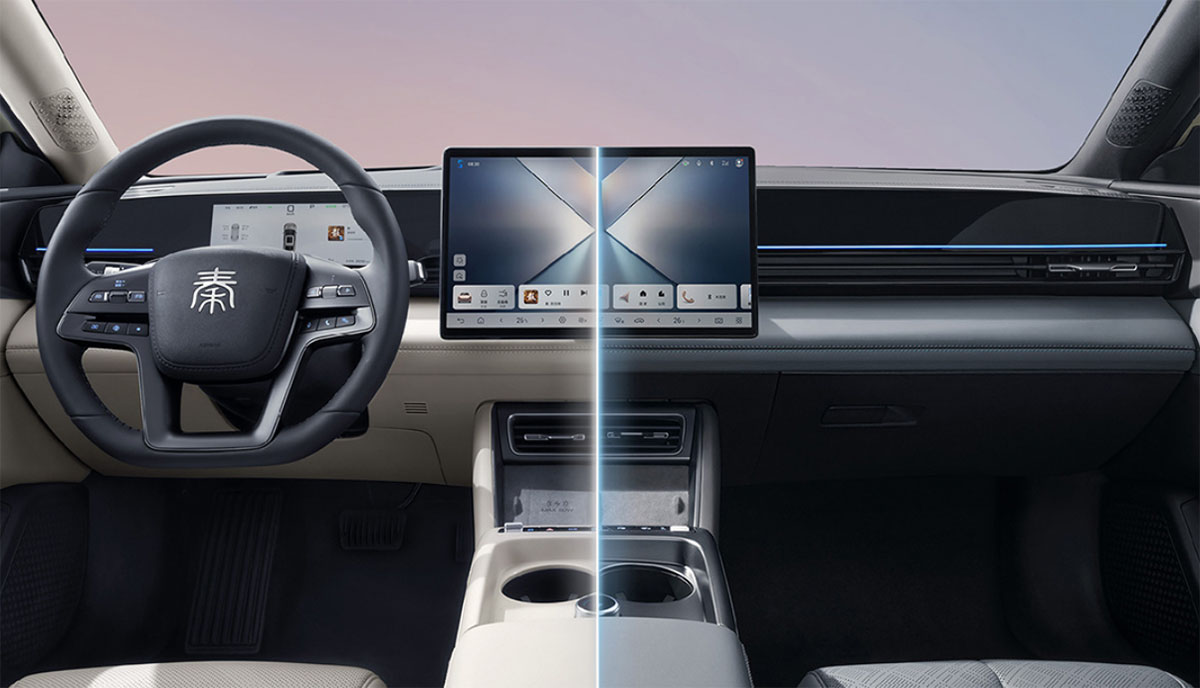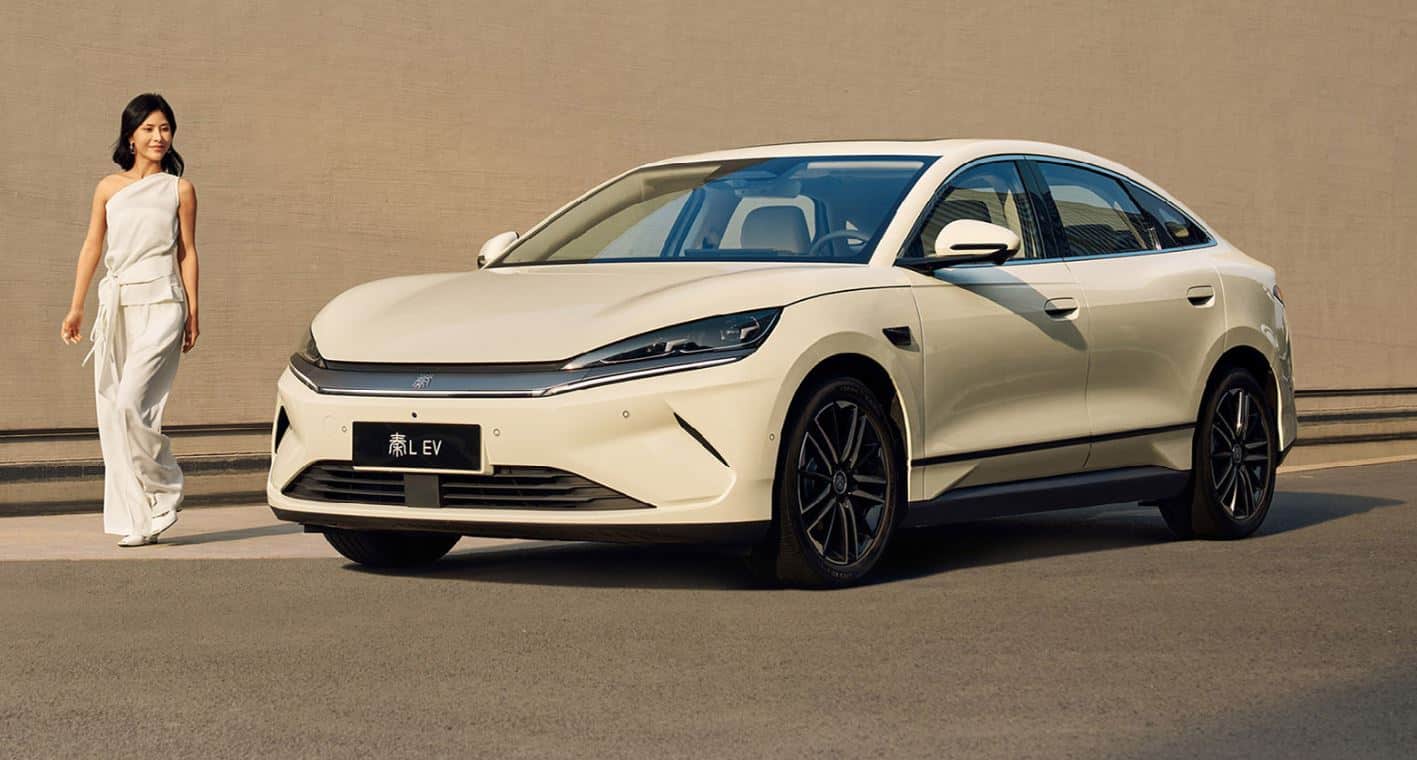
BYD has officially launched the Qin L EV, a mid-size all-electric sedan aimed at younger buyers, with a lower price point compared to Tesla’s Model 3.
The vehicle, built on BYD’s e-Platform 3.0 Evo, was introduced at an event on Wednesday, featuring advanced driver assistance technology as a standard offering.
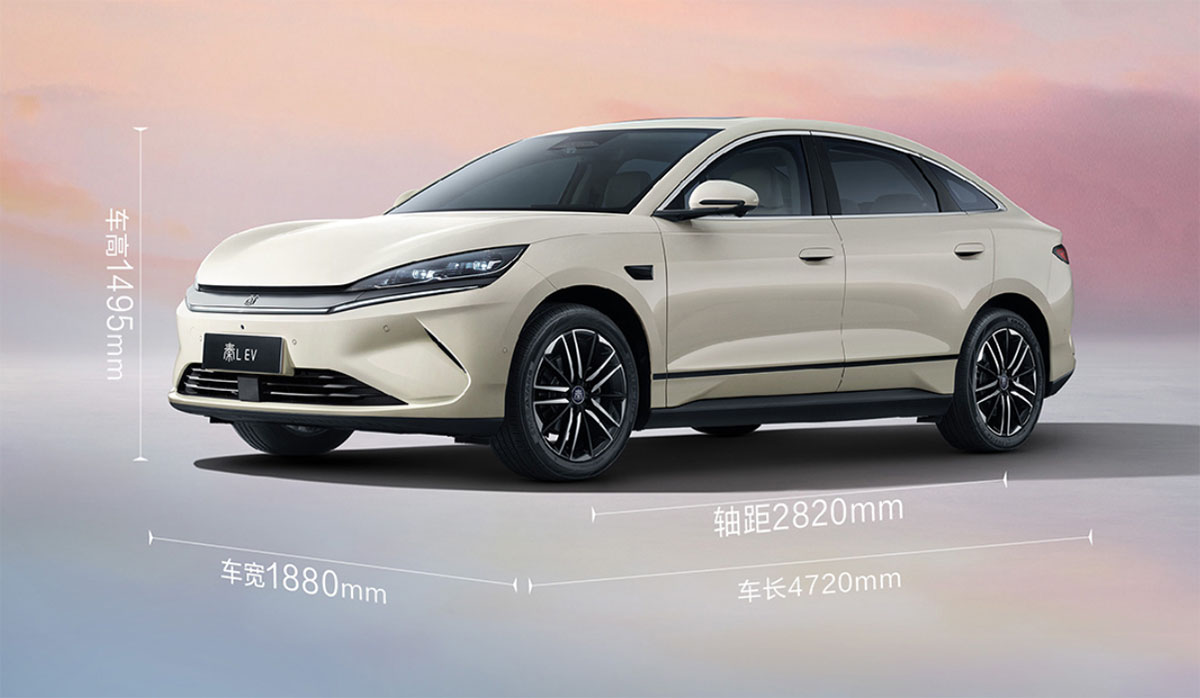
The Qin L EV measures 4,720 mm in length, 1,880 mm in width, and 1,495 mm in height, with a wheelbase of 2,820 mm, closely matching the dimensions of Tesla’s Model 3.
However, BYD’s model undercuts its competitor significantly on price. The Qin L EV is available in three variants, starting at RMB 119,800 ($16,530), while the Model 3’s base model in China is priced at RMB 235,500.
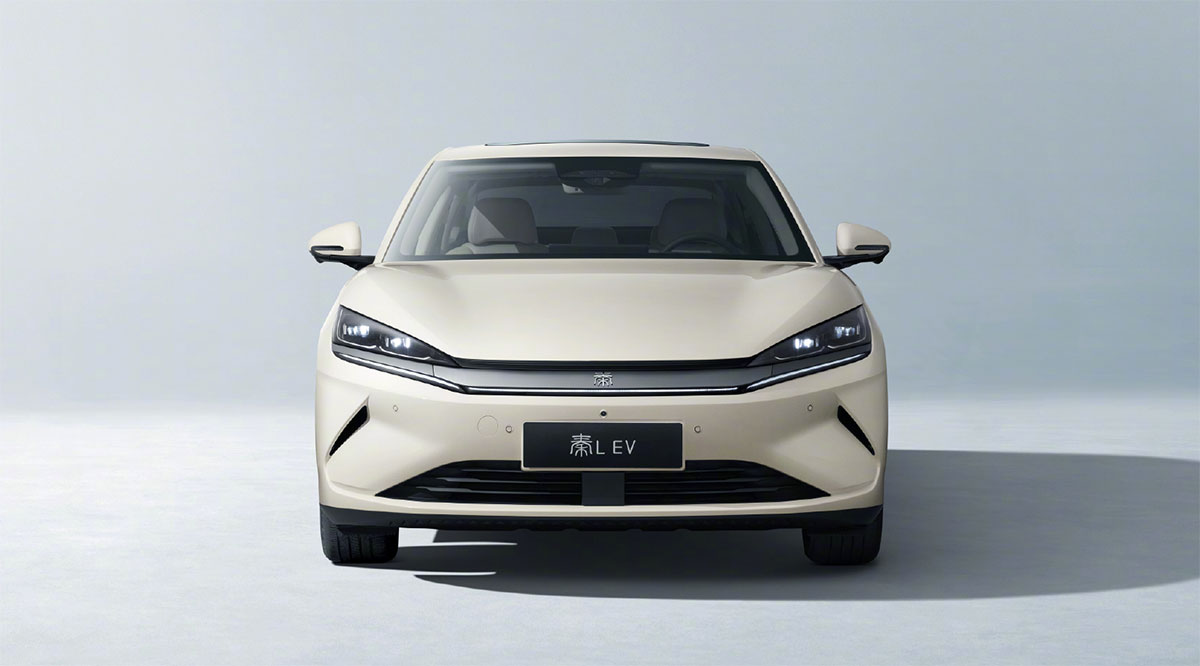
BYD equips the entry-level Qin L EV with a 46.08-kWh battery pack, providing a CLTC range of 470 km, while the two higher-end variants feature a 56.64-kWh battery pack and a 545 km range. All three versions are rear-wheel-drive with a single-motor setup, delivering up to 160 kW of peak power and 330 Nm of peak torque. The model supports fast charging, replenishing from 30 percent to 80 percent in 24 minutes.
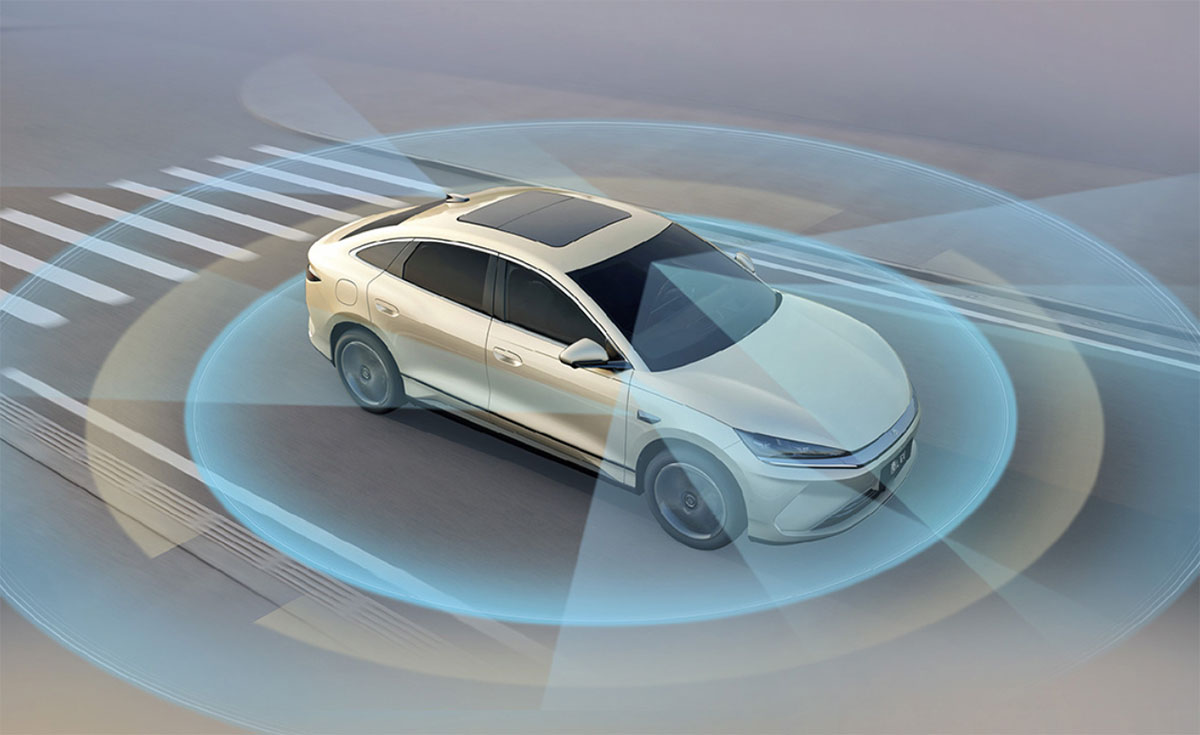
The Qin L EV features BYD’s God’s Eye C smart driving system, which includes 12 cameras, five millimeter-wave radars, and 12 ultrasonic radars, offering highway NOA (Navigate on Autopilot) and automated parking capabilities. “The Qin L EV is designed to deliver a smart driving experience at an affordable price, making advanced mobility accessible to more consumers,” a BYD spokesperson said at the event.
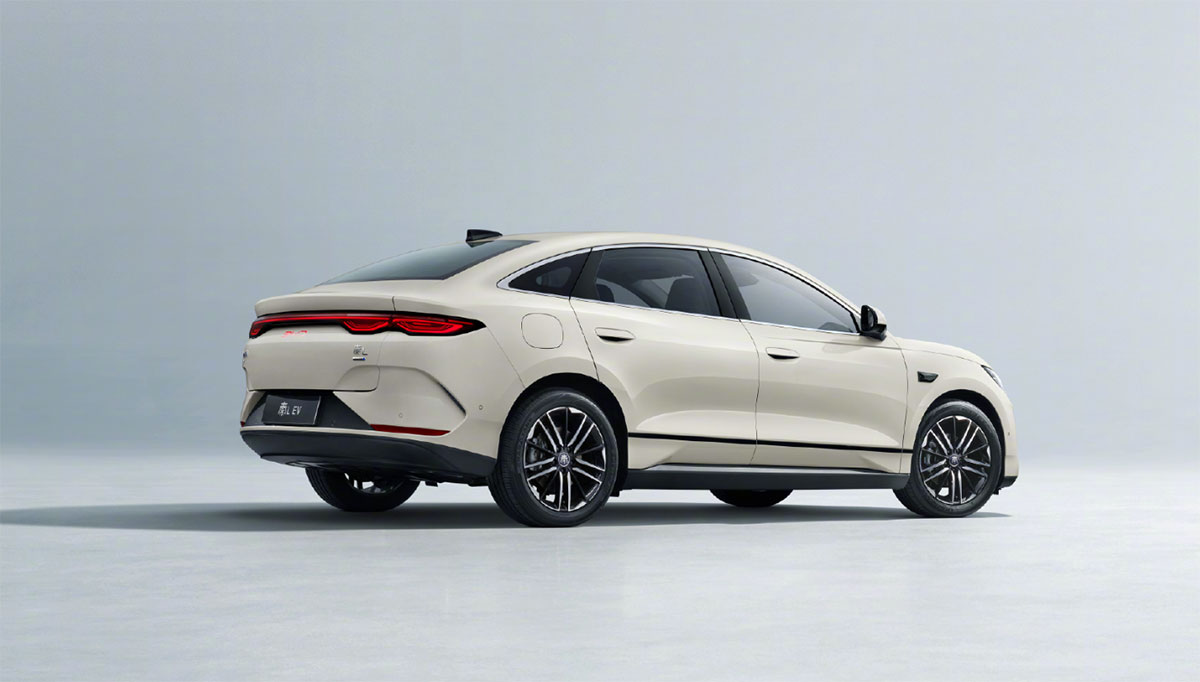
The model also comes equipped with an onboard refrigerator capable of cooling to -6°C and heating up to 50°C, a feature increasingly common in premium EVs. BYD initially teased the Qin L EV a month ago, positioning it as an attractive choice for young consumers looking for an affordable electric sedan.
The Qin L EV enters a competitive market, following the August launch of Xpeng’s (NYSE: XPEV) Mona M03, which has seen strong sales momentum. In February, the Mona M03 delivered 15,312 units, making up more than 50 percent of Xpeng’s total monthly sales.
For BYD, the new model is expected to further boost sales within its Qin family lineup. The series accounted for 732,252 units sold in 2024, representing 17.14 percent of BYD’s annual NEV sales. In the first two months of 2025, sales of the Qin family surged by 108.95 percent year-on-year to 79,315 units.
With the introduction of the Qin L EV, alongside the Qin L DM-i, Qin Plus DM-i, and Qin Plus EV, BYD aims to solidify its position in China’s competitive EV market while expanding its appeal to a younger demographic.