
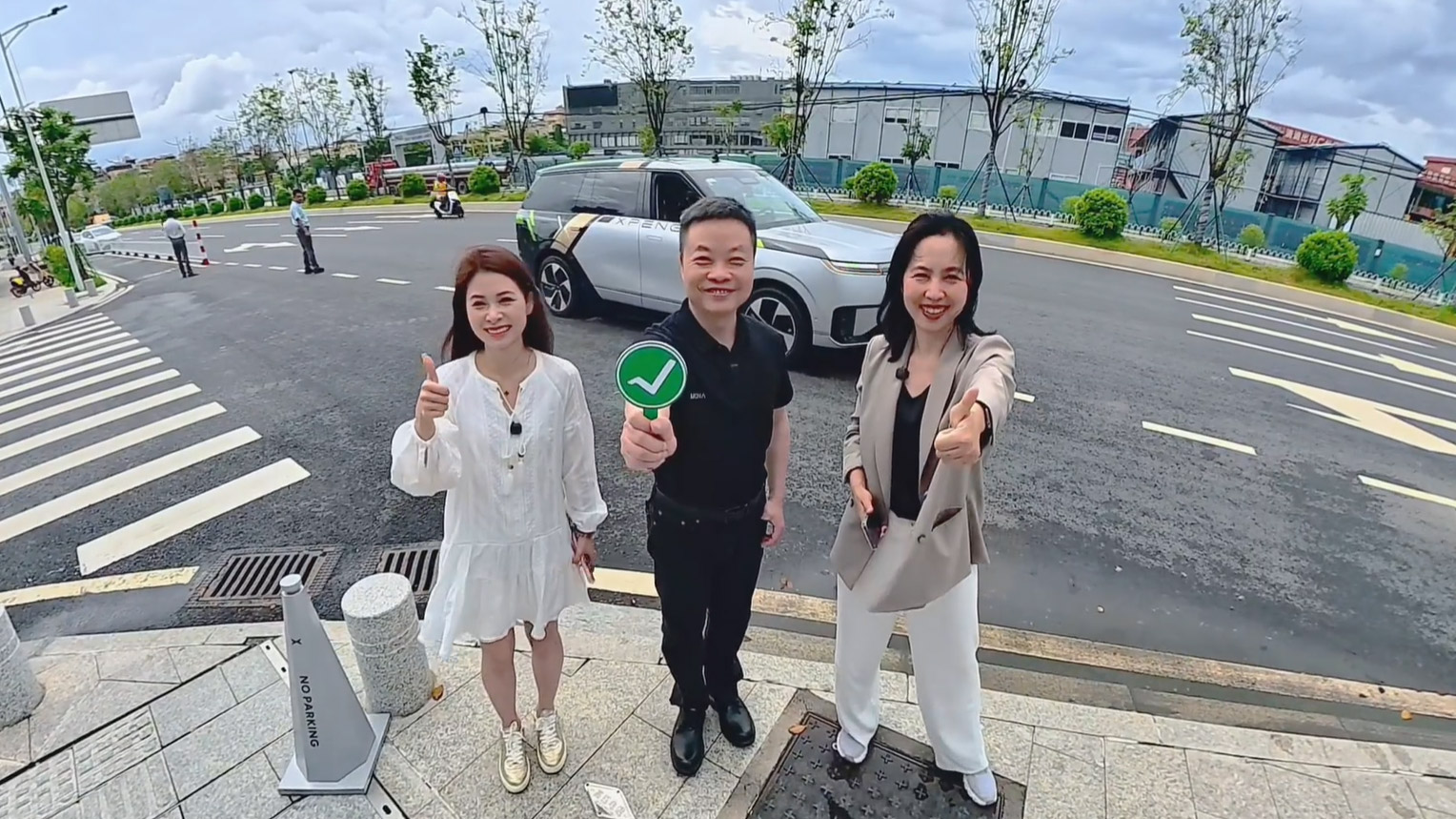
Xpeng has completed the first order in the closed beta of its robotaxi service, marking another milestone in the company’s effort to commercialize autonomous ride-hailing technology.
Chairman and Chief Executive He Xiaopeng became the first passenger to use the service and shared the experience in a post on Weibo.
“Very happy to be the first user in our robotaxi closed beta,” He said. “Downstairs from the office, I placed the order, got in, took my seat, and set off — the whole process was seamless.”
According to He, the demonstration marked the first time Xpeng had connected the complete process of booking a robotaxi through an online platform and completing the trip in an autonomous vehicle.
Commercialization Progress
He said Xpeng had progressed from announcing its robotaxi strategy in November last year to completing its first closed beta ride within eight months.
During that period, the company began regular road testing in January, produced its first robotaxi in May and has now activated the full ride-hailing workflow.
“We look forward to soon having our internal users, friends here in Guangzhou, and everyone visiting Guangzhou as tourists all being able to open their phones, hail an Xpeng robotaxi, and get in for a ride,” He said.
He added that widespread deployment would take time, with the company continuing to focus on improving safety, user experience and the generalization capabilities of its autonomous driving system.
Built on Xpeng’s GX SUV
The robotaxi is based on Xpeng’s GX full-size sport utility vehicle and has been developed to Level 4 (L4) autonomous driving standards.
The vehicle is equipped with four internally developed Turing AI chips providing a combined computing capability of 3,000 TOPS, which Xpeng said represents the highest onboard computing performance currently available in a mass-produced vehicle.
Instead of using LiDAR sensors and high-definition maps, the robotaxi relies on a camera-based autonomous driving system powered by the company’s second-generation Vision-Language-Action (VLA 2.0) artificial intelligence model.
The cabin includes privacy glass, zero-gravity seats and a rear entertainment display. Passengers can view trip information, access multimedia content and adjust climate settings using voice commands.
Pilot Operations Planned
Xpeng received approval to conduct intelligent connected vehicle road testing in Guangzhou in January, allowing regular public-road testing of its Level 4 autonomous driving technology.
The company established a dedicated robotaxi business unit in March to oversee product development, engineering, testing and commercial operations.
Xpeng plans to begin pilot robotaxi operations during the second half of this year to evaluate technical performance, customer acceptance and commercial viability. It aims to introduce fully autonomous daily operations without on-site safety personnel in early 2027.
The company has also opened its robotaxi software development kit (SDK), with Amap becoming its first ecosystem partner.
Xpeng said the robotaxi shares the same VLA 2.0 artificial intelligence foundation as its Iron humanoid robot, reflecting the company’s broader strategy of developing physical AI technologies.
The GX, which serves as the robotaxi platform, entered the Chinese market on May 20 with a limited-time starting price of 269,800 yuan (approximately $39,690), supporting Xpeng’s expansion into the premium sport utility vehicle segment.