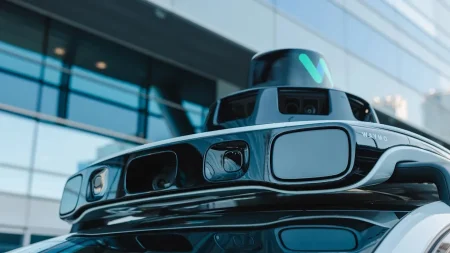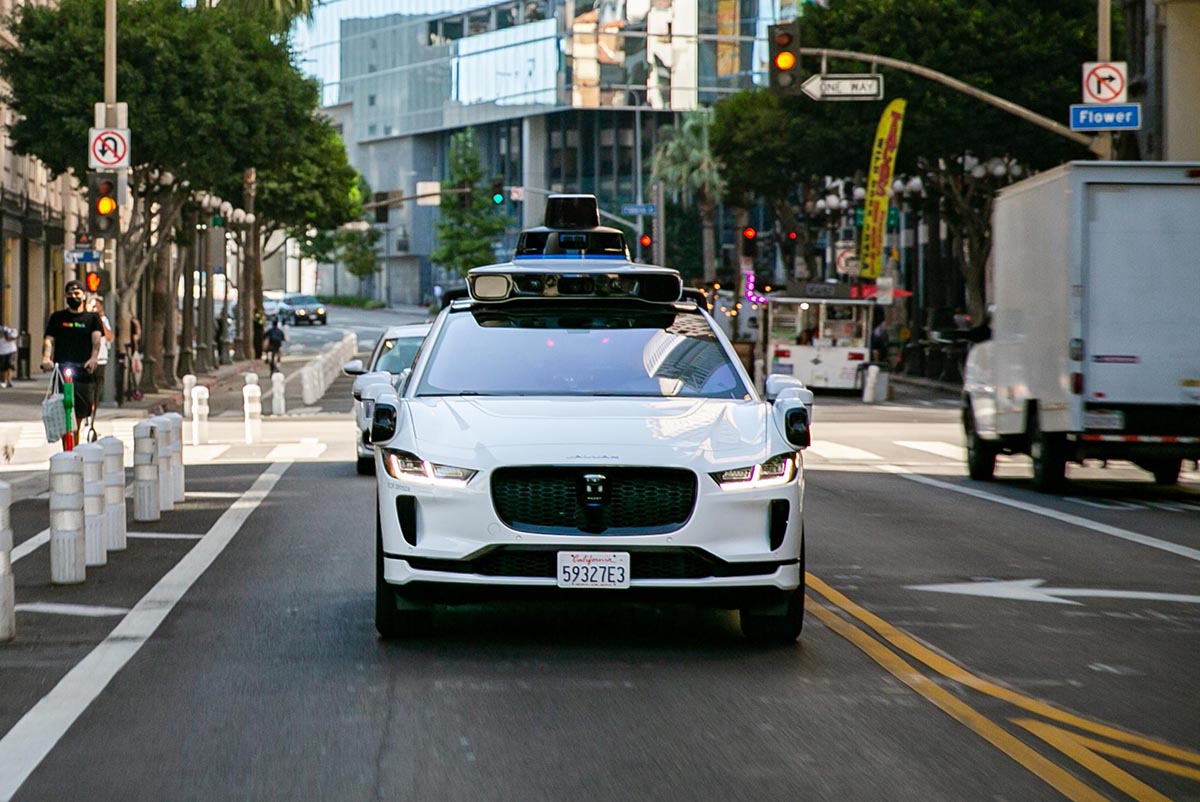
Waymo’s robotaxi service commands significantly higher prices than rivals Uber and Lyft in San Francisco, but many riders are willing to pay a premium for the experience, according to a new pricing analysis by ride-hailing app Obi.
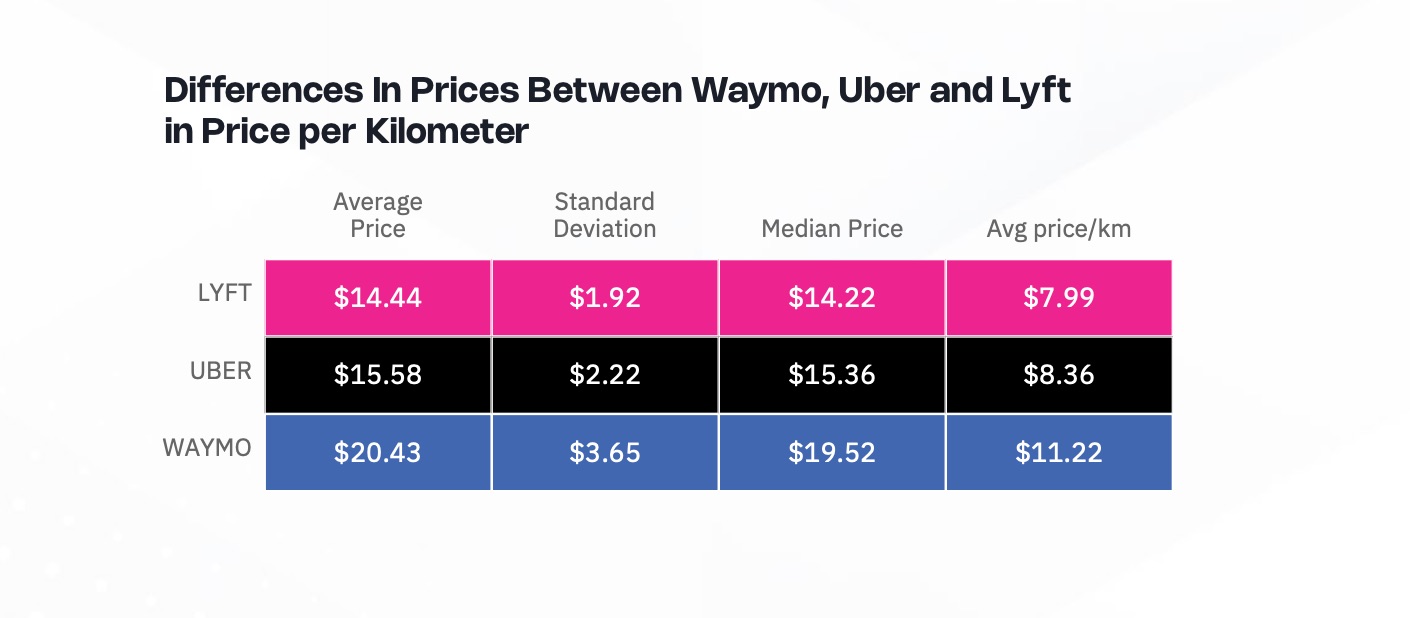
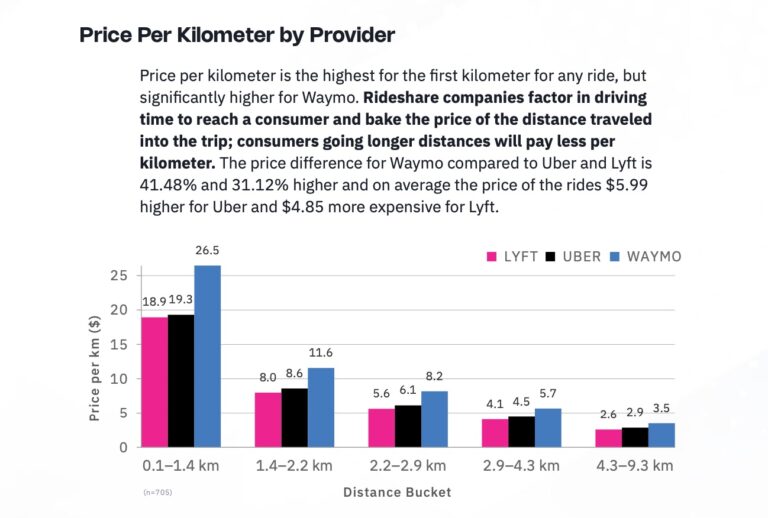
The study, conducted from March 25 to April 25, aggregated nearly 90,000 real-time ride offers from Waymo, UberX, and Lyft’s standard service. Obi found that Waymo’s average fare was $20.43, compared to $15.58 for Uber and $14.44 for Lyft. Despite the gap, user interest in Waymo’s driverless vehicles has remained strong.
“I didn’t expect consumers being willing to pay up to $10 more,” said Ashwini Anburajan, Obi’s chief revenue officer. “I think [that] speaks to a real sense of excitement for technology, novelty, and a real preference to sometimes be in the car without a driver.”


Waymo, a subsidiary of Alphabet, currently provides 250,000 paid trips per week across four U.S. cities. The analysis also revealed that 70% of Waymo riders preferred autonomous vehicles over human-driven ones. A user survey found that 16.3% were willing to pay up to $10 more for a robotaxi, and an additional 26.4% said they would pay up to $5 more.
“There’s something about being in the car alone,” Anburajan said. “It is there for you to, like, kind of live in a little bubble and get from point A to point B, and be very comfortable doing so.”
Analysts note that Waymo’s pricing structure differs from Uber and Lyft, which use refined dynamic pricing models and rely on human drivers who can increase fleet availability during peak demand. Waymo’s smaller, company-owned fleet and simpler pricing approach may contribute to the cost differences.
The data suggest that while Waymo is not yet profitable, its premium pricing combined with strong user sentiment could support future growth. The company has also partnered with Uber to list some of its rides on the Uber app, potentially expanding access and optimizing ride distribution.