



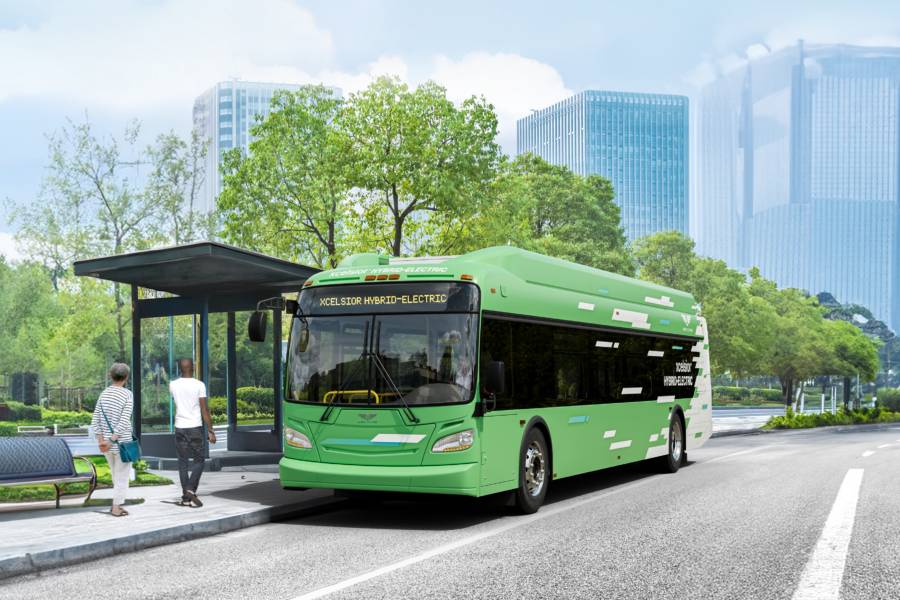
The Washington Metropolitan Area Transit Authority (Metro) has placed a follow-up order with New Flyer of America for 100 forty-foot buses, including 75 hybrid-electric models and 25 battery-electric units, as part of efforts to modernize its fleet serving the U.S. capital region.
The latest purchase mirrors an order placed last summer for the same mix of vehicles and falls within a broader agreement that included options for up to 400 additional buses. Financial support for the procurement comes from a combination of federal, state and local sources, including funding from the Federal Transit Administration’s Low or No Emission grant program.
Metro said the new buses will replace older vehicles nearing the end of their service life while improving reliability and passenger comfort. The agency added that the upgrades are aligned with its five-year Strategic Transformation Plan to deliver a more efficient and modern transit system.
Serving Washington, D.C., as well as parts of Maryland and Virginia, Metro operates a bus fleet of roughly 1,500 vehicles across the National Capital Region. The battery-electric Xcelsior CHARGE NG buses can seat between 32 and 61 passengers and have a range of up to 220 miles per charge, depending on battery configuration. The hybrid-electric buses can accommodate up to 84 passengers.
Chris Stoddart, president of North American Bus and Coach at parent company NFI, said the order extends a long-standing partnership with the transit agency. “New Flyer is committed to continuing our decades-long relationship with Metro, providing buses that deliver strong value, reliability, and performance,” Stoddart said. He added that the new vehicles “will boost the efficiency, power, and overall service quality of its transit system while fueling good manufacturing jobs and economic opportunity across the United States.”


