


Volkswagen is reportedly evaluating plans to introduce vehicles developed for the Chinese market into Europe, including the possibility of manufacturing some of those models at underutilised European factories as it seeks to improve production efficiency and reduce costs.
According to a report by Handelsblatt, the proposal forms part of broader transformation measures being considered by the automaker as it responds to weakening demand and excess manufacturing capacity in Europe. Volkswagen has not commented on the reported plans.
Two-Pronged Strategy Under Review
The report says Volkswagen is examining two possible approaches.
The first would involve importing selected China-developed models directly into Europe. The second would see vehicles designed for the Chinese market manufactured at existing European plants with spare production capacity, including the company’s factory in Zwickau, Germany.
The strategy could help increase factory utilisation while shortening development cycles by leveraging vehicles already engineered for China’s highly competitive electric vehicle market.
Pressure to Improve Factory Utilisation
The reported plans come amid continued pressure on Volkswagen’s European manufacturing network.
Recent reports have suggested the company is considering significant restructuring measures, including workforce reductions and the potential closure of several production facilities in Germany over the medium term.
Support for building China-developed Volkswagen models in Germany has also come from Lower Saxony Minister President Olaf Lies, who serves on Volkswagen’s supervisory board.
“If we were to produce vehicles that we currently build in China here as well, we could stabilise plant utilisation. This would also bring new development and innovation opportunities to our sites. For me, it is about stabilising employment and capacity in our plants instead of watching others build new factories outside Germany.”
China-Built SUV Among Potential Candidates
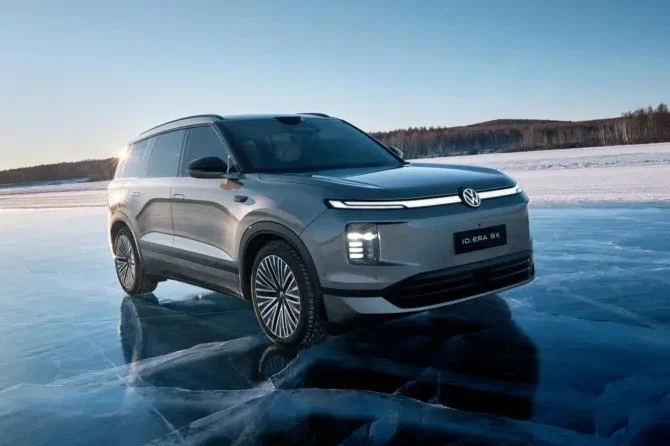
According to the report, one vehicle being evaluated for Europe is the ID. Era 9X SUV, developed jointly with Chinese partner SAIC Motor.
The model is the first Volkswagen Group vehicle to feature a range-extender powertrain. It combines a 220kW electric motor with either a 51.1kWh or 65.2kWh battery, providing a claimed all-electric driving range of up to 340 kilometres under China’s CLTC testing standard. A 1.5-litre turbocharged petrol engine functions solely as a range extender.
Because range-extender vehicles are not currently covered by the European Union’s additional tariffs on battery-electric vehicles imported from China, the model could offer Volkswagen a regulatory advantage if imported. However, the European Commission is reviewing whether similar tariffs should be extended to plug-in hybrid and range-extender vehicles.
The company is also reportedly considering an SUV based on its China Scalable Platform (CSP), which supports both battery-electric and range-extender powertrains. Any European launch would likely not occur before late 2027.
Software Compatibility Remains a Challenge
A key obstacle to introducing China-developed vehicles in Europe is software integration.
Chinese-market Volkswagen models rely on locally developed driver assistance systems and software architectures that differ substantially from those used in Europe. According to the report, Volkswagen is assessing whether the existing software can be adapted to comply with European regulations or whether a different software platform would be required.
While the reported strategy could help reduce development costs, improve factory utilisation and accelerate the rollout of new models, Volkswagen has not confirmed any production plans. The proposals remain under evaluation, and no final decision has been announced.


