





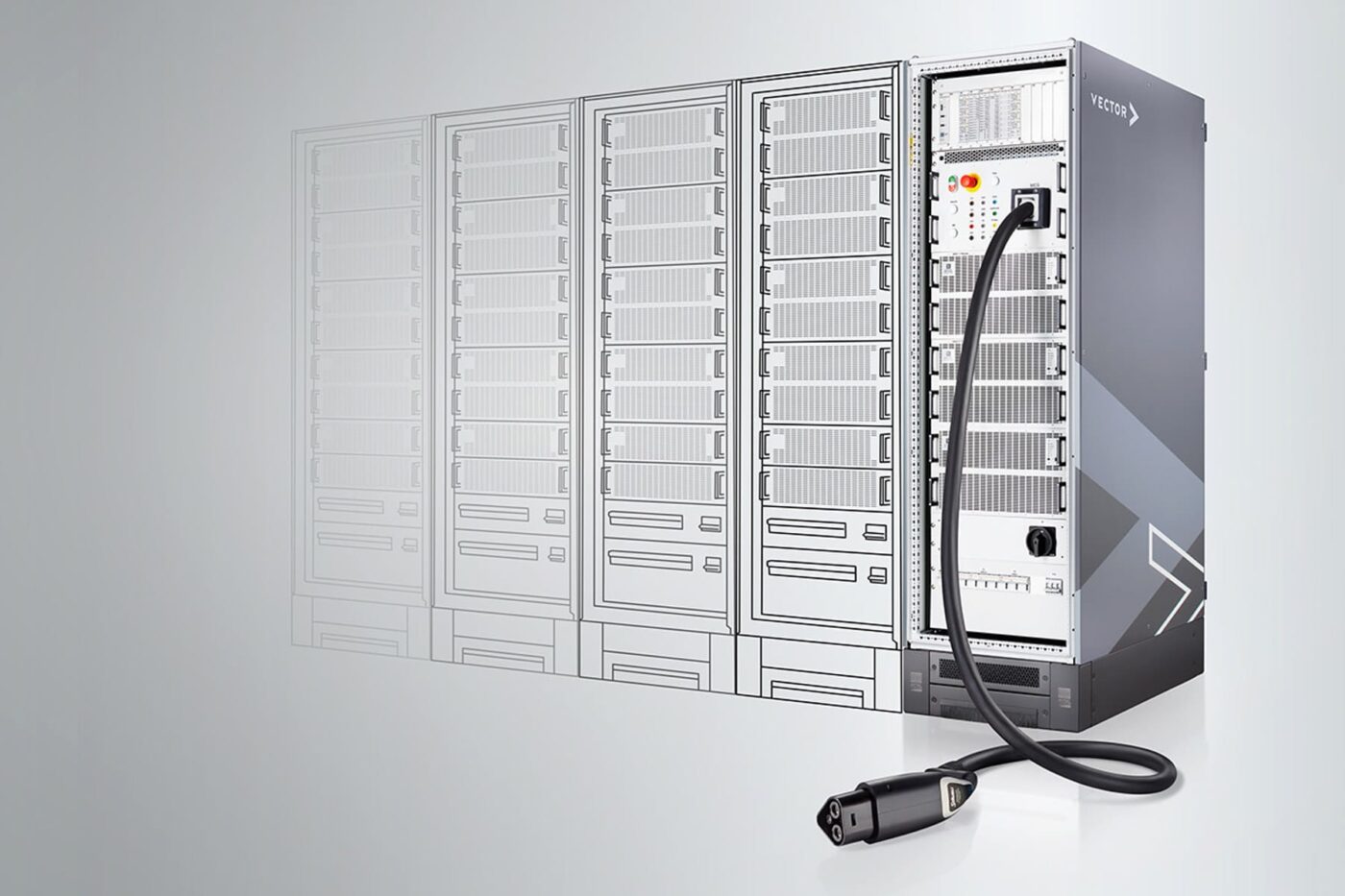
Vector has introduced the vCTS.performance, a new hardware-in-the-loop (HIL) test system designed to validate charging communication between electric vehicles and charging infrastructure, including the emerging Megawatt Charging System (MCS).
Developed in partnership with EA Elektro-Automatik, the system aims to support high-performance and scalable testing for next-generation EV charging technologies.
See also: Germany’s Vector Begins Production of Megawatt Charging Controller for Heavy-Duty EVs
According to Vector, the vCTS.performance can deliver up to 3.84 megawatts (MW) of scalable DC charging power, enabling both load and endurance tests that simulate real-world charging conditions. The system supports multiple global charging standards, including MCS, CCS, NACS, GB/T, and CHAdeMO, making it suitable for a wide range of electric vehicle and charging station applications. Vector noted that the unit’s scalable performance, in 60 kW increments, ensures flexibility for various testing needs.
The company emphasized that the new platform ensures the conformity and interoperability of EV and EVSE communication protocols. Energy efficiency was also a focus, with regenerative charging technology feeding power back into the grid at over 96 percent efficiency.
See also: BorgWarner Receives New Xpeng Orders, Debuts Torque Vectoring in Polestar Electric Cars
“With vCTS.performance, Vector sets new standards for high-power charging tests for electric vehicles and makes a significant contribution to the advancement and validation of charging communication in electromobility,” said Jan Großmann, Product Manager at Vector.
Vector positions itself as a leading provider of software and system solutions across industries including automotive, aerospace, medical technology, and IoT. Beyond testing systems, the company also manufactures MCS controllers, having begun production earlier this year to support the rollout of megawatt charging technology.


