



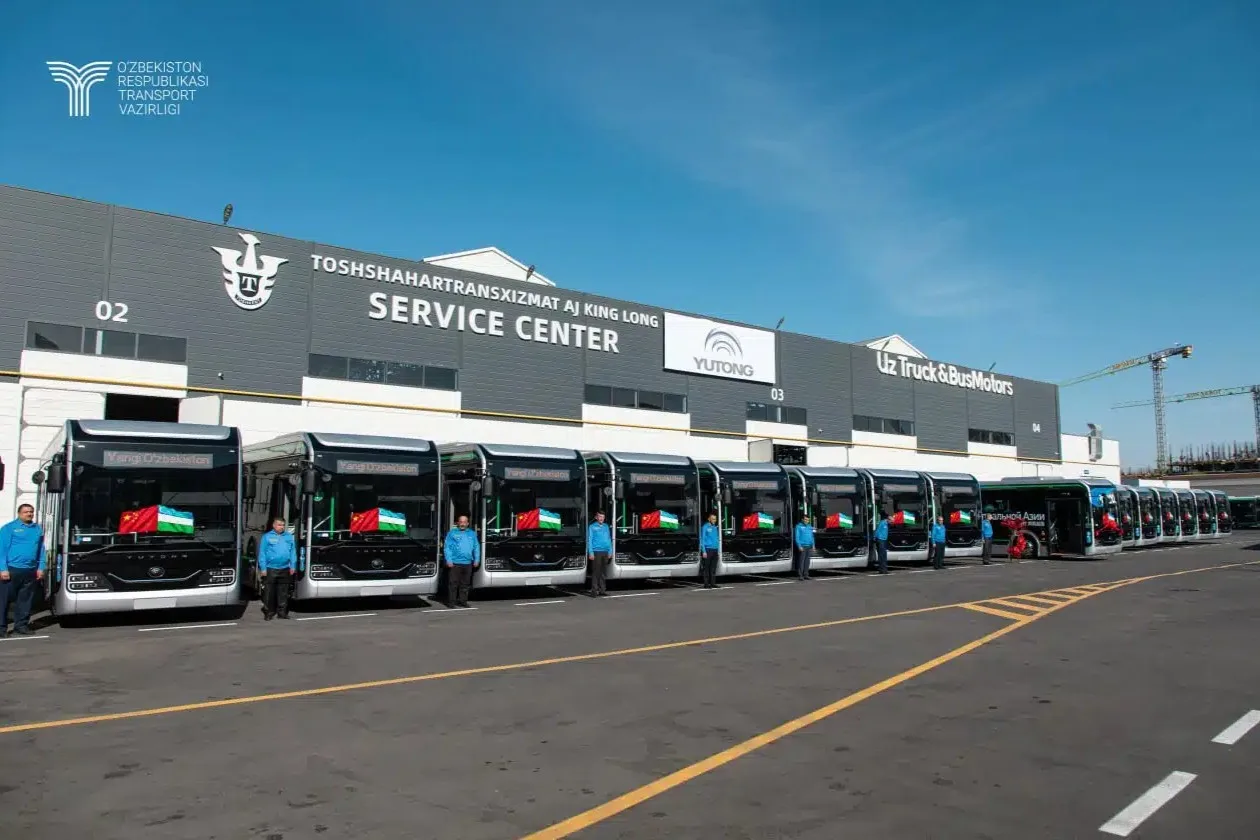
Uzbekistan has received 202 new Yutong electric buses for the capital, Tashkent, as part of a broader government initiative to modernize the city’s transport system and cut emissions. The move supports the country’s target of making half of the capital’s bus fleet electric by 2030.
The new buses were delivered under a series of supply agreements between Chinese manufacturers and the Uzbek government to enhance cooperation in sustainable transport development. The vehicles will be operated by Toshshahatransxizmat JSC, the state-owned public transport operator responsible for Tashkent’s bus network. Authorities did not specify which Yutong models were supplied.
See also: Li Auto Opens First Overseas Retail Center in Uzbekistan, Expands Presence in Central Asia
According to Uzbekistan’s Ministry of Transport, the new electric buses comply with modern technical, environmental, and safety standards. The ministry said the addition of electric vehicles has already produced tangible environmental benefits, with harmful emissions from the city’s bus fleet reduced by about 93.3 tonnes per month in recent years.
“The arrival of these buses marks a significant step toward achieving sustainable urban mobility in Tashkent,” a Ministry of Transport official said. “We aim to build an efficient, eco-friendly public transport system that meets the needs of our growing city.”
See also: Uzbekistan Targets Over 32,000 EV Charging Stations by 2025 in Major Infrastructure Push
Under the national transport modernization plan, authorities intend to introduce 1,200 new electric and modern buses of various capacities by the end of 2026. The planned additions include 30 ultra-large 18-metre buses, 500 large 12-metre buses, and 470 medium 9-metre models. The government said the expanded fleet is expected to increase passenger comfort, enhance service reliability, and further reduce operational emissions across Tashkent’s transport network.


