





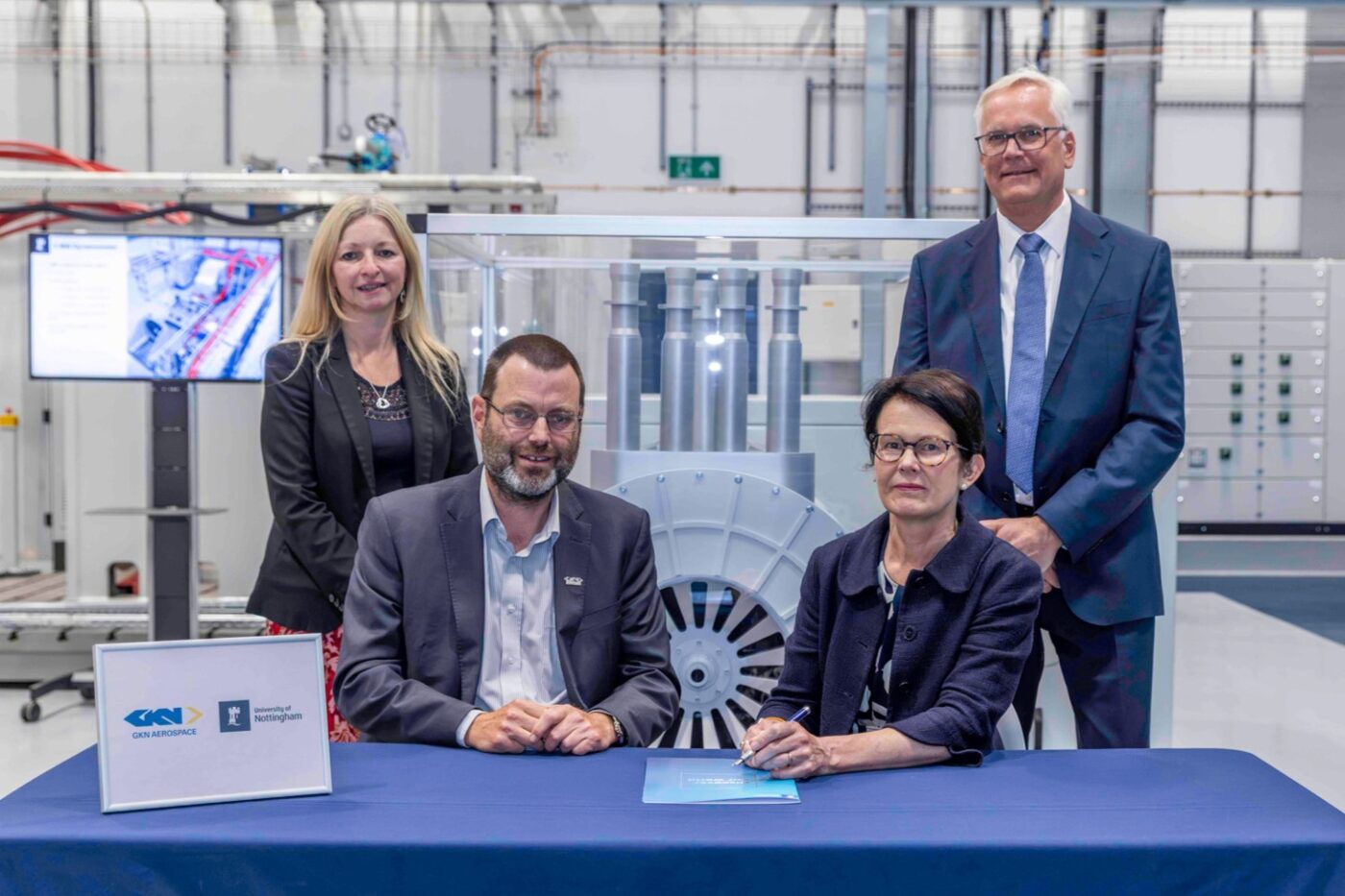
The University of Nottingham and GKN Aerospace have launched a new company, HPDrive Technologies, to accelerate the development and commercialisation of cryogenic electrical machine technologies for hydrogen-electric aviation and other high-power applications.
The joint venture will focus on advancing lightweight, high-efficiency electrical machines designed to operate at megawatt power levels, supporting the development of future zero-emission aircraft propulsion systems and other energy-intensive industries.
Focus on Hydrogen-Electric Aviation
According to the partners, HPDrive will provide a dedicated pathway for developing and industrialising cryogenic electrical machine technologies, with an initial emphasis on aerospace applications before expanding into other sectors that require high-power electric propulsion systems.
The company combines expertise in cryogenic engineering, advanced coil technologies, electrical machine design and aerospace engineering. HPDrive is currently advancing its technology roadmap while engaging with potential industrial and research partners.
The University of Nottingham said the new venture complements its broader research activities in zero-carbon technologies, sustainable transport and advanced electrification. It also supports work being carried out at the university’s Hybrid Propulsion Systems facility, which is co-funded through the UK Research Partnership Investment Fund.
Building on Existing Aerospace Research
GKN Aerospace said HPDrive will build upon technologies developed through its H2GEAR programme, which focuses on hydrogen-powered flight technologies.
“The launch of HPDrive marks an exciting step forward in the journey towards zero-emission aerospace. The company has been established on strong foundations and brings together complementary expertise in cryogenic technologies, electrical machines and aerospace engineering,” said Professor Henner Wapenhans, Chief Executive Officer of HPDrive Technologies.
“Through this new venture, we will further develop advanced cryogenic electrical machine technologies and accelerate their route towards future industrial and aerospace applications.”
Max Brown, Vice President of Technology at GKN Aerospace, said the new company provides a dedicated route for continuing work initiated under the H2GEAR programme.
“HPDrive creates a dedicated route to build on the technologies, expertise and capability developed through H2GEAR and take advanced cryogenic electrical machines closer to future industrial and aerospace applications.”
“Through this venture with the University of Nottingham, we are supporting the continued development of a strategically important UK capability and helping to advance the technologies required for the longer-term transition towards zero-emission flight.”
Supporting Commercialisation
The partners said the company is intended to bridge the gap between research and industrial deployment by accelerating the commercialisation of cryogenic propulsion technologies.
George Rice, Director of Knowledge Exchange and Business Engagement at the University of Nottingham, said the collaboration demonstrates the value of partnerships between academia and industry.
“It has been an extremely rewarding process to co-create HPDrive with GKN Aerospace to facilitate the development of a nationally important technology platform. The University and GKN Aerospace will continue to support the company as it progresses towards commercialisation.”
The launch of HPDrive reflects growing efforts across the aerospace industry to develop next-generation propulsion technologies capable of supporting zero-emission aviation, with hydrogen-electric systems regarded as one of several potential pathways toward decarbonising future aircraft.


