


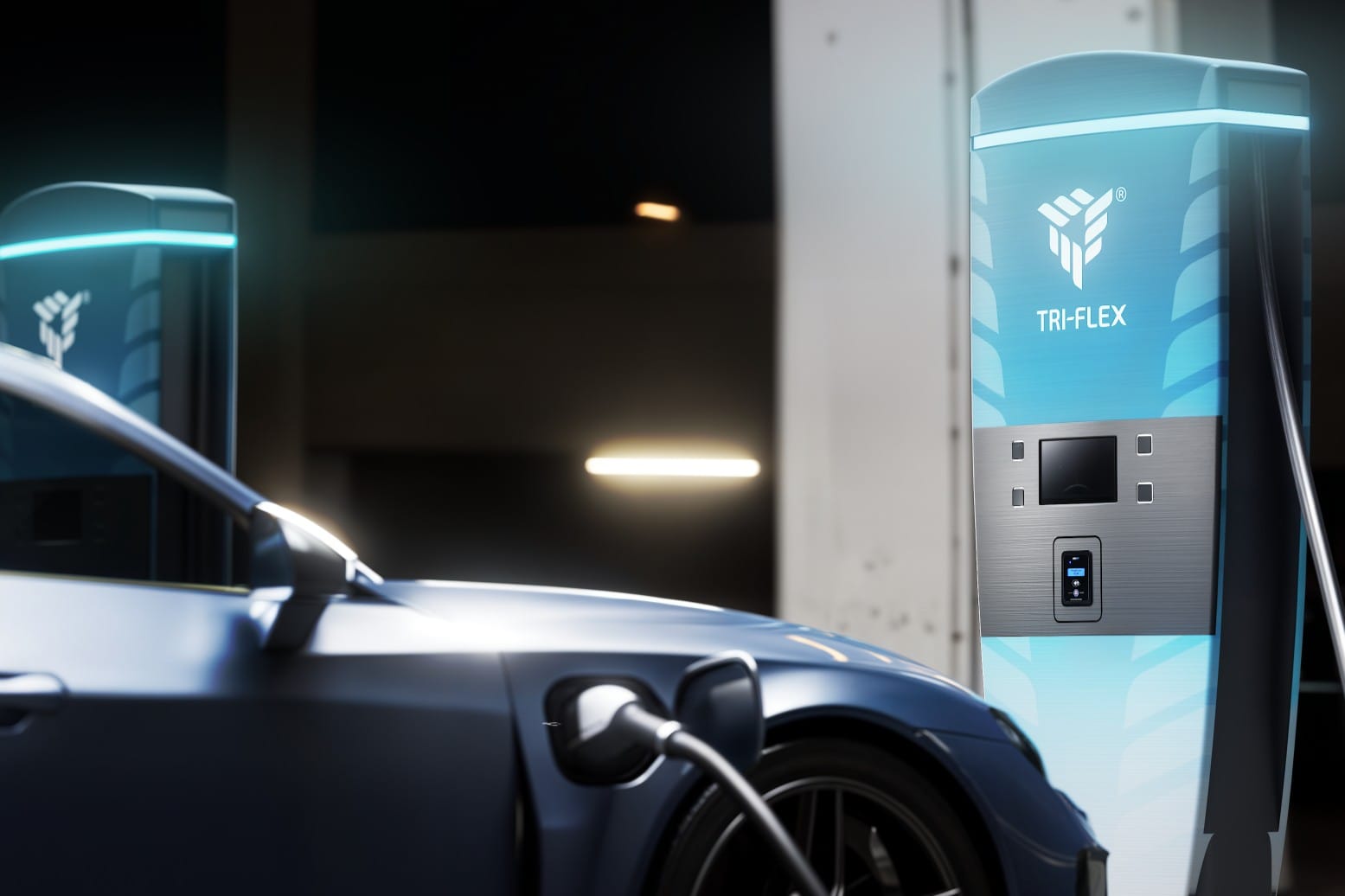
Tritium on Monday unveiled its TRI-FLEX charging platform at ACT Expo 2025, introducing a high-capacity modular system designed to scale from four to 64 charge points with up to 3.2 megawatts of DC output, addressing infrastructure limitations in high-demand electric vehicle and fleet charging environments.
The platform features a distributed architecture centred around the TRI-FLEX Hub, a power conversion unit that supports AC input ranging from 400 kW to 1.6 MW and delivers up to 3.2 MW of DC output. Each hub can connect to between two and 32 TRI-FLEX dispensers, supporting up to 64 simultaneous charging points — a density eight times higher than many conventional distributed systems.
See also: Tritium to Deploy 48 Fast Chargers Across Tennessee in Major Infrastructure Initiative
“Today marks a paradigm shift in EV charging infrastructure,” said Tritium CEO Arcady Sosinov during the product launch. “TRI-FLEX is not just an incremental improvement but a fundamental reimagining of distributed charging architecture designed to scale efficiently at the speed of coming demand in the market.”
The platform supports a combination of 100 kW, 200 kW, and 400 kW dispensers within a single system. It features 25 kW load resolution and real-time power management to balance energy delivery across vehicle types, including passenger cars and heavy-duty commercial trucks. Tritium says the TRI-FLEX system can reduce total cost of ownership by enabling phased rollouts and minimizing the need for grid upgrades.
See also: AmpUp and Tritium Partner to Launch Fast-Charging Station Upgrade Program in North America
Built for environmental durability, the TRI-FLEX platform carries an IP65 rating and includes advanced liquid cooling for operation in temperatures ranging from -35°C to +55°C. The company confirmed the system will be compatible with MCS (Megawatt Charging System) connectors, with a 640 kW dispenser available for heavy-duty vehicle applications and full MCS support planned as vehicle adoption grows.
Integration capabilities with battery storage and renewable energy sources are also included, allowing for deployments in grid-constrained areas and helping operators reduce peak electricity costs.