
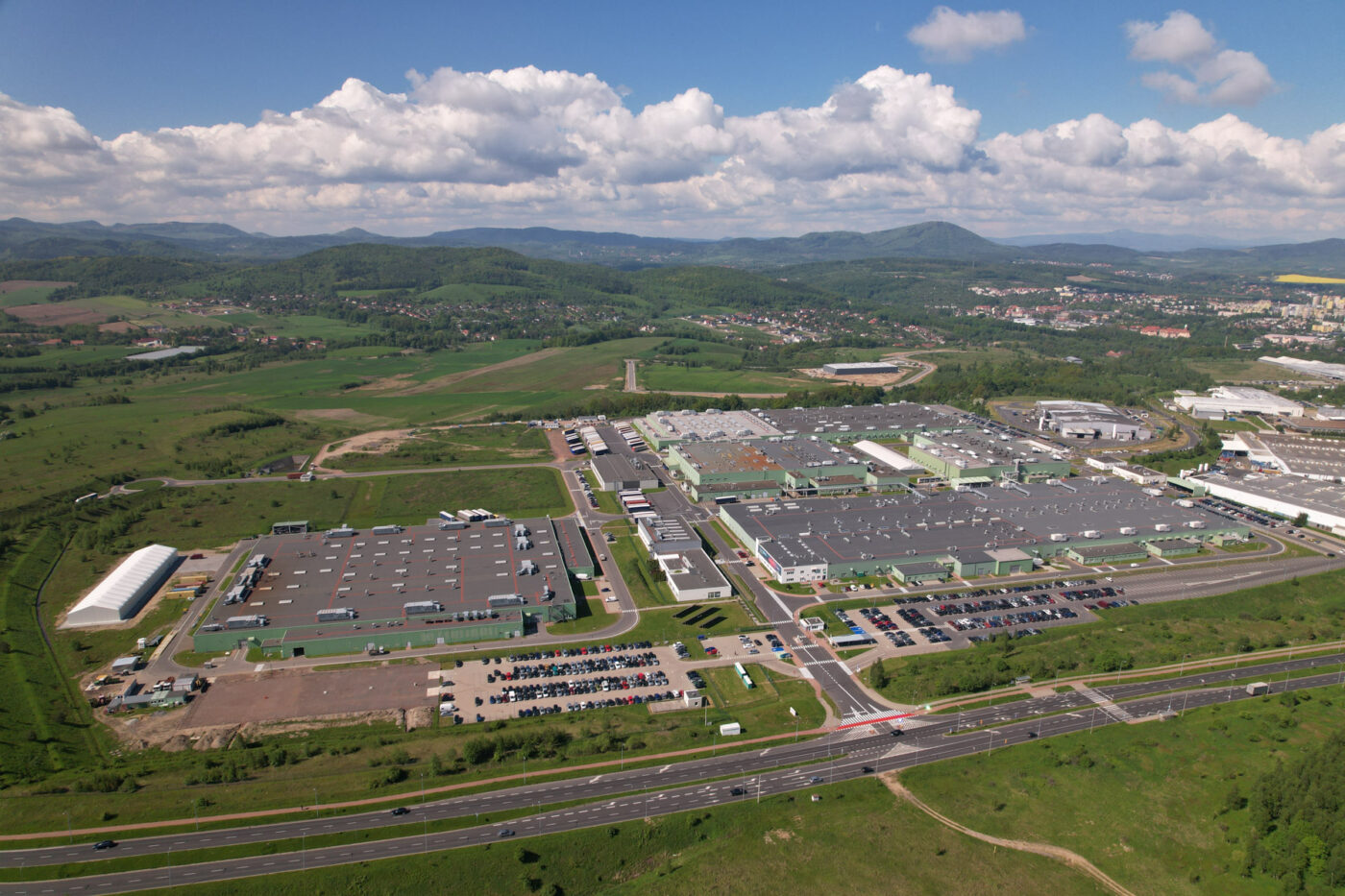
Toyota has announced plans to build a circular economy factory in Wałbrzych, Poland, aimed at dismantling end-of-life vehicles and recovering components and raw materials for reuse in new production.
The facility will occupy approximately 25,000 square metres and is designed to process about 20,000 vehicles per year. The plant will focus on salvaging usable parts and extracting valuable materials, with particular attention to traction batteries and other electrified vehicle components.
“Items such as batteries and wheels will be evaluated for their potential to be remanufactured, repurposed or recycled,” Toyota said, adding that the objective is to maximise environmental benefits through systematic processing at the end of a vehicle’s life cycle.
Components deemed suitable for reuse will be refurbished and returned to the market, while non-recoverable parts will be recycled to extract materials including copper, steel, aluminium and plastics. These secondary raw materials will be fed back into manufacturing, supporting closed-loop production systems.
The Wałbrzych site will become Toyota’s second circular economy facility in Europe, following a similar plant scheduled to open in Burnaston, United Kingdom, in 2025. The new project will be integrated into Toyota’s existing manufacturing complex in the Polish city, where the company already produces key components for hybrid and conventional drivetrains.
“We selected Poland due to the strong market potential to source End-Of-Life vehicles, recycling upstream & downstream and the presence of our established manufacturing infrastructure,” said Leon van der Merwe, Vice President of Circular Economy at Toyota Motor Europe. He added that similar investments could follow in other European markets.
The project reflects growing industry efforts to reduce waste, secure critical materials for electrification and comply with increasingly stringent environmental regulations across the European Union.