
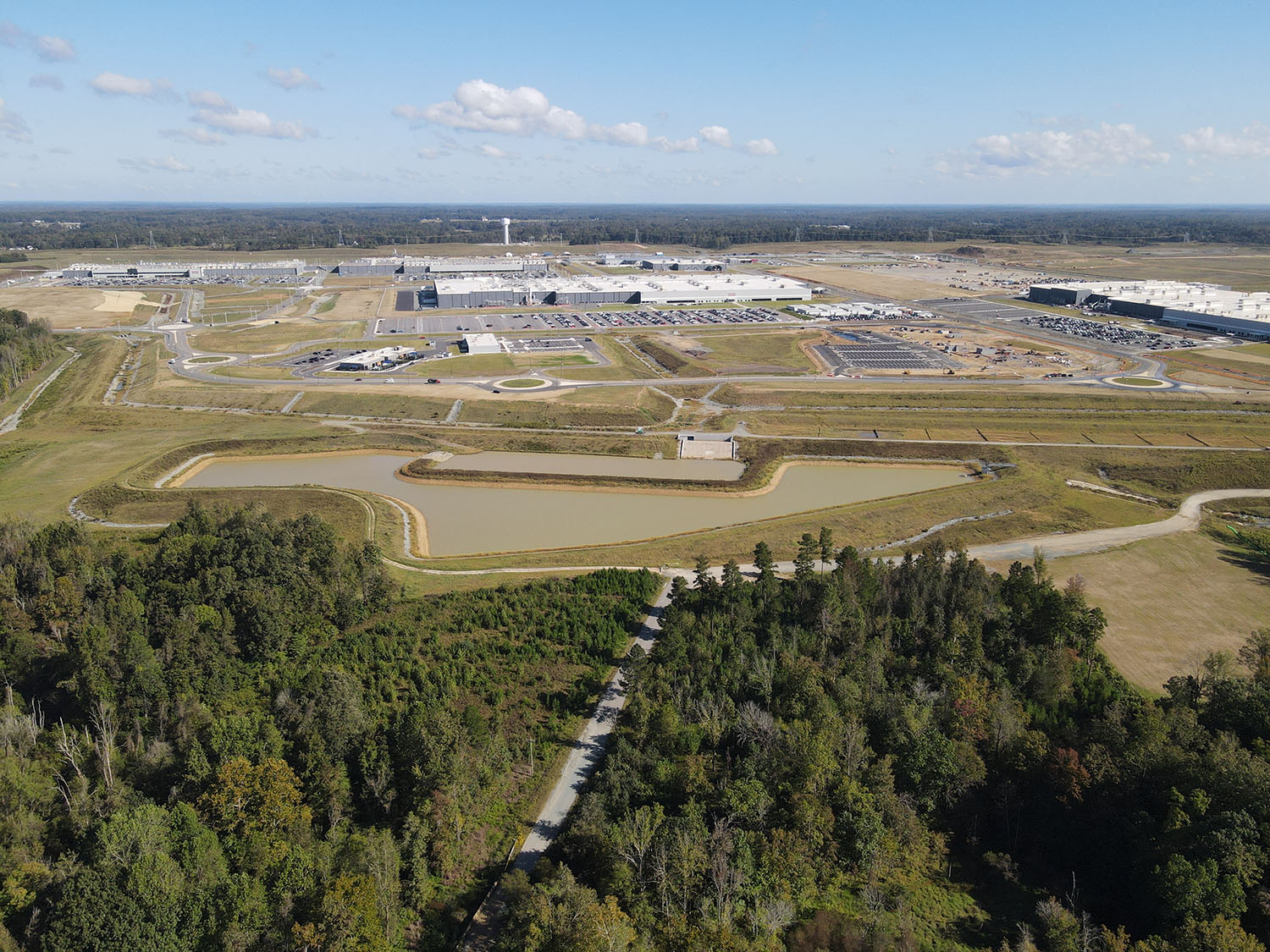
Toyota Motor said on Wednesday it has started production at its $13.9 billion battery manufacturing plant in North Carolina, marking a key step in expanding its hybrid vehicle output in the United States. The company also confirmed plans to invest an additional $10 billion over the next five years to strengthen its U.S. manufacturing operations.
The Japanese automaker first announced the North Carolina project in December 2021, aiming to produce batteries for both hybrid and fully electric vehicles. Batteries from the plant will power hybrid versions of the Camry, Corolla Cross, and RAV4, as well as a yet-to-be-announced three-row all-electric SUV, Toyota said. The new facility is currently supplying hybrid batteries to factories in Kentucky and a Mazda-Toyota joint venture in Alabama.
See also: Toyota Postpones Battery Factory Project in Fukuoka Amid Weak EV Demand
“Over the next five years, we are planning an additional investment of $10 billion in the U.S. to further grow our manufacturing capabilities, bringing our total investment in this country to over $60 billion,” said Ted Ogawa, President of Toyota Motor North America.
Located on a 1,850-acre (749-hectare) site, the plant is Toyota’s 11th factory in the United States and will have the capacity to produce 30 GWh of batteries annually at full scale. It will include 14 production lines for plug-in hybrid and battery-electric models and is expected to employ 5,000 workers once fully operational.
See also: Toyota Unveils Ninth-Generation Hilux with Electric and Hydrogen Variants
During a recent visit to Japan, U.S. President Donald Trump highlighted Toyota’s new investment, saying, “Go out and buy a Toyota.” The president has previously criticized auto imports and imposed higher tariffs on foreign-made vehicles.
Toyota has been slower than some competitors in adopting full battery-electric vehicles, focusing instead on hybrid and fuel cell technologies. “We know there is no single path to progress,” Ogawa said. “That’s why we remain committed to our multi-pathway approach, offering fuel-efficient gas engines, hybrids, plug-in hybrids, battery electric and fuel cell electric vehicles.”
See also: Toyota Introduces 2026 Crown Signia With Two-Tone Design and Hybrid Efficiency
Other automakers, including Volkswagen, have announced plans to expand hybrid offerings as the Trump administration moves to rescind electric vehicle tax credits and ease fuel economy standards that had previously encouraged EV adoption.
At the plant’s opening, U.S. Transportation Secretary Sean Duffy said the administration would soon propose revised fuel economy standards, calling prior regulations “too aggressive.” Duffy previously signed an order in January directing the National Highway Traffic Safety Administration to roll back fuel economy rules set under former President Joe Biden for the 2022–2031 model years, which had aimed to sharply reduce fuel consumption.