
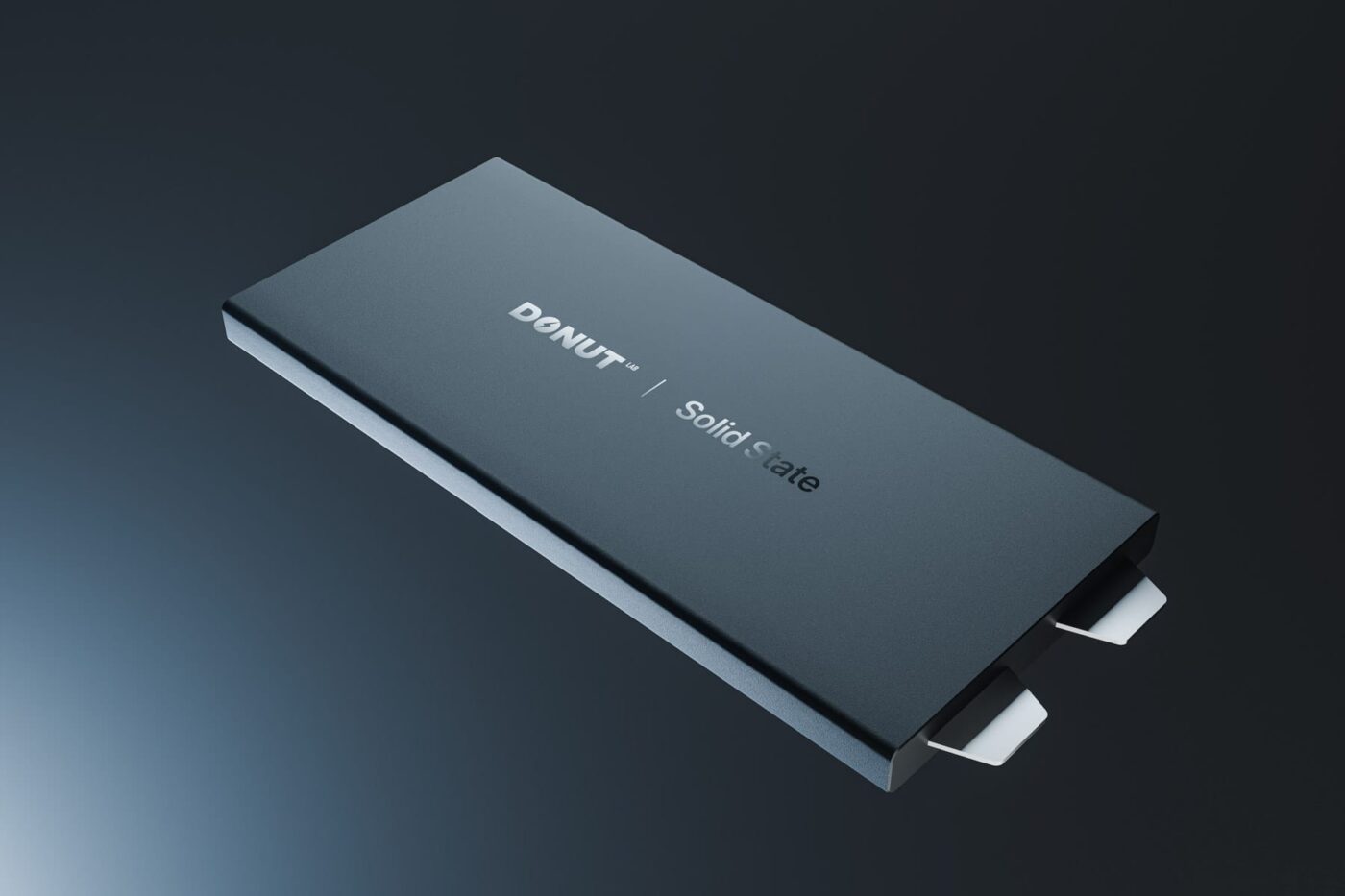
The chairman of Chinese battery maker Svolt Energy has cast doubt on claims by Finnish startup Donut Lab that it has developed a production-ready solid-state battery, saying the specifications described are not technically feasible.
Speaking to local media on Jan. 14, Yang Hongxin, chairman and chief executive of Svolt, said the battery presented by Donut Lab “doesn’t exist in the world,” according to a report by Xuanyuan Business Review.
See also: Dongfeng Tests Solid-State Battery Prototypes in Extreme Cold Ahead of Planned 2026 Production
“All the parameters are contradictory,” Yang was quoted as saying. “Any technician with basic knowledge would recognise it as a scam.”
The comments followed Donut Lab’s announcement earlier in January that it had unveiled a solid-state battery it said is now available to original equipment manufacturers. The Finnish technology company said deployment would begin with all 2026 models of Verge Motorcycles from the first quarter of next year.
See also: Chinese Researchers Report Solid-State Battery Breakthrough That Cuts Pressure Requirements
Donut Lab said the battery can be fully charged in five minutes and has an energy density of 400 watt-hours per kilogram, describing it as ready for use in production vehicles. The company said the technology is designed to enable longer driving range, lighter vehicle structures and greater flexibility in product design.
The battery was showcased at the Consumer Electronics Show in Las Vegas, which opens on Jan. 6, 2026, according to the company.
Donut Lab has also said the battery can withstand extreme temperatures, retaining more than 99% of its capacity at minus 30 degrees Celsius and at temperatures above 100 degrees Celsius, without signs of ignition or degradation. It claims the battery has a lifespan of up to 100,000 charge cycles with minimal capacity loss.
See also: Svolt Energy Unveils 80-kWh PHEV Battery Pack, Advances Semi-Solid-State R&D
However, the company has not disclosed details about the materials used in the cell, saying only that it relies on abundant and geopolitically safe materials and offers lower costs than conventional lithium-ion batteries.
Yang said such performance metrics could not realistically coexist in a single battery system. “Twelve-C charging, extreme low-temperature performance and 400 Wh/kg energy density — no such battery exists in the world,” he said.
Svolt maintains a cautious stance on all-solid-state batteries, citing unresolved challenges in materials, durability and manufacturing. “Too many unresolved issues exist; it’s premature to discuss industrialisation timelines,” Yang said, according to the report.
See also: KAIST Researchers Develop Lower-Cost Solid-State Battery Design Using Structural Innovation
Yang added that China remains at the forefront of battery technology development. “China’s technology is the most advanced globally. If China can’t produce or perfect it, companies from other countries certainly can’t either,” he said, while noting that continued research and information gathering are still necessary.
Svolt currently operates a 2.3 gigawatt-hour production line for semi-solid-state batteries. The company says its 100-kilowatt-hour semi-solid battery system delivers a system energy density of 188 Wh/kg and supports peak 6C charging. Svolt aims to complete development of second-generation 400 Wh/kg semi-solid cells in 2026, followed by 450 Wh/kg semi-solid pouch cells by 2028.
See also: Swiss Researchers Unveil Manufacturing Method to Advance Solid-State Batteries
Other major Chinese battery manufacturers, including CATL and BYD, have indicated that limited vehicle integration of solid-state batteries could begin around 2027. According to data from SNE Research, CATL and BYD together accounted for more than half of global battery market share between January and November last year.
Xuanyuan Business Review via CnEVPost