
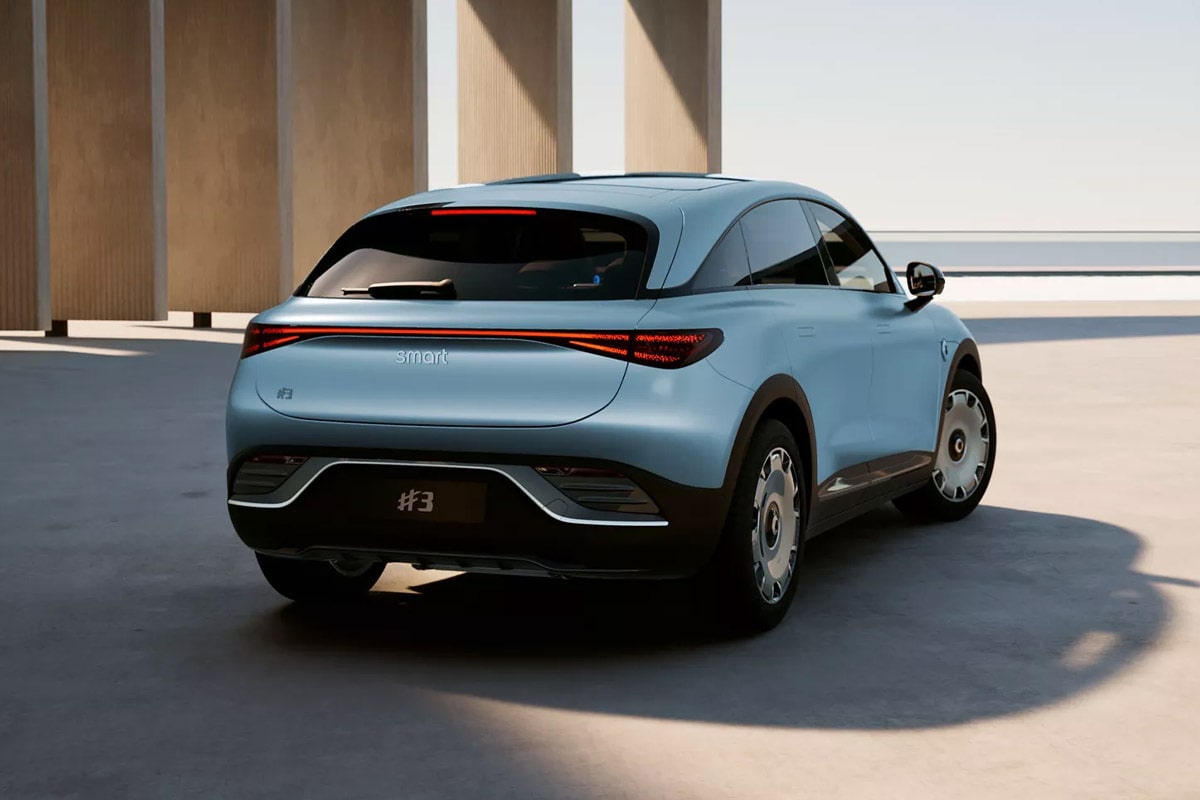
Electric vehicle brand Smart has launched a nationwide recall in China covering 18,217 units of its battery-electric models, the Smart #1 and Smart #3, due to a potential fire risk linked to battery components.
The recall, filed with China’s State Administration for Market Regulation (SAMR), affects vehicles manufactured between 2022 and 2023. According to the notice, the campaign includes 16,072 units of the Smart #1 and 2,145 units of the Smart #3.
The recall will begin on March 17, 2026. The company said the issue stems from “manufacturing consistency of components in their high-voltage power batteries,” which could increase the risk of thermal runaway under certain conditions.
To address the issue, Smart will inspect affected vehicles or perform remote diagnostics through connected vehicle systems. Depending on the results, the company may replace the battery packs. Owners will also receive alerts through a cloud-based system warning of potential overheating risks while driving.
Since 2020, Smart has operated as a 50:50 joint venture between Mercedes-Benz and Geely. Its latest battery-electric models are built on a platform developed by Geely.
The recall follows a similar action by Geely’s premium electric brand Zeekr, which recently announced a recall affecting roughly 38,000 units of the Zeekr 001 WE Edition produced between 2021 and 2024.
In that case, the issue was linked to an 86 kWh battery supplied by Sunwoda. Reports indicated that prolonged use could lead to increased internal resistance within the high-voltage battery, potentially degrading performance and, in extreme cases, triggering thermal runaway.
Thermal runaway occurs when a battery cell overheats due to defects, internal damage or manufacturing inconsistencies. The resulting chain reaction of heat-producing chemical processes can spread to neighbouring cells, posing a risk to the entire battery pack.
According to industry portal CNEVPost, the Smart recall comes amid growing scrutiny of battery quality across some Geely-related electric vehicle platforms.
Last month, a legal dispute between Geely subsidiary Vremt and Sunwoda was resolved, with Sunwoda agreeing to cover part of the costs associated with replacing defective traction batteries in affected vehicles.