
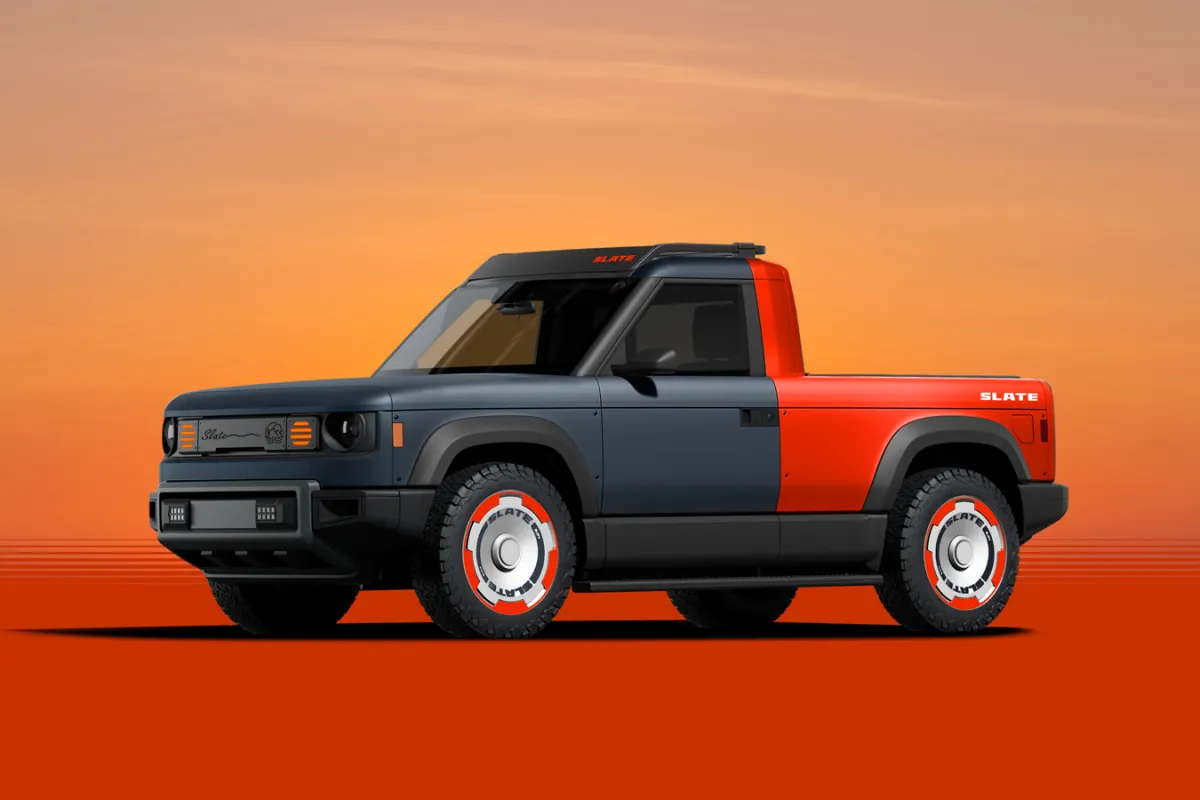
U.S. electric vehicle startup Slate Auto unveiled its debut model on Thursday in Long Beach, California — a bare-bones, highly customizable EV pickup that eschews modern tech frills in favor of affordability and analog design.
The three-year-old company said its base model, dubbed the “Blank Slate,” will be priced under $20,000 with the federal EV tax credit when it arrives in late 2026. Unlike most electric vehicles, Slate’s truck features manual windows, no main infotainment screen, and comes unpainted. Buyers can opt to wrap the vehicle using kits sold by Slate, either on their own or via company-approved installers.
“The auto industry has been so focused on autonomy and technology in the vehicle, it’s driven prices to a place that most Americans simply can’t afford,” said Jeremy Snyder, Slate’s chief commercial officer. CEO Chris Barman added that Slate aims to build “the affordable vehicle that has long been promised but never been delivered.”
The Blank Slate features a 52.7kWh battery offering about 150 miles of range, with an optional upgrade to 240 miles. It uses a single 150kW motor on the rear axle and charges via the North American Charging Standard. Standard specs include a five-foot bed, 17-inch wheels, and a 1,400-pound payload capacity — with towing maxed at 1,000 pounds, trailing behind rivals like Ford’s Maverick.
Backed by more than $111 million in funding, including investment from Amazon founder Jeff Bezos and Guggenheim Partners CEO Mark Walter, Slate hopes to stand apart in the EV space with its modular approach. The truck can be transformed from a two-seater pickup to a five-seater SUV, and the company promises over 100 accessories at launch. Buyers can place a $50 refundable reservation online.
Slate also plans to launch “Slate University,” a content hub offering how-to videos for installing upgrades and accessories. “Make the Blank Slate yours at the time of purchase, or as your needs and finances change over time,” Barman said, emphasizing the startup’s customer-centric strategy.
While other EV startups have struggled to scale, Slate is betting that its low-cost platform and domestic production strategy will give it a better shot at long-term viability.