
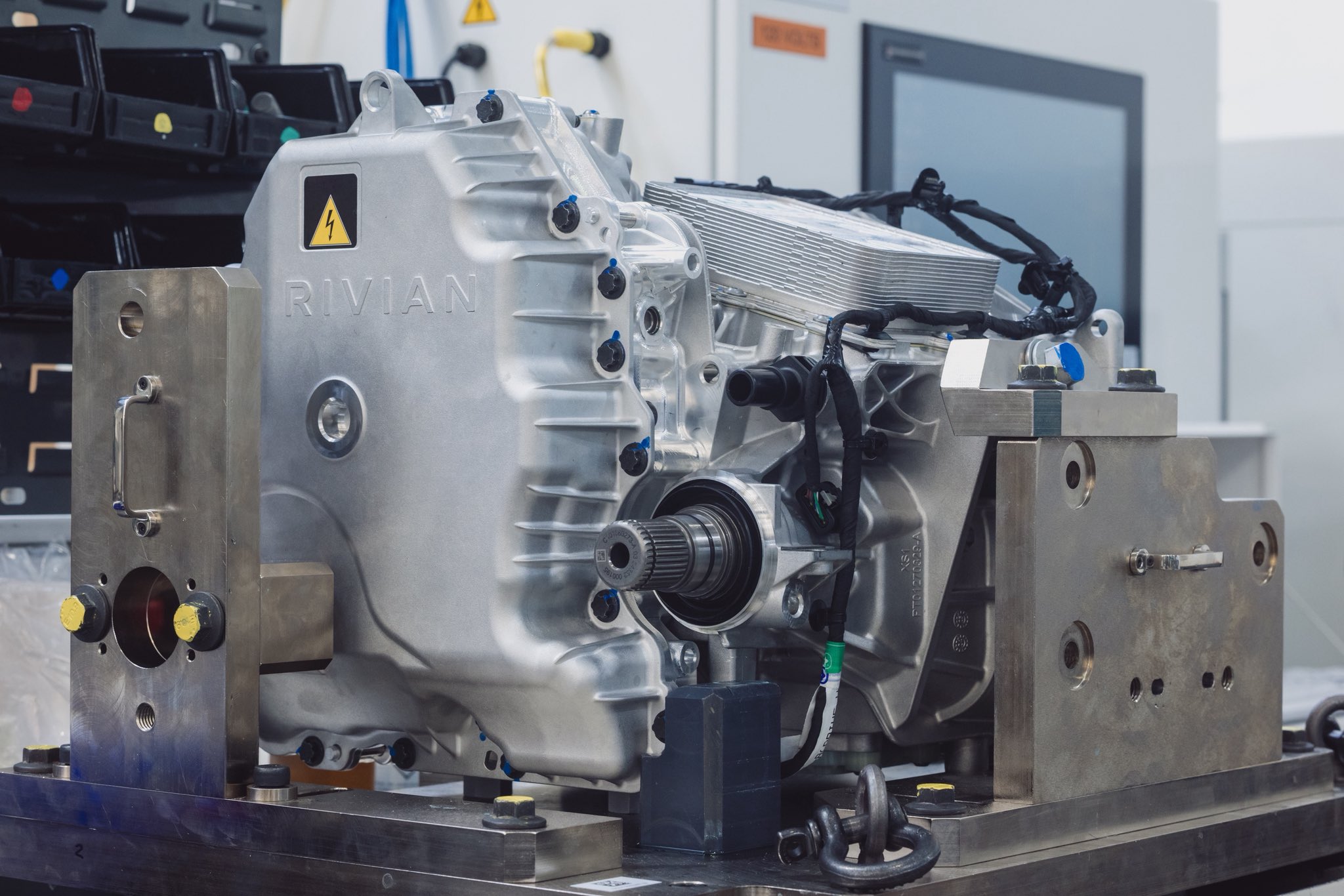
Rivian Automotive is moving forward with development of its upcoming R2 electric vehicle lineup, offering a closer look at the Maximus drive unit that will power the mid-size SUVs when they enter production next year.
Rivian CEO RJ Scaringe recently shared new images of the Maximus drive unit, underscoring the company’s efforts to increase manufacturing efficiency and reduce costs. The drive unit, designed in-house, features several innovations aimed at streamlining production, including a continuous stator winding technique that significantly reduces weld requirements.
See also: Rivian Maintains $45,000 R2 Price, 2026 Production Despite Trade Uncertainty
Compared to Rivian’s existing Enduro unit, which requires 264 welds per stator, the new Maximus unit needs only 24. The reduced complexity is expected to lower overall production costs while improving component reliability.
Scaringe said the Maximus drive unit includes a side-mounted inverter that makes use of flat space at the end of the motor, helping to minimize the length of bus bars. The unit’s design integrates a single printed circuit board to handle all processing and power electronics, further consolidating components.
See also: Rivian Maintains $45,000 R2 Price, 2026 Production Despite Trade Uncertainty
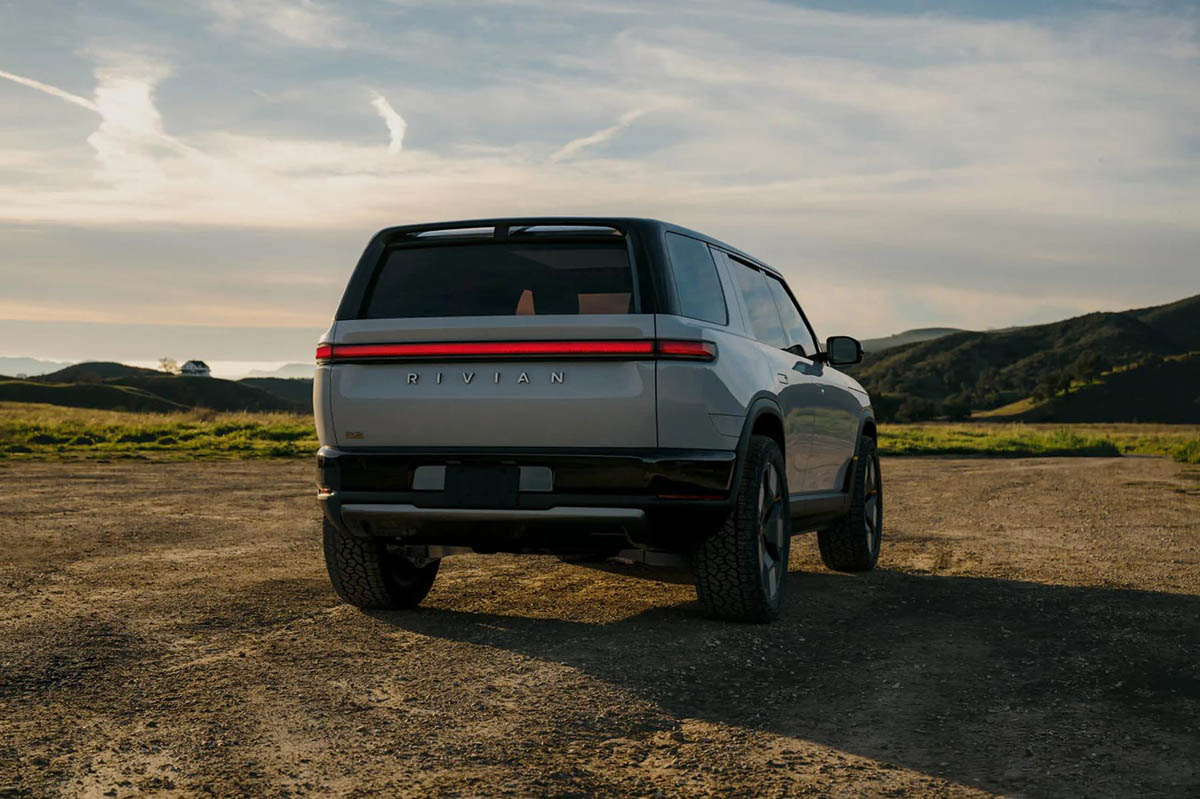
“The inverter chassis closes out the oil-cooled motor cavity and seamlessly routes coolant from the power modules to the drive unit’s heat exchanger with no extra parts,” Scaringe said in a recent social media post.
According to the company, the total inverter part count is reduced by 41% compared to the Enduro drive system. Additionally, the structural inverter lid doubles as a mounting point for the drive unit, reducing the need for separate fasteners.
See also: Rivian Unlocks $1 Billion in Volkswagen Partnership as It Eyes Expansion with New Models
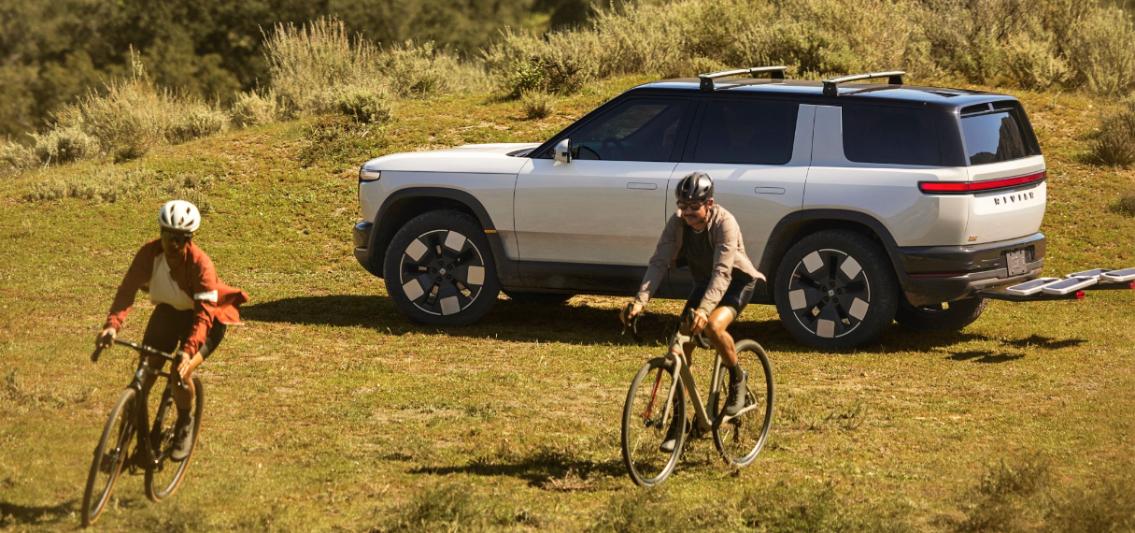
The R2 models, which are currently undergoing validation builds at Rivian’s plant in Normal, Illinois, are part of the automaker’s strategy to expand into the more affordable mid-size SUV segment. Production is expected to begin in 2026, following continued development and testing through 2025.