




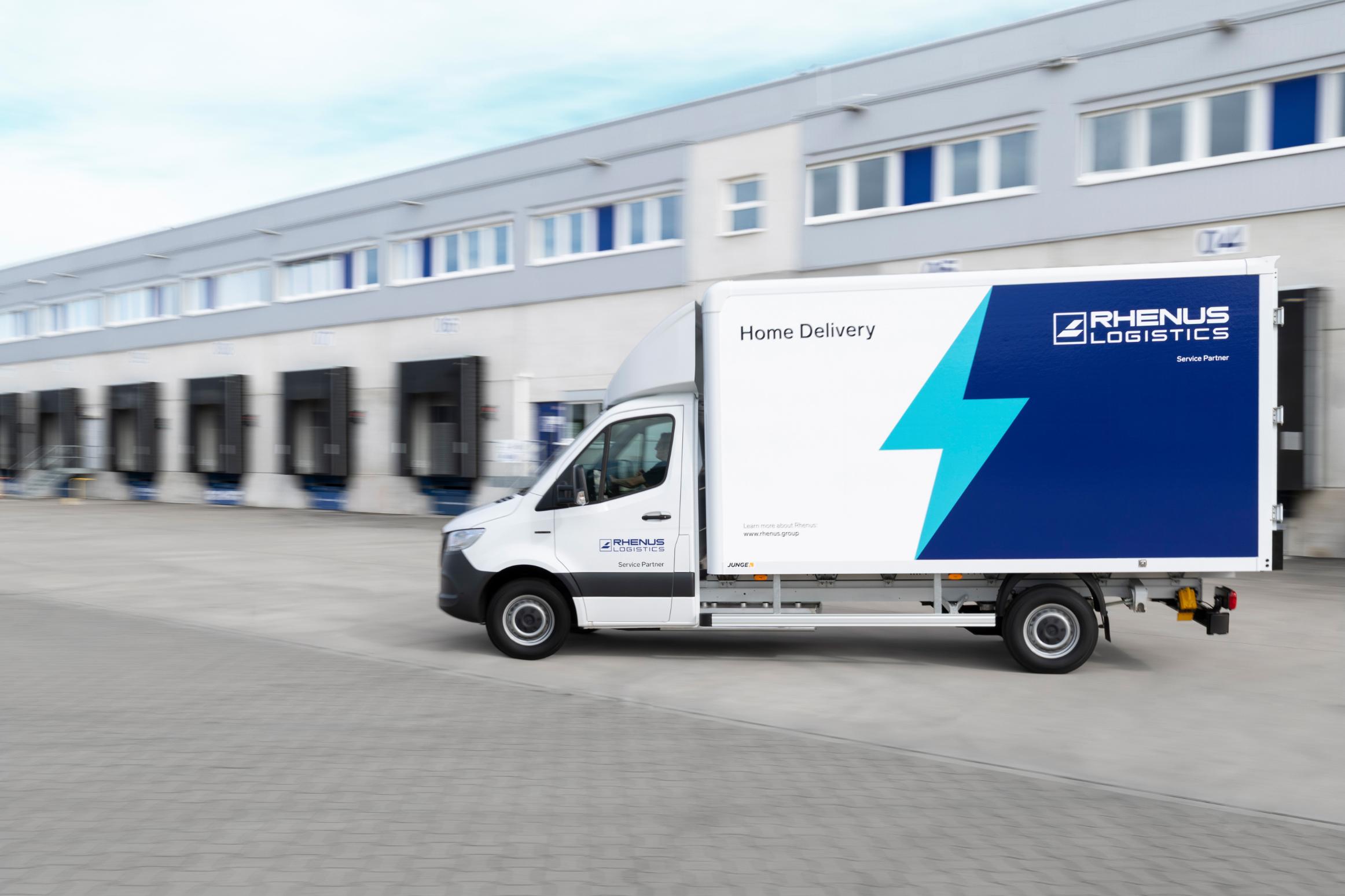
Rhenus is expanding its electric delivery fleet in Germany with 51 Mercedes-Benz eSprinter vans for nationwide home delivery operations. The vehicles will be used to transport bulky goods, including furniture, large household appliances and consumer electronics, directly to customers.
The vans are based on the Mercedes-Benz eSprinter chassis and fitted with box bodies supplied by German vehicle body manufacturer Junge Fahrzeugbau. They were manufactured at the Mercedes-Benz plant in Ludwigsfelde.
eSprinter Specifications and Charging
The newly deployed vehicles feature an 81-kWh battery, rear-wheel drive and an electric motor producing 100 kW. They support AC charging at up to 11 kW and DC fast charging at a maximum of 115 kW.
Mercedes-Benz has not disclosed a driving range for this specific configuration.
Standard equipment includes the MBUX multimedia system, remote and navigation services, and driver-assistance features such as Active Brake Assist, Distance Assist, Blind-Spot Assist and Lane-Keeping Assist.
The vans will operate within Rhenus’s Home Delivery division, which combines warehousing and regional distribution with the delivery of large items to customers’ preferred locations.
Electric Vehicles for Final-Mile Logistics
Battery-electric vans can be suited to last-mile delivery operations, where routes are often planned in advance and vehicles typically return to established depots. These operating patterns can help logistics companies organise charging and integrate electric vehicles into daily schedules.
Mercedes-Benz has also highlighted the potential for the 51 eSprinter vans to deliver competitive total cost of ownership. However, the company has not provided specific cost figures. Actual operating economics will depend on factors including vehicle mileage, electricity prices, charging infrastructure and fleet utilisation.
Andreas Böger, Head of New Vehicle Sales for Mercedes-Benz Transporters and Vans Germany, said the delivery demonstrates the use of electric vans in commercial operations.
The delivery of these 51 vehicles demonstrates that battery-electric vans can already be an integral part of professional logistics solutions. Together with Rhenus and Junge Fahrzeugbau, we are bringing electromobility into everyday delivery practice.
Rhenus Expands Electric Fleets Internationally
Rhenus is also adding electric vehicles to its operations outside Germany. In Poland, the logistics company expanded its fleet by nine vehicles in August 2026, bringing its total number of electric vans in the country to 33.
Those vehicles are primarily used for last-mile deliveries in urban areas and regions with access restrictions.
The company is also testing alternative powertrains for heavier transport operations. At its Duisburg site, a Mercedes-Benz GenH2 truck has been operating in regular logistics service since early 2026.
Next Generation of Electric Commercial Vehicles
The 51 vans use the current Mercedes-Benz eSprinter generation, while the manufacturer is preparing further developments for its electric commercial vehicle lineup.
Future models are expected to incorporate 800-volt electrical architecture, faster charging, the MB.OS operating system and expanded over-the-air software functions. Mercedes-Benz also plans deeper integration of external fleet management applications into its vehicles.
For Rhenus, the latest deployment adds electric vehicles to an operation focused on delivering bulky goods to customers nationwide, while its broader fleet strategy continues to include different technologies for different transport requirements.


