




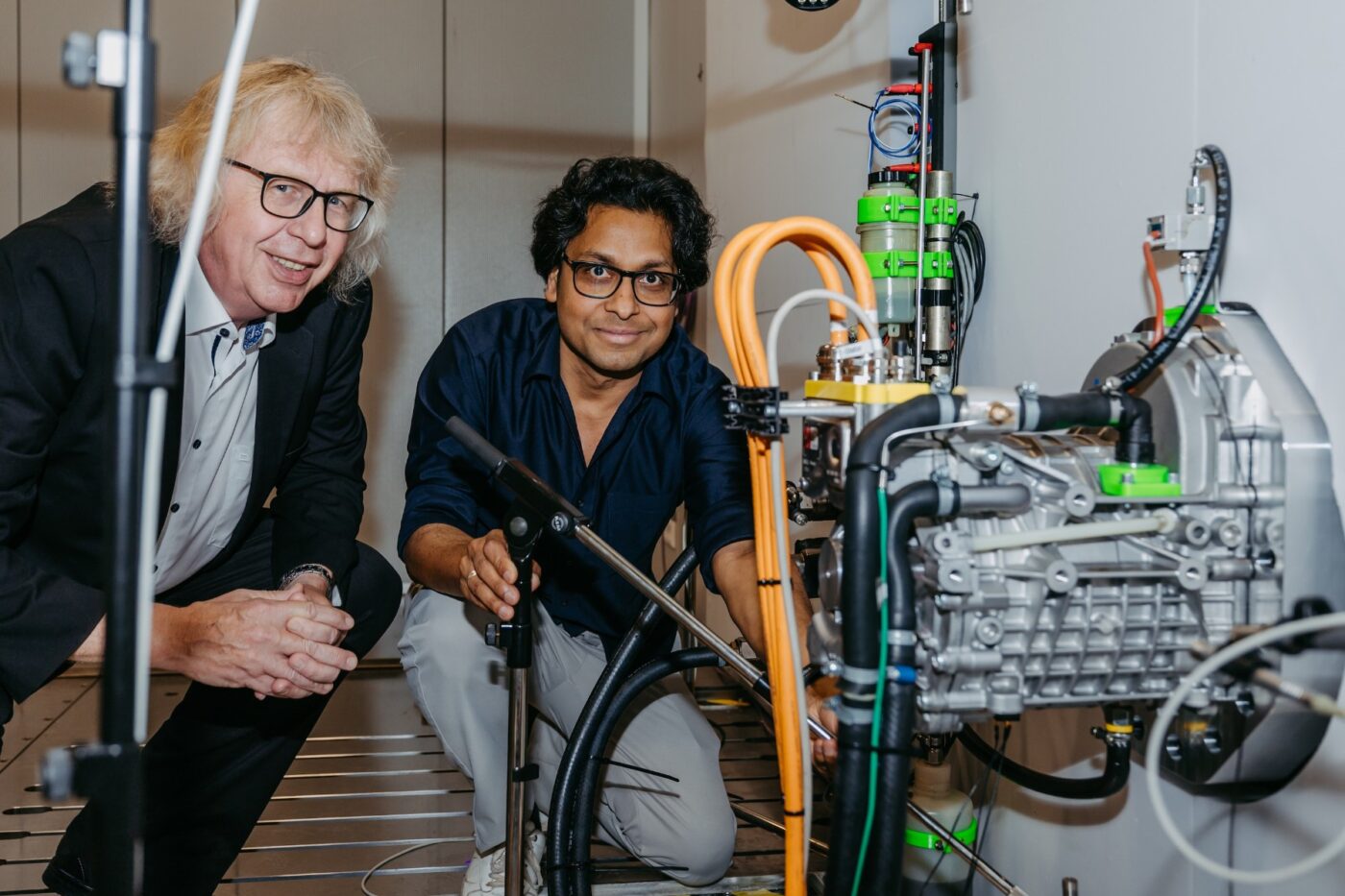
Researchers at Otto von Guericke University Magdeburg have developed a new noise-reduction technology for electric vehicles that uses recycled tyre rubber to damp vibrations in power electronics, potentially improving cabin comfort while supporting sustainability goals.
The innovation targets high-frequency noises generated by electric vehicle components such as power electronics, inverters and control systems. While electric vehicles are generally quieter than conventional combustion-engine cars, certain electronic components can still produce humming, whirring and high-pitched sounds that some passengers find unpleasant.
The research team believes the new approach could provide a lighter and more cost-effective alternative to traditional sound insulation materials.
Tackling Noise from Power Electronics
Electric vehicles generate noise from several sources, including tyres, aerodynamics and electronic systems.
Researchers at the Institute for Engineering of Products and Systems focused on vibrations originating from power electronics and related drivetrain components. These vibrations can create audible high-frequency sounds that become more noticeable in quieter electric vehicles.
Until now, manufacturers have typically relied on insulation mats and other sound-damping materials to address the issue. However, such solutions can increase vehicle weight and add to manufacturing costs.
Seeking a more efficient alternative, Professor Hermann Rottengruber and research associate Dr.-Ing. Braj Bhushan Prasad explored the use of recycled materials to absorb unwanted vibrations.
Recycled Tyres Offer a New Solution
The researchers developed a special granulate made from recycled tyre rubber that can be inserted into cavities already present within power electronic components.
As the vehicle operates, the particles move inside these cavities and absorb vibrations before they can generate unwanted noise.
Laboratory testing showed promising results. According to the researchers, noise levels in the most critical frequency range were reduced by up to 6.5 decibels, while vibrations in a component cover decreased by as much as 9.7 decibels.
The findings suggest that small quantities of recycled rubber particles can significantly improve acoustic performance without requiring extensive redesigns of existing components.
Optimizing Particle Performance
The research team noted that effective vibration damping depends on a variety of factors, including particle size, material composition, temperature and component geometry.
“Particles behave very differently depending on their size, material, filling quantity, temperature, component geometry, and excitation. That’s why simply filling a component with granulate isn’t enough. We must calculate and test which particles, in what quantity and at which location, achieve the best results,” said Braj Bhushan Prasad.
The researchers are continuing to refine the technology to better understand how different particle configurations affect vibration control and acoustic performance.
Potential Applications Across EV Systems
According to the research team, the particle damping approach could eventually be applied beyond power electronics.
Future applications may include inverters, control units and other vibration-sensitive components within electric drivetrains, helping manufacturers improve vehicle refinement without significantly increasing weight or cost.
Professor Hermann Rottengruber highlighted both the technical and environmental benefits of the development.
“Our findings show that even small particles made from recycled tyre rubber can make a noticeable difference in reducing noise in electric vehicles.”
“We now aim to develop this into a tool for designing future electric vehicles, so they not only drive cleaner but also sound more pleasant.”
As automakers continue to focus on improving the driving experience of electric vehicles, technologies that address noise, vibration and harshness are becoming increasingly important. The use of recycled tyre materials could offer an additional sustainability benefit by giving end-of-life tyres a new role in next-generation mobility solutions.