
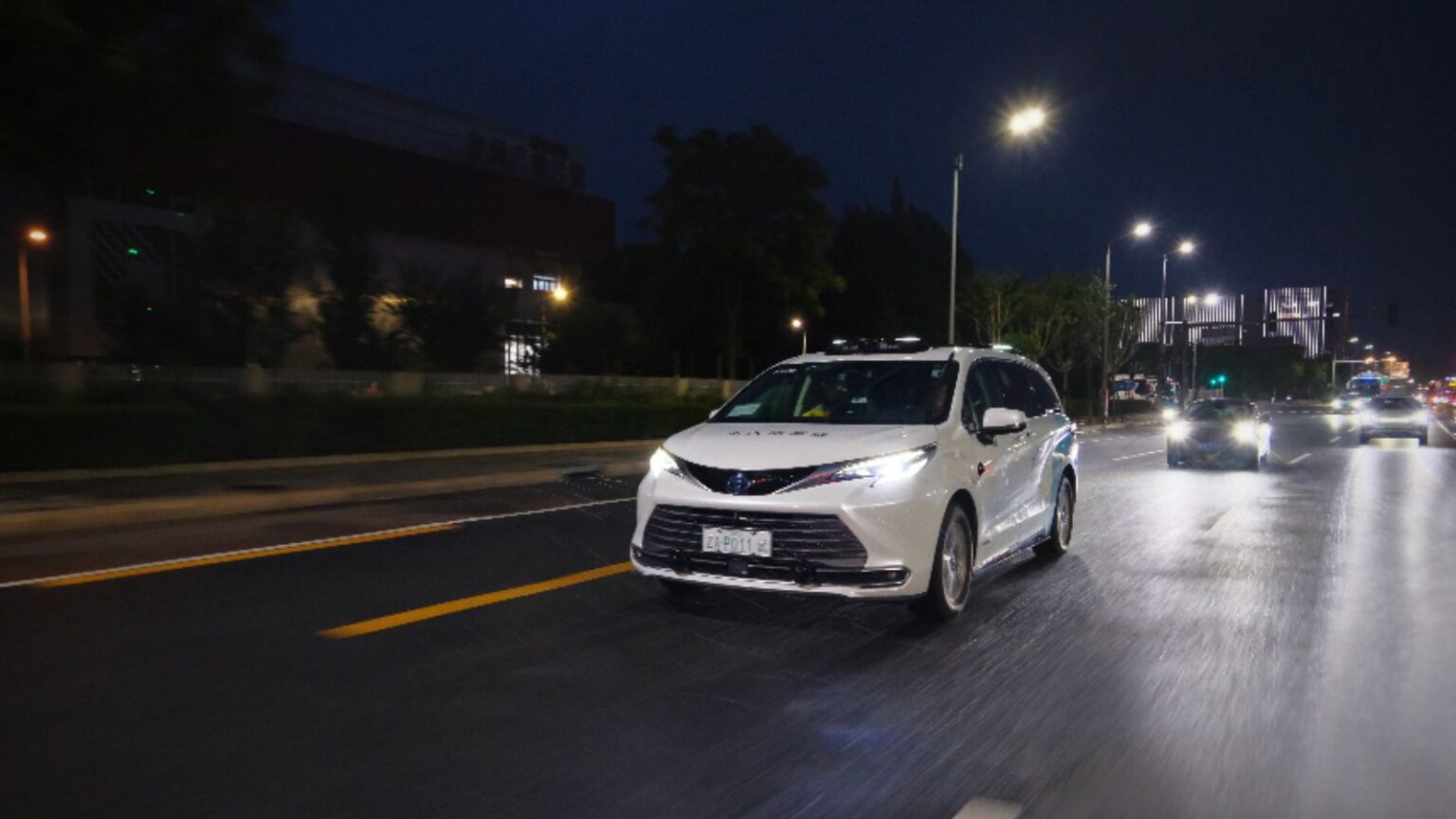
Chinese autonomous driving firm Pony.ai announced on Friday that it has begun 24/7 robotaxi testing in Beijing, Guangzhou, and Shenzhen, extending its daily testing window beyond the previous 7 a.m. to 11 p.m. schedule.
The company said the move marks a step forward in the maturity of autonomous driving technology and has the potential to support the evolution of urban mobility. “The launch of tests covering all hours of the day demonstrates the maturity of autonomous driving technology and has far-reaching implications for the improvement and upgrading of urban transportation,” Pony.ai said in a statement.
Late-night and early-morning hours are typically underserved by traditional transportation services, with public transit operating at less than 30 percent of daytime capacity, according to the company. The expanded testing aims to explore operational performance during these off-peak hours and assess the viability of robotaxi services when mobility demand is low but persistent.
Pony.ai said it has accumulated more than 50 million kilometers of autonomous testing mileage globally, spanning various traffic volumes and lighting conditions, from daytime congestion to low-visibility nighttime operations.
Earlier in July, the company began mass production and road testing of robotaxis equipped with its seventh-generation autonomous driving system. Developed over two years, the system uses automotive-grade components and has reduced costs by 70 percent compared to its predecessor, according to Pony.ai.
The company plans to deploy over 1,000 robotaxis by the end of 2025, enabled by the cost-effectiveness of its latest platform. The expanded fleet would support ongoing testing and future commercialization efforts across multiple cities in China.