
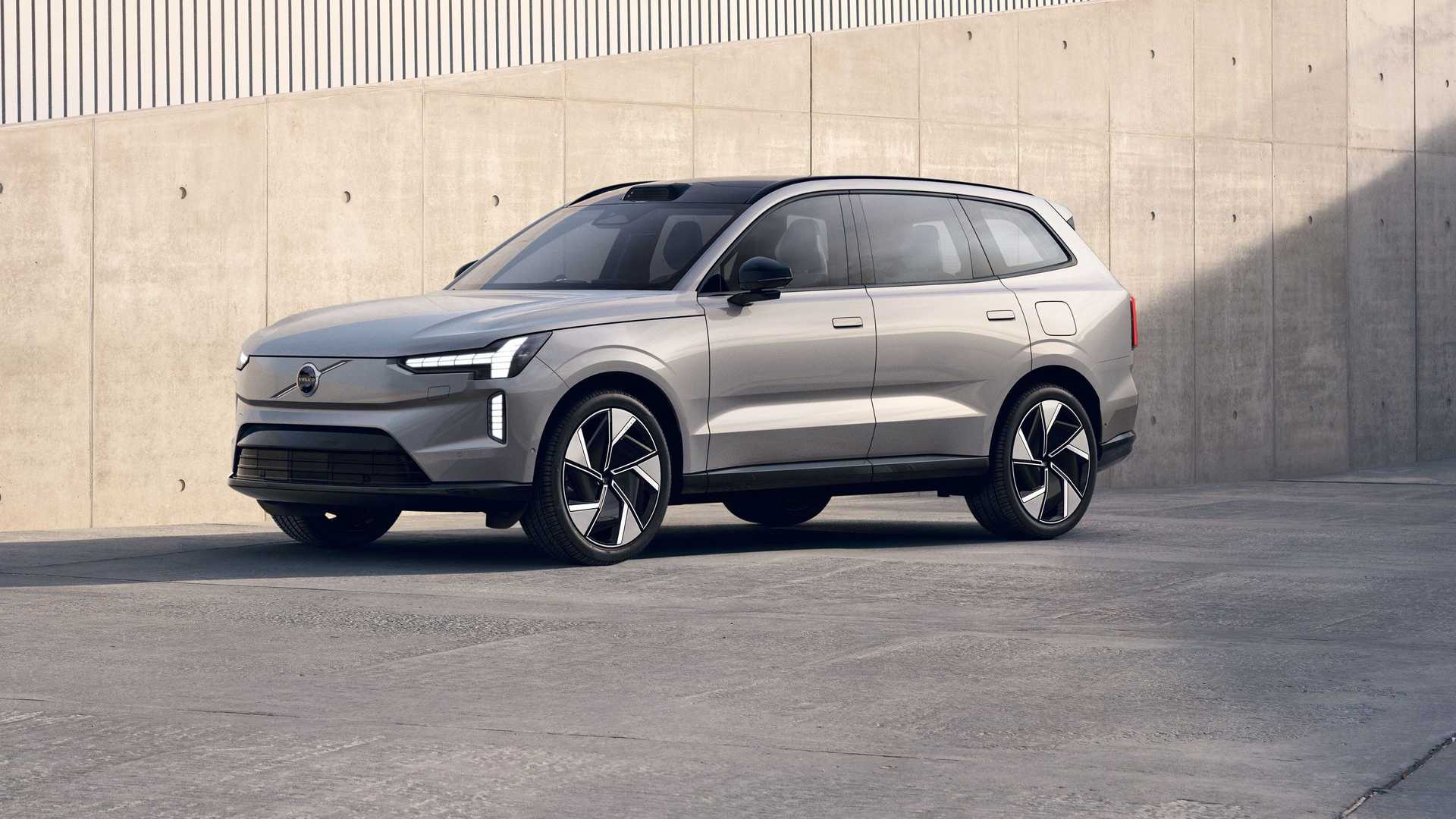
California utility PG&E has expanded its residential vehicle-to-everything (V2X) programme to include additional electric vehicles and bidirectional charging systems from Kia, Volvo, Polestar, Nissan and General Motors. Eligible vehicle and charger combinations can qualify for incentives of up to $13,000 through funding provided by a California Energy Commission grant.
More EVs Added to Bidirectional Charging Programme
Bidirectional Energy and PowerFlex have joined PG&E’s V2X programme as partners, expanding the range of vehicles and charging equipment that customers can use.
General Motors, PG&E Launch V2X Pilot in California to Enhance Grid Resilience
The Nissan Leaf from model years 2018 through 2025, along with the 2025 Volvo EX90 and Polestar 3, are eligible when paired with the dcbel Ara bidirectional charger.
The Kia EV9 from model year 2024 onward and the Kia EV6 from model year 2025 onward qualify when used with the Wallbox Quasar 2.
Customers using these eligible combinations can receive up to $13,000 in additional incentives through a California Energy Commission grant, subject to programme requirements.
PG&E has also added the 2027 Chevrolet Bolt, the Cadillac Celestiq from model year 2025 and the Cadillac Escalade IQL from model year 2025. Ford, General Motors and Tesla vehicles were already included in the programme.
The bidirectional capabilities available to customers vary depending on the specific vehicle and charger combination.
The Mobility House, EcoG and EV-Tech Launch Bidirectional DC Wallbox for V2G Applications
V2X Enables EVs to Support Homes and the Grid
V2X technology allows an electric vehicle to exchange electricity with external systems when paired with compatible hardware. Depending on the vehicle and equipment, stored energy can be used to provide backup power to a home, manage household electricity consumption or send electricity back to the grid during periods of high demand.
“This expansion is all about choice,” said David Almeida, Director, Clean Energy Transportation at PG&E. “By broadening the mix of eligible vehicles and chargers, we’re helping our customers access this valuable technology, while also offering them a way turn their EV into a home backup and a grid asset.”
PG&E is providing incentives to help residential customers purchase the required bidirectional charging hardware. The programme provides $2,500 upfront, increasing to $3,000 for customers living in disadvantaged communities.
General Motors Highlights Bidirectional Charging Potential Across Electric Vehicle Lineup
The first 250 customers to enrol can also receive an additional $1,500 Early Adopter Incentive.
Commercial V2X Incentives Also Available
PG&E operates a separate incentive structure for commercial bidirectional charging installations.
Commercial customers can receive $2,500 for a three-phase bidirectional charger rated below 50 kW, or $3,000 when the installation is located in a disadvantaged community.
For chargers rated at 50 kW or higher, the incentives increase to $4,500, or $5,000 in disadvantaged communities.
PG&E Has Expanded V2X Testing Over Several Years
PG&E has been testing the interaction between EVs, buildings and the electricity grid for several years.
The utility recently added the Tesla Cybertruck to its residential V2X programme. When combined with Tesla’s Powershare Gateway and Universal Wall Connector, the Cybertruck can provide backup power to a home and send electricity to the grid. PG&E described the system as the first AC-based vehicle-to-grid application approved for California customers.
General Motors joined PG&E’s V2X pilot in 2025 with vehicles including the Chevrolet Silverado EV, Equinox EV, Blazer EV, Cadillac Lyriq EV and GMC Sierra EV. Participating customers could receive up to $4,500 toward qualifying GM Energy home products as PG&E evaluated the potential benefits of bidirectional charging for customers and the electricity grid.
GM Energy Home System Brings Bidirectional Charging to Cadillac EV Lineup
PG&E and BMW also expanded their long-running smart-charging collaboration to V2X testing in 2023. Testing at PG&E’s Applied Technology Services Lab and BMW’s Mountain View office examined how EV batteries could help manage household energy consumption and support renewable energy integration at the neighbourhood level.
That collaboration developed from the ChargeForward programme launched by BMW and PG&E in 2015.
Electric School Buses Provide Grid Support
PG&E is also testing bidirectional charging with commercial electric vehicles. The utility has worked with school districts in Fremont, Oakland and San Francisco on electric school bus fleets capable of bidirectional energy exchange.
The buses can provide grid support when they are not being used for regular transportation duties, extending V2X applications beyond residential vehicles.
PG&E’s current residential V2X programme remains open for enrolment through June 30, 2027.