
Oxfordshire County Council has awarded new contracts to Connected Kerb and EZ-Charge to deliver more than 1,500 additional public electric vehicle charging sockets across the county, a move aimed at more than doubling the number of publicly accessible charging points currently available.
The initiative is designed to create a countywide charging network that is reliable, easy to use, and supports contactless payment. Oxfordshire County Council said the rollout will prioritize neighborhoods where a large proportion of residents do not have access to private driveways or off-street parking, helping make electric vehicle ownership more practical for a wider range of households.
Connected Kerb and EZ-Charge Selected
Under the agreements, Connected Kerb will install and operate charging infrastructure on public streets as well as at County Council-managed park-and-ride facilities and car parks. The company will play a key role in expanding on-street charging access across the county.
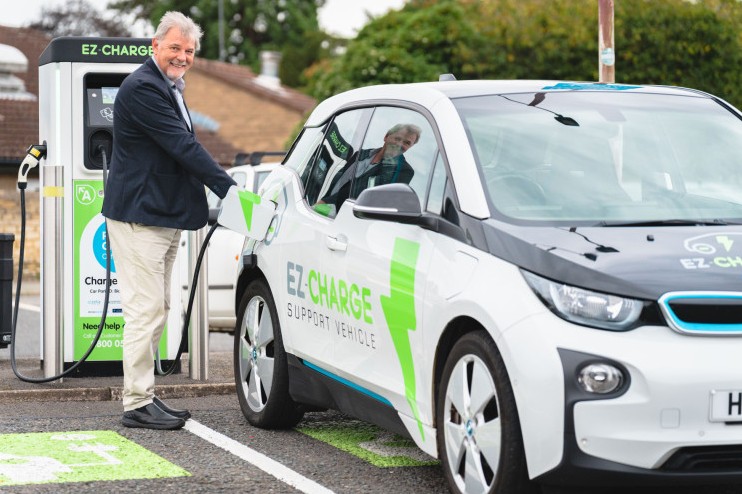
EZ-Charge, a Bicester-based provider of EV charging hardware and software, will focus on installing and operating charging hubs in district and city council-owned car parks. The company already participates in Oxfordshire’s existing Park and Charge program and will now significantly expand its footprint through the new contracts.
The agreements cover Oxfordshire at both county and local authority levels, including district and city council areas.
Focus on Accessible Charging
Most of the new installations will consist of 7kW chargers, which are intended to support overnight and longer-duration charging sessions. The council said discounted electricity tariffs will be available during overnight periods to encourage charging when demand on the grid is lower.
In addition, a smaller number of rapid chargers rated at 50kW or higher will be deployed at strategic locations throughout the county to provide faster charging options for drivers requiring shorter charging stops.
The council believes the combination of slower destination chargers and strategically placed rapid chargers will help meet a variety of charging needs while supporting the broader adoption of electric vehicles.
Community Charging Microhubs Planned
Alongside the public charging rollout, Oxfordshire County Council plans to launch a community microhub program aimed at expanding access in rural and underserved areas.
The initiative will invite town and parish councils, as well as non-profit community organizations, to host publicly accessible charging facilities at locations such as village halls, community centers, and sports pavilions.
Six pilot sites have already been selected ahead of the formal launch of the application process.
Supporting the EV Transition
Local authorities across Oxfordshire said the investment will help remove barriers to electric vehicle adoption, particularly for residents who lack access to home charging.
Andrew Prosser, Executive Member for Climate Action and Nature Recovery at West Oxfordshire District Council, said expanding public charging infrastructure would give residents greater confidence when considering an electric vehicle.
“Expanding public charging in this way means more people can make the switch to electric with confidence. We at West Oxfordshire District Council are pleased to play our part in a countywide effort that gives residents real, practical choices where they haven’t previously had them,” Prosser said.
Rob Pattenden, Portfolio Holder for Property and Assets at Cherwell District Council, said the investment was particularly important for areas with limited on-street charging options and significant transient traffic.
“This investment is essential in Cherwell, where many residents do not have access to on-street charging. In addition, the district has significant transient traffic, increasing the demand for conveniently located charging facilities. By expanding access to charging infrastructure, we are making it easier for people to transition to electric vehicles,” Pattenden said.
The new charging network forms part of Oxfordshire’s broader efforts to support transport decarbonization and improve access to electric vehicle infrastructure across both urban and rural communities.