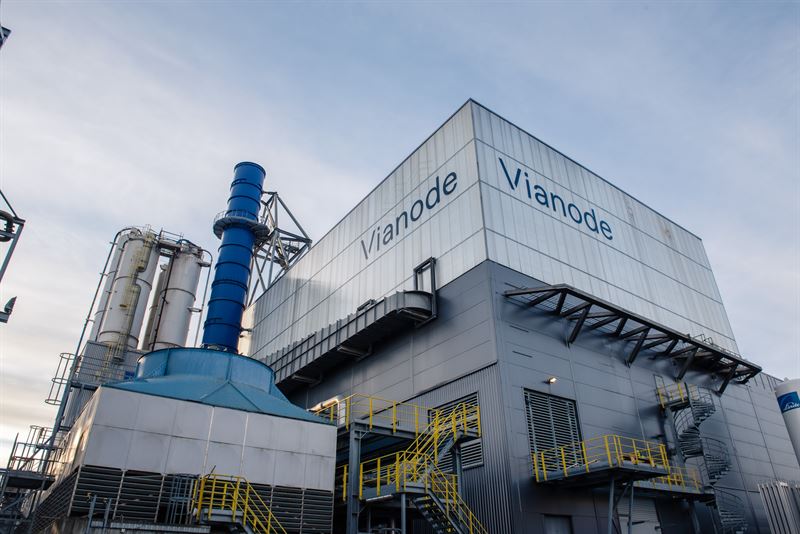





Orbia Fluor & Energy Materials has secured £1.4 million ($1.9 million) in funding from the UK government to develop a graphite recycling pilot facility in Runcorn, as the country seeks to strengthen its domestic electric vehicle battery supply chain and reduce dependence on imported raw materials.
The project, which remains in the planning phase, is expected to begin in early 2026, with installation work and initial product output anticipated later that year.
According to Orbia, the pilot facility will establish graphite recycling capabilities in the United Kingdom and evaluate the technical and commercial viability of recovering graphite from battery materials. The company said the project is intended to support the development of a more resilient domestic battery supply chain while reducing reliance on overseas sources of graphite.
China currently accounts for approximately 95% of global graphite production, making supply diversification a strategic priority for many countries seeking to expand battery manufacturing capacity.
Initially, the Runcorn facility will process graphite in kilogram-scale batches. The pilot is designed to demonstrate the feasibility of recovering and reusing battery-grade graphite before the company considers investment in a larger industrial-scale operation.
The funding was awarded through the UK government’s £4 billion DRIVE35 programme, which is delivered by the Department for Business and Trade in partnership with the Advanced Propulsion Centre UK (APC) and Innovate UK.
Orbia already maintains battery materials research and development activities in the UK through its technology center in Thornton, near Chester. The facility focuses on electrolyte and solvent development, lithium-ion battery prototyping and inorganic materials research.
John Jaddou, Global Director of New Business Development at Orbia Fluor & Energy Materials, said the project represents an important step toward establishing a circular battery materials ecosystem in the UK.
“This investment marks a significant milestone in enabling a huge step toward building a domestic, circular supply chain for battery materials and supporting the UK’s transition to a more sustainable, zero-emission future,” said John Jaddou, Global Director of New Business Development at Orbia Fluor & Energy Materials.
Jaddou said the pilot project is intended to validate both the technical and economic potential of graphite recycling.
“That graphite recovery can be both technically robust and commercially feasible, laying the groundwork for a future industrial scale facility,” Jaddou said, describing the company’s objective for the project.
The initiative comes as governments and battery manufacturers increasingly focus on securing local sources of critical battery materials and developing recycling technologies that can reduce dependence on imported raw materials while improving sustainability across the electric vehicle supply chain.
If successful, the pilot could contribute to the UK’s broader efforts to establish a domestic battery materials industry and support the growth of electric vehicle manufacturing in the country.
Source: Electrive