




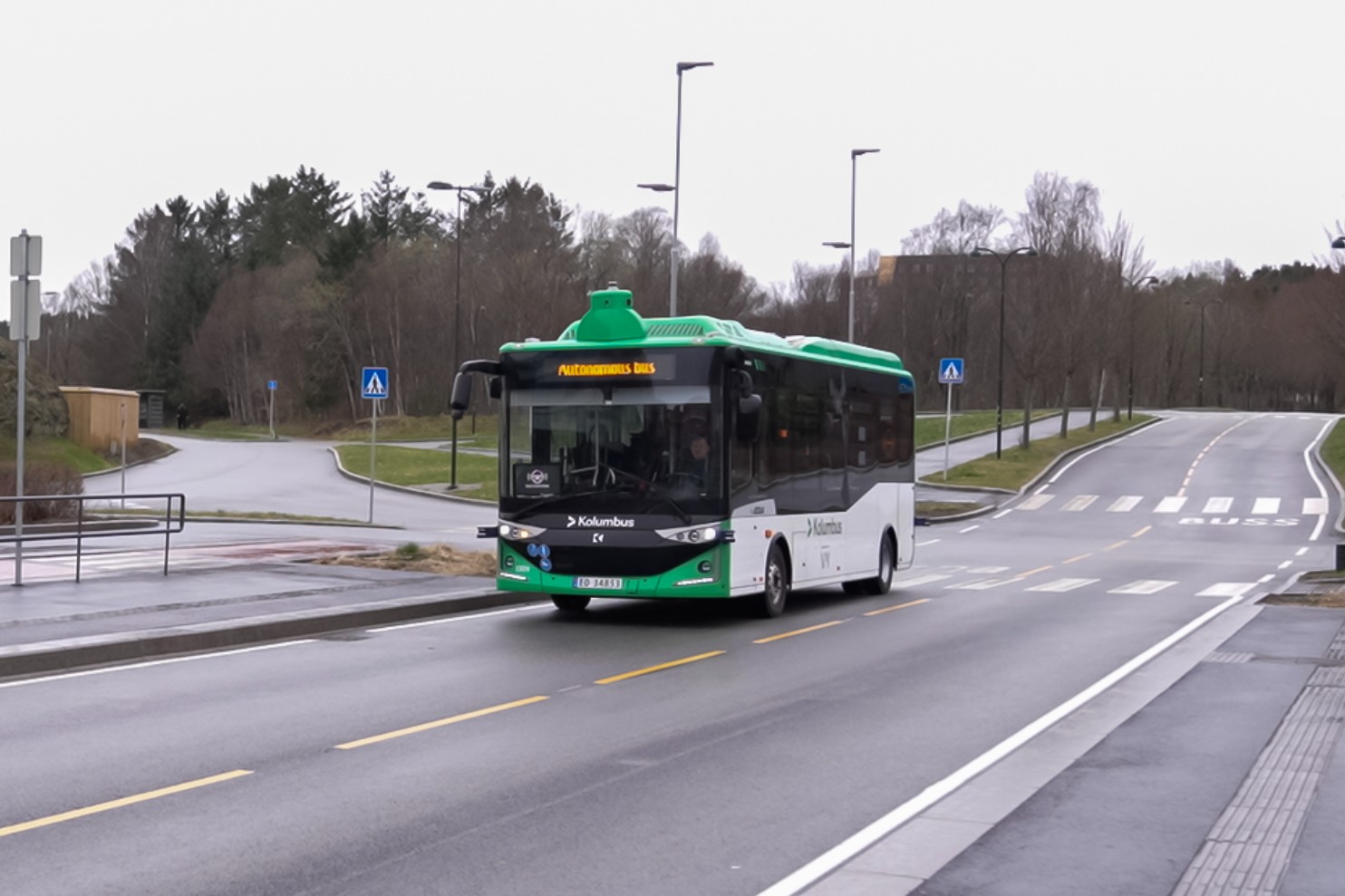
Norway is set to introduce Europe’s first autonomous public bus service operating without a safety driver on board, following regulatory approval for deployment in the city of Stavanger.
The approval was granted by Statens Vegvesen to transport operator Vy Buss, allowing the company to place an autonomous electric bus into regular service within the Kolumbus network.
See also: Bertrandt Tests BumbleB Autonomous Shuttle in Stuttgart Mobility Project
The project has been under development since 2022 and uses the autonomous Karsan e-ATAK bus manufactured by Karsan and equipped with autonomous driving technology from Adastec. The vehicle operates with Level 4 autonomy, enabling fully self-driving capability under defined conditions.

Until now, the bus has always carried a safety driver during testing. The newly approved service will operate without onboard supervision, representing a milestone for autonomous public transport in Europe.
See also: Karsan Autonomous e-ATAK Bus Wins Approval for Driverless Testing Across France
According to project partners, the regular route will begin operations later this month and will include more challenging urban driving conditions than earlier trials. The route features multiple intersections, mixed traffic, and an approximately 800-meter tunnel, with the vehicle operating at speeds of up to 40 kilometers per hour. The service route is also expected to be substantially longer than the original 2.6-kilometer pilot tested in 2022.
The deployment incorporates xFlow, a remote fleet management platform developed by Norwegian technology company Applied Autonomy. The system connects the vehicle, passengers, and a remote operations center, enabling a single operator to monitor multiple autonomous vehicles simultaneously.
The public transport sector across Europe is currently facing a shortage of more than 105,000 bus drivers, according to project participants, a deficit that has affected service reliability and limited network expansion efforts.
See also: QCraft Raises $100 Million in Series D to Advance Autonomous Driving and AI
“By implementing xFlow®, we are removing the primary bottleneck for scaling public transport,” said Olav Madland, chief executive of Applied Autonomy. “Our technology allows a single remote operator to support and oversee multiple vehicles simultaneously. This provides a unique opportunity to maintain and even expand route services in areas where recruiting traditional drivers is no longer feasible.”
Madland said the shift toward remote-assisted autonomous operations could also improve the economics of public transport systems.
“With xFlow®, there is a clear path to significant cost savings,” he said. “By optimizing operations and shifting roles from manual driving to advanced fleet management and remote passenger care, we can deliver more public transit for every dollar spent. This is the key to making autonomous buses a commercially viable solution rather than just a pilot project.”
See also: Norway’s Ruter Partners with Volkswagen’s Moia to Deploy Autonomous ID. Buzz Shuttles in Oslo
Autonomous versions of the e-ATAK have also been tested elsewhere in Europe. The vehicle recently completed a six-month trial in Paris and is currently operating in Germany as part of the Albus project led by Üstra near Hanover.
Developers and public transport operators view autonomous buses as a potential solution to driver shortages and rising operating costs, while also enabling flexible on-demand transport services. Industry participants also argue that autonomous systems could eventually improve road safety compared with human-driven vehicles.


